
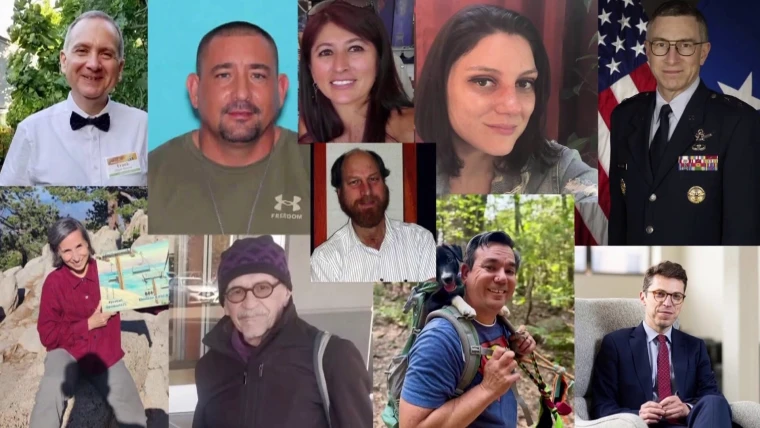
A wave of headlines about the US scientists’ deaths and disappearances has raised alarms in Washington and beyond. Reports describe at least ten individuals—linked to sensitive nuclear, aerospace, and research programs—who have either died under unusual circumstances or vanished over the past few years.
The Federal Bureau of Investigation is now leading a multi-agency probe. But despite the dramatic framing, investigators and security experts caution that there is no confirmed connection tying these cases together, at least not yet.
What triggered the investigation?
The concern stems less from any single incident and more from the pattern: multiple cases involving individuals connected to high-security environments.
Agencies reportedly involved include:
- Federal Bureau of Investigation
- Department of Energy
- NASA
- Congressional oversight bodies such as the House Oversight Committee
Facilities connected to the individuals span major institutions:
- Jet Propulsion Laboratory (JPL)
- Los Alamos National Laboratory
- Massachusetts Institute of Technology
- California Institute of Technology
- Kansas City National Security Campus
That spread, across geography, institutions, and timelines, is exactly why experts urge caution before concluding.
Who are the individuals involved?
Several cases highlighted in reporting have drawn particular attention.
Carl Grillmair
Carl Grillmair, an astrophysicist associated with Caltech, was found dead outside his California home. He had contributed to NASA-related projects, including near-Earth object tracking missions.
Monica Reza
Monica Reza, a senior engineer at JPL, disappeared during a hike in 2025 and has not been located. Her case remains unsolved.
William Neil McCasland
William Neil McCasland, a retired Air Force major general, vanished in early 2026 after leaving his home in New Mexico. Personal belongings, including his phone and wearable devices, were left behind.
Additional cases
Other individuals linked to Los Alamos National Laboratory, including employees Melissa Casias and Anthony Chavez, reportedly disappeared under somewhat similar circumstances, though details remain limited.
Is there evidence of a coordinated pattern?
What investigators say
So far, officials and independent experts emphasize the following:
- The cases are spread across multiple years
- They involve different institutions and roles
- There is no verified operational link between individuals
That doesn’t rule out a connection, but it means there’s currently no evidence of one.
Why does the pattern feel alarming?
Even without confirmed links, several factors amplify concern:
- Many individuals held security clearances
- Some worked on sensitive or classified programs
- The incidents involve both violent deaths and unexplained disappearances
This combination naturally raises national security questions—even if the underlying causes turn out to be unrelated.
Could this be a coincidence?
It’s an uncomfortable possibility, but statistically plausible.
Large workforce, isolated incidents
Across institutions like NASA and Department of Energy labs, tens of thousands of scientists, engineers, and contractors work in high-level roles.
Over a span of years, some number of the following:
- Accidental deaths
- Criminal incidents
- Missing person cases
will occur independently.
The clustering effect
When such cases are reported together, they can create the impression of a pattern—what psychologists call apophenia, or seeing connections where none exist.
What are investigators looking for?
The ongoing probe is likely focused on three core questions:
1. Any shared professional link?
- Were these individuals working on related projects?
- Did they have overlapping access to sensitive data?
2. External threats?
- Espionage or foreign intelligence activity
- Targeting of individuals with classified knowledge
3. Domestic causes?
- Criminal activity
- Personal circumstances unrelated to work
At this stage, none of these hypotheses has been confirmed.
Why this story matters
Even if no connection is found, the investigation highlights real vulnerabilities.
Security of high-clearance personnel
Scientists and engineers working in sensitive fields are not always protected at the same level as military or intelligence officers.
Public perception and trust
Stories like this can quickly spiral into speculation—especially when tied to:
- Space programs
- Nuclear research
- Government secrecy
That makes clear, evidence-based communication essential.
TL;DR
- Reports highlight multiple US scientists who have died or disappeared
- Federal agencies, led by the FBI, are investigating
- Cases span major institutions like NASA, JPL, and Los Alamos
- No confirmed link or coordinated pattern has been established
- Experts caution against jumping to conclusions