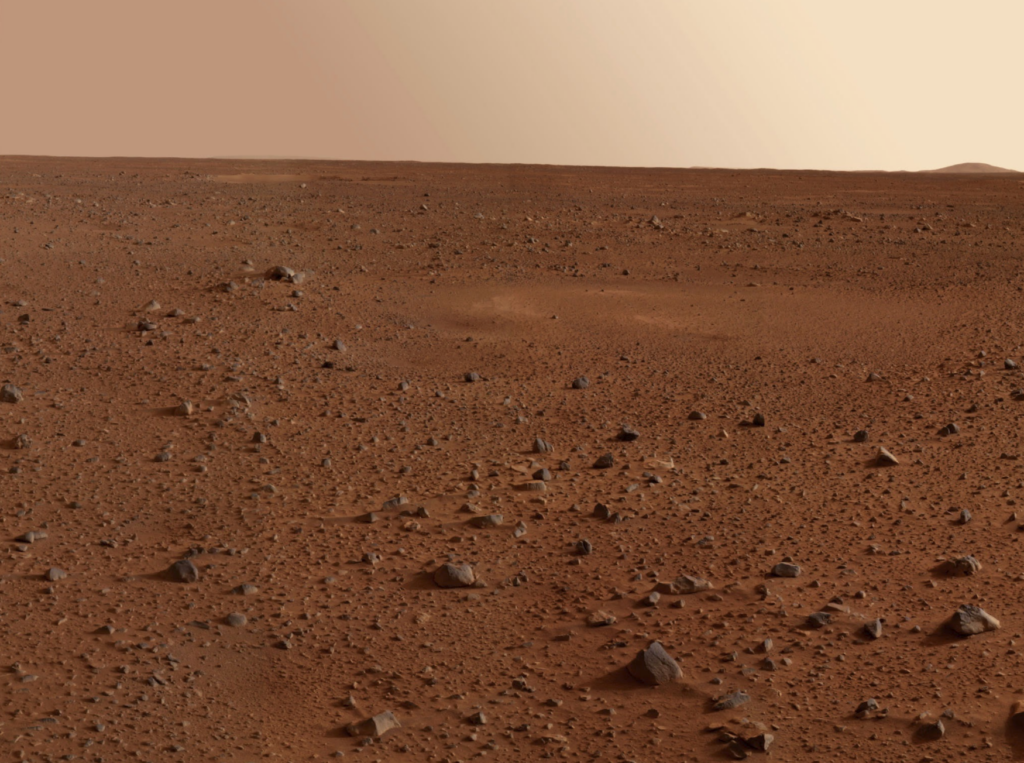
As aerospace agencies and billionaires like Elon Musk race to establish a human colony on Mars, most of the focus has been on rocketry, life support, and radiation shielding. But a new line of research suggests the most immediate threat to astronauts might not come from the deep vacuum of space—it might come from inside their own bodies.
New research from Radboud University in the Netherlands indicates that earthly pathogens, the disease-causing microbes that naturally live in and on humans, can not only survive the harsh conditions of the Red Planet but may actually mutate to become far more deadly.
The Survival Test: Earth Pathogens in Martian Conditions
To understand how our microbiome would react to an interplanetary move, researcher Tommaso Zaccaria subjected four known human pathogens to a simulated Martian environment in the lab.
The conditions were built to be overwhelmingly hostile to life:
- Near-zero atmospheric pressure
- Extreme desiccation (dryness)
- High-intensity ultraviolet (UV) radiation
- High concentrations of salty water laced with perchlorate, a highly toxic chemical abundant on the Martian surface
Despite these brutal parameters, the microbes demonstrated remarkable resilience. In the extreme dry conditions alone, some pathogens survived for up to 16 days. When subjected to all Martian stressors simultaneously, their survival window dropped to one day—but researchers noted that this timeline is artificially short. On actual Mars, the planet’s sandy soil (regolith) contains trace amounts of hidden water. It would act as a natural shield, protecting the bacteria from fatal UV radiation and allowing them to persist much longer.
The Mutation: Evading the Human Immune System
Survival is only the first half of the problem; adaptation is the second. Under the immense stress of the Martian environment, the bacteria structurally changed.
The initial phases of the experiment revealed that the microbes physically shrank, fundamentally altering how they interact with human biology. When researchers exposed these stress-adapted pathogens to peripheral blood mononuclear cells (PBMCs), the front-line white blood cells of the human immune system, the results were alarming.
Because the bacteria had shrunk and adapted, the human immune cells failed to mount a full defence. The immune cells produced fewer cytokines (the proteins that signal the body to fight an infection) and fewer reactive oxygen species. By learning to evade immune detection, these seemingly ordinary bacteria could transform into highly pathogenic, life-threatening strains for astronauts who are already dealing with the physical toll of spaceflight.
Toxic Soil: A Double Threat to Respiratory Health
The bacteria aren’t the only hazard awaiting future colonists. Zaccaria also tested the direct biological impact of the Martian regolith on human tissue.
Because Martian soil is heavily laced with toxic perchlorates and abrasive dust, exposure of human cells to it triggered immediate tissue damage. This resulted in severe local inflammation and neutrophilia—a spike in white blood cell activity as the body frantically tries to repair damaged tissue. According to the data, these cellular responses are highly consistent with the early warning signs of chronic respiratory disease.
If human colonisation of Mars is to succeed, life support systems won’t just need to keep oxygen in and the cold out. They will have to account for a hyper-toxic environment that damages human lungs while simultaneously training our own bacteria to bypass our immune systems. As Zaccaria notes in his thesis, understanding microbial tolerance to space is no longer just a biological curiosity—it is a strict prerequisite for keeping astronauts alive.