
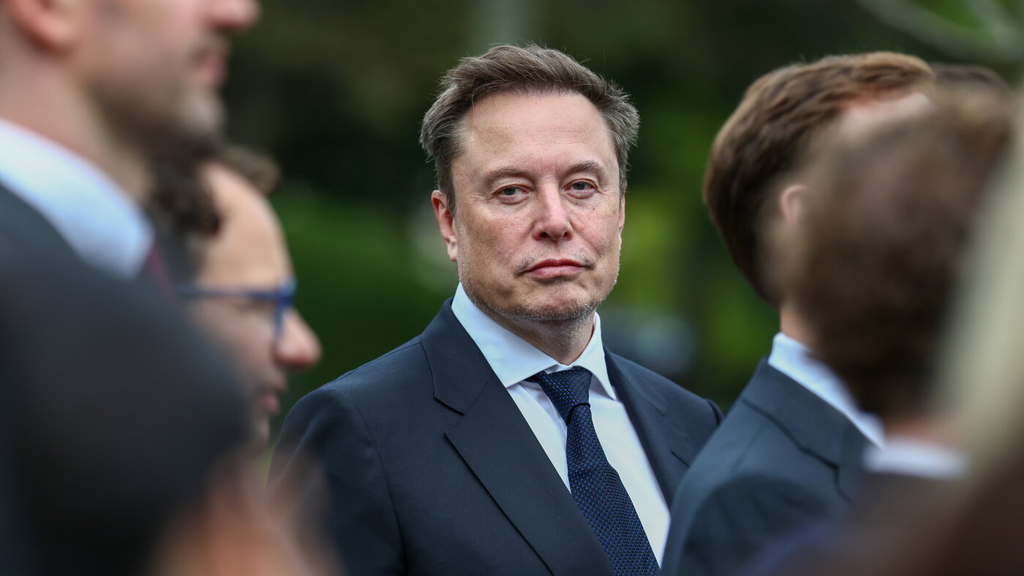
Elon Musk and Palmer Luckey have been asked to help shape the US military’s vision of future warfare. The unusual arrangement is already raising questions about whether the people helping the Pentagon decide what technologies it should want in the future could also benefit from those decisions.
Musk, the founder and CEO of SpaceX, and Palmer Luckey, the co-founder of defence technology company Anduril Industries, are co-directing Project Meridian with former House Speaker Newt Gingrich.
The 120-day initiative, announced by Defence Secretary Pete Hegseth on September 30, is intended to examine how warfare could change over the next decade and beyond and identify the weapons, technologies, and operational capabilities the US military may need.
The Pentagon has commissioned MITRE to conduct the actual analysis and recommendations. Musk, Palmer Luckey and Gingrich are serving as co-directors who will provide outside expertise.
That structure is important because the central controversy is not simply that two technology executives are advising the government. It is that their companies already do significant business with the US military and operate in areas that could become even more important under Project Meridian.
What is Project Meridian?
Project Meridian is a Pentagon study focused on the future of warfare.
According to the Pentagon’s commissioning documents and MITRE, the project will examine emerging technologies and operational concepts that could help maintain US military advantages across future battlefields.
The scope goes well beyond drones.
The initiative is expected to consider artificial intelligence, autonomous systems, robotics, directed energy, biotechnology, and other emerging technologies. Hegseth has also described a future battlefield extending across multiple environments, from underground operations to space beyond the Moon.
The study is supposed to identify capability gaps and propose actionable ways to develop, test, and field systems needed by the military.
The final findings are due by January 28, 2027. MITRE says the project will produce recommendations for the Defence Department, with an unclassified report and a classified annex.
Why are Musk and Palmer Luckey’s appointments controversial?
The basic concern is straightforward.
Musk owns or controls companies that have enormous business interests in space, artificial intelligence and military technology. Palmer Luckey co-founded Anduril, a company whose business is heavily focused on autonomous defense systems, drones, sensors and other military technology.
Project Meridian is being asked to examine precisely these kinds of technologies.
That creates a potential overlap between public policy and private financial interests.
A study recommending a larger role for autonomous systems, military satellites, artificial intelligence or advanced battlefield networking could benefit companies operating in those sectors.
That does not prove either Elon or Palmer will attempt to steer the study toward their own businesses. It does, however, create a situation in which outside observers could reasonably question whether the process is sufficiently independent.
Richard Painter, a corporate-law professor and former chief White House ethics lawyer during the George W. Bush administration, has argued that the financial interests involved warrant serious scrutiny.
The concern is particularly sensitive because Project Meridian is not merely discussing existing procurement. It is intended to help shape what the military develops and buys in the future.
SpaceX already has billions in Pentagon business
Musk’s connection to the US government is hardly new.
SpaceX has become one of the most important private companies in America’s military and national-security space infrastructure.
In 2026 alone, SpaceX secured several major US government awards, including a $4.16 billion Space Force agreement connected to space-based sensing and tracking capabilities and a $2.29 billion award related to a military satellite communications network.
Two additional Space Force task orders announced in July were valued at approximately $1.6 billion in total for Falcon 9 launches supporting space-based sensing and targeting capabilities.
Taken together, those major 2026 awards exceed $8 billion.
The figures matter because Project Meridian could influence how much emphasis the Pentagon places on space-based capabilities, satellite networks, sensing systems and related technologies.
SpaceX is already a major supplier in that ecosystem.
Anduril’s interests may be even closer to the study’s focus
Palmer Luckey’s potential conflict is more direct in another respect.
Anduril develops autonomous military systems, surveillance technology, drones and software designed to connect sensors and weapons.
Those areas are central to the Pentagon’s push toward autonomous warfare.
Anduril’s government business has also expanded rapidly.
The company received a major US Marine Corps contract in 2025 worth up to $642 million for counter-drone systems. More recently, the Army agreed to a deal worth roughly $1.8 billion to expand and support its Next-Generation Command and Control architecture using Anduril’s Lattice software platform.
On October 6, 2026, Anduril also became the centerpiece of a nearly $7 billion US government-backed shipbuilding initiative in Maryland. The Navy’s portion of the arrangement is valued at about $2.9 billion, while Anduril has committed $3.7 billion in private investment for a new shipbuilding facility.
That announcement came just days after Palmer was named a co-director of Project Meridian.
The timing does not establish any improper connection between the two events. But it demonstrates the extraordinary scale at which Luckey’s company is expanding its relationship with the federal government.
The key question: what legal status do Musk and Palmer Luckey have?
One unresolved issue is exactly how Musk and Luckey have been brought into the project.
The Pentagon has not publicly clarified whether they are serving as special government employees, contractors or in another formal capacity.
That matters because different categories can trigger different ethics and conflict-of-interest rules.
Federal law under 18 U.S.C. Section 208 generally restricts executive-branch employees, including special government employees, from personally and substantially participating in particular matters that directly and predictably affect their own financial interests.
There are exceptions and waiver mechanisms under federal ethics rules.
But the legal framework depends heavily on the precise nature of an individual’s government role and the matters in which that person participates.
That is why the Pentagon’s failure to publicly explain the arrangement has become such an important part of the controversy.
Why MITRE’s role matters
There is another layer that complicates the picture.
Although Musk, Luckey and Gingrich were publicly presented as the project’s co-directors, the Pentagon’s memorandum directed Chief Technology Officer Emil Michael to commission Project Meridian through a partner organization.
MITRE is that organization.
MITRE says it is responsible for the analysis and recommendations and that it will apply technical rigor and appropriate conflict-of-interest and information safeguards while considering outside input.
That potentially provides an institutional buffer between the industry figures participating in the project and the actual technical analysis.
But it does not make the conflict-of-interest question disappear.
If outside advisers help determine which technological areas receive priority, their recommendations could still influence future government investment, even when another organization writes the final analysis.
Could the project recommend technologies that benefit Musk or Palmer?
That is the heart of the concern.
Imagine, for example, that Project Meridian concludes the US military needs dramatically more autonomous drones, AI-enabled battlefield systems, satellite-based sensing or robotic platforms.
Those recommendations could align closely with the commercial interests of Anduril and SpaceX.
That does not mean the recommendation would be wrong.
The US military may genuinely need more autonomous systems or advanced satellite capabilities regardless of who advises the Pentagon.
The problem is one of incentives and credibility.
A recommendation can be technically sound and still raise legitimate questions about whether the person making it had an economic interest in the outcome.
For a government study intended to shape defense strategy for the next 10 to 20 years, even the appearance of favoritism can become a serious institutional problem.
Are Musk and Luckey actually deciding what the military buys?
No, not based on the publicly available description of Project Meridian.
The project is a study designed to identify future technologies and operational concepts. It is not itself a procurement contract or a direct authorization to buy weapons from SpaceX or Anduril.
The Pentagon says MITRE will conduct the analysis and produce recommendations.
Future procurement decisions would involve additional military, acquisition and budgeting processes.
This distinction is essential.
The current controversy concerns the possibility of influence, not evidence that Musk or Luckey have already directed the Pentagon to purchase products from their companies.
Why critics are worried about autonomous weapons
The concerns extend beyond money.
Project Meridian comes as the Pentagon is dramatically increasing its focus on AI, drones, robotics and autonomous warfare.
Hegseth has separately announced plans for an Autonomous Warfare Command intended to accelerate the military’s use of unmanned and autonomous systems.
That raises ethical and strategic questions about how much decision-making should be delegated to machines, particularly when weapons can identify, track or engage targets with increasing levels of autonomy.
Musk has long advocated rapid development of autonomous technology and has been outspoken about the military potential of AI and robotics.
Luckey, meanwhile, runs a company whose core business includes autonomous defense systems.
Their expertise is therefore highly relevant to the Pentagon’s technological goals, but their commercial interests make their involvement unusually sensitive.
The Pentagon says safeguards are in place
The Defense Department has not publicly answered all questions about Musk’s and Luckey’s financial conflicts or their precise employment status.
However, a Pentagon spokesperson told NPR that MITRE is responsible for the analysis and recommendations and will evaluate all inputs while applying conflict-of-interest and information safeguards.
That suggests the department is aware of the potential problem.
The crucial question is whether those safeguards are transparent enough for Congress, watchdogs and the public to evaluate.
Without disclosure about recusals, ethics agreements, financial interests and the precise limits of the advisers’ authority, outsiders have little way of knowing how effective the safeguards are.
What does the Government Accountability Office say?
A senior Government Accountability Office official has also warned that the project’s eventual findings should be examined closely.
The official questioned why another task force was necessary when government and defense experts have already spent years studying autonomous warfare and emerging military technologies.
That criticism goes to another issue surrounding Project Meridian: institutional expertise.
The Pentagon already has military commands, research agencies, acquisition officials and scientific organizations devoted to analyzing future weapons and emerging technologies.
Bringing influential private-sector executives into that process could provide valuable perspectives from Silicon Valley and the defense industry.
But it could also shift more strategic influence toward companies that stand to benefit from a government emphasis on emerging technologies.
Why the timing is significant
Project Meridian arrives during a period when the traditional boundary between Silicon Valley and the Pentagon is rapidly disappearing.
Technology companies that once focused primarily on consumer products, software or commercial space are increasingly becoming defense suppliers.
At the same time, the US government is trying to move faster in adopting AI, autonomous systems and advanced robotics, while defense contractors are eager to capture that spending.
Musk and Luckey sit directly at that intersection.
Their companies are already major government suppliers, while the initiative they have been asked to lead could influence which technologies the military considers strategically essential.
That makes Project Meridian a test not only of America’s approach to future warfare, but also of how the government manages private-sector influence over defense policy.
What happens next?
Project Meridian has roughly 120 days to complete its work.
MITRE will oversee the analysis while Musk, Luckey, Gingrich and other participants provide outside expertise.
The findings and recommendations are due to the Defense Department by January 28, 2027, followed by an unclassified public report and a classified annex.
The recommendations could influence future research priorities, force planning and procurement decisions.
That is why the project’s governance may ultimately matter almost as much as its technological conclusions.
The United States has strong reasons to involve engineers, entrepreneurs and technology executives in planning for future warfare. The military is entering an era in which software, AI, robotics, space systems and autonomous platforms could be as strategically important as traditional weapons.
But when the people advising the Pentagon also run companies that could profit from those priorities, independence must be demonstrated, not merely asserted.
For now, there is no public evidence that Musk or Palmer have improperly steered Project Meridian toward their own businesses.
There is, however, a very real unanswered question about how the Pentagon intends to prevent that appearance from becoming an actual conflict.
Fact-checking notes
Project Meridian was announced by Defense Secretary Pete Hegseth on September 30, 2026. MITRE officially identifies Newt Gingrich, Palmer Luckey and Elon Musk as the project’s co-directors and says MITRE is responsible for the independent analysis. The project examines technologies and operational concepts across future warfighting domains.
The project’s findings are due within 120 days. Reporting based on the Pentagon commissioning memorandum puts the deadline at January 28, 2027, with an unclassified public report and a classified annex.
Musk, Luckey and Gingrich were announced as co-directors, while Pentagon Chief Technology Officer Emil Michael oversees the government side of the project. The original Pentagon memorandum reportedly directed Michael to commission Project Meridian through a partner organization. MITRE is that organization.
The Pentagon has not publicly clarified whether Musk and Luckey are serving as special government employees or contractors. NPR reported that their classification matters because different ethics rules can apply depending on their status.
Federal conflict-of-interest law, 18 U.S.C. Section 208, generally restricts executive-branch employees and special government employees from personally and substantially participating in particular matters that have a direct and predictable effect on their financial interests, subject to statutory exemptions and waivers. (ssa.gov)
The Department of Defense’s Standards of Conduct Office describes the same basic restriction and notes that the rule concerns official participation in particular matters that directly and predictably affect an employee’s financial interest.
SpaceX received major 2026 US Space Force awards including a $4.16 billion agreement related to space-based sensing and targeting and a $2.29 billion award connected to a satellite communications network. Additional launch task orders announced in July were valued at approximately $1.6 billion. The combined value of those major 2026 awards exceeds $8 billion, although the deals cover different programs and procurement structures. (defensebriefing.co)
Anduril has significant US defense business, including a US Marine Corps counter-drone agreement worth up to $642 million and a more recent Army agreement valued at about $1.8 billion for its Next-Generation Command and Control architecture.
On October 6, 2026, Anduril was also announced as part of a nearly $7 billion US government-backed Maryland shipbuilding initiative involving a $2.9 billion Navy contract and $3.7 billion in private investment by Anduril. The announcement is separate from Project Meridian and does not establish that Luckey’s Pentagon role influenced the shipbuilding deal.
Richard Painter, former chief White House ethics lawyer during the George W. Bush administration, has raised concerns that Musk’s and Luckey’s financial interests could shape the study’s recommendations. Those are expert assessments, not findings of an official ethics investigation.
The Government Accountability Office has not issued a formal report concluding that Project Meridian violates ethics rules. A senior GAO official, speaking without authorization to represent the agency publicly on unpublished work, said the project’s findings and recommendations should be scrutinized.