
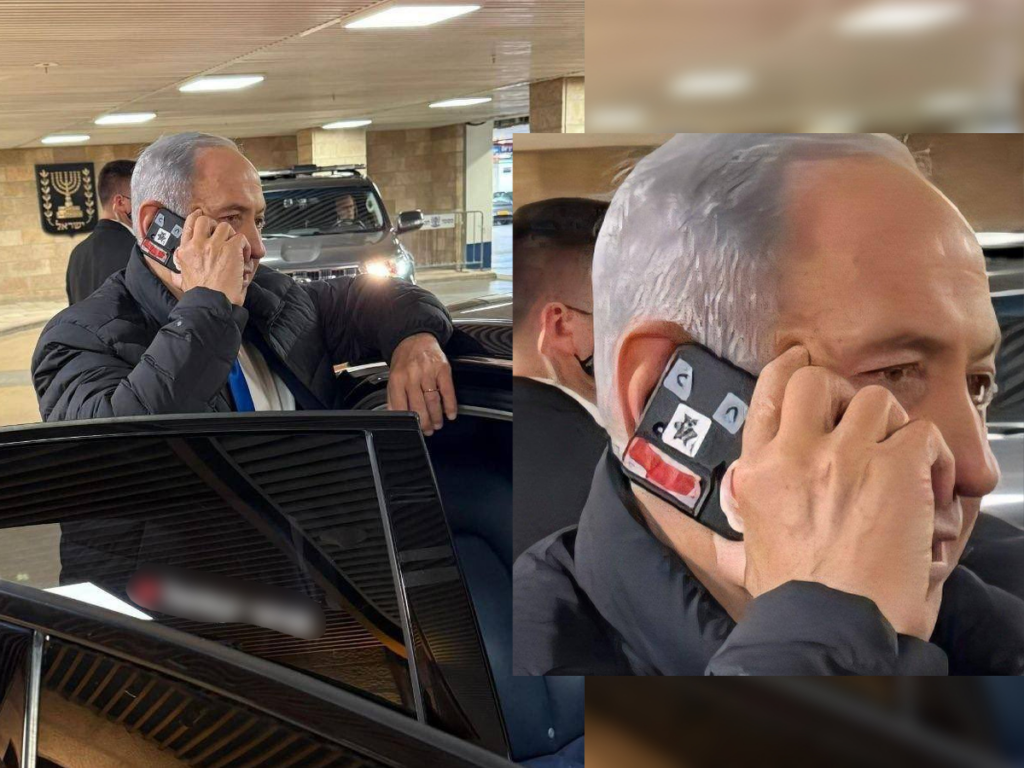
A single strip of tape on a smartphone has ignited a global debate. A viral image showing Israeli Prime Minister Benjamin Netanyahu speaking on a phone with its rear camera covered has set off waves of speculation online, raising questions about surveillance, hacking fears, and whether everyday users should take similar precautions.
The image, widely shared on X and other platforms, shows Netanyahu standing beside a dark-colored vehicle, dressed in a black jacket over a white shirt, holding a phone whose camera module appears to be covered with tape or a small sticker. No official explanation has followed. Yet the silence has only amplified curiosity.
So why would one of the world’s most security-conscious leaders cover his phone camera? And does it signal a broader risk in an age of digital espionage?
What exactly is seen in the viral Netanyahu phone photo?
The photograph itself is unremarkable at first glance. Netanyahu is seen mid-conversation, phone held to his ear. What caught attention is the rear camera area, which appears intentionally obscured.
Social media users quickly zoomed in, circled the detail, and began asking pointed questions. One widely shared post asked why the Israeli prime minister would feel the need to tape his camera and whether that implies ordinary citizens should worry even more.
It is important to note that the image’s authenticity has not been independently verified, and the Israeli Prime Minister’s Office has not commented on the photo or the phone visible in it.
That absence of confirmation has not slowed the discussion.
Why would a prime minister cover a phone camera?
For security experts, the idea is neither new nor particularly shocking. Covering phone cameras has long been considered a basic precaution in sensitive environments.
Cameras as potential surveillance tools
Modern smartphones contain multiple sensors that can be exploited if compromised. These include:
- Cameras that can capture images or video
- Microphones that can record conversations
- Location services that track movement
- Background processes that can operate without visible alerts
In high-risk security settings, even a small chance of compromise is treated seriously. A covered camera eliminates one entire category of risk.
Is this standard practice in Israel?
Israel is widely regarded as one of the most cyber-aware countries in the world, both in defensive and offensive capabilities. Current and former officials have often spoken about strict digital hygiene practices.
According to Grok, the AI chatbot integrated into X, the red tape seen on Netanyahu’s phone resembles tamper-evident stickers used in classified facilities. These stickers are designed to block lenses and make it obvious if someone attempts to remove them.
While Grok cited reports about such practices, there is no official confirmation that Netanyahu’s phone was covered as part of a formal protocol.
Does spyware really pose that serious a threat?
The concern is not theoretical. In recent years, spyware has moved from spy novels into mainstream headlines.
The rise of advanced phone spyware
Sophisticated spyware can:
- Activate cameras and microphones remotely
- Extract photos, messages, and contacts
- Monitor calls and encrypted chats
- Operate without user awareness
Israel itself has been at the center of global debates around spyware, particularly after revelations involving Pegasus, a surveillance tool developed by NSO Group. Although unrelated to the viral image, those past controversies have shaped public perception around phone security.
Recent hacking claims heighten fears
The timing of the viral image matters. Earlier this month, Iranian hacker group Handala claimed it had breached the phone of former Israeli justice minister Ayelet Shaked. The group released personal images, including photos from military service, family moments, and work meetings.
In separate claims, the same group said it had accessed:
- The phone of Netanyahu’s chief of staff, Tzachi Braverman
- The Telegram account of former Prime Minister Naftali Bennett
Israeli authorities have not publicly confirmed these breaches, but the claims circulated widely and added context to the Netanyahu phone image.
Why did this image resonate so strongly online?
The reaction was not just about Netanyahu. It tapped into a broader anxiety shared by millions of smartphone users.
If a prime minister is cautious, what about everyone else?
Many users framed the issue bluntly. If one of the most heavily guarded leaders in the world takes such precautions, does that mean the average person is already exposed?
This line of thinking explains why the image went viral far beyond political circles. It became a symbol of invisible digital vulnerability.
Social media amplifies visual symbols
A strip of tape is simple, visual, and easy to copy. Unlike complex cybersecurity advice, it feels actionable. That makes it perfect for social media discussion, memes, and debates.
Is covering your phone camera actually effective?
This is where expert opinion becomes more nuanced.
What camera covers can and cannot do
Covering a camera can:
- Prevent visual surveillance
- Reduce risk in case of spyware that activates the lens
- Offer psychological reassurance
However, it does not:
- Stop audio recording through microphones
- Prevent data theft or message interception
- Protect against location tracking
- Secure apps or operating systems
In other words, tape solves one narrow problem, not the entire threat landscape.
Why officials still do it
For high-level officials, security is layered. Covering the camera is not a standalone defense but part of a broader system that includes secure devices, encrypted communication, and controlled environments.
What does the silence from Netanyahu’s office mean?
The Israeli Prime Minister’s Office has not issued any statement explaining the image. That silence could have several explanations.
- The image may not warrant an official response
- The phone could belong to security staff, not Netanyahu personally
- Commenting on security practices could itself pose a risk
In security circles, saying nothing is often considered safer than clarifying details.
Should ordinary people copy this practice?
The answer depends on the threat level.
Who might benefit from extra precautions?
- Journalists working on sensitive stories
- Activists in hostile environments
- Business leaders handling confidential data
- Individuals who believe they are targeted
For most users, basic digital hygiene is far more important than camera tape.
Practical steps that matter more
Instead of focusing solely on cameras, experts often recommend:
- Keeping operating systems updated
- Downloading apps only from trusted sources
- Reviewing app permissions regularly
- Using strong device passwords and biometrics
- Being cautious with links and attachments
Why does this debate go beyond one photo
The viral image has become a proxy for a larger conversation about trust, technology, and power.
Smartphones blur the line between personal convenience and constant surveillance. When a head of government appears to take visible steps to limit that exposure, it reinforces the sense that digital threats are real, even if not always visible.
Whether Netanyahu’s camera was covered for security, coincidence, or some other reason may never be officially clarified. But the reaction to the image reveals something important: public awareness of digital risk is rising, and symbols matter.
TL;DR
- A viral image shows Benjamin Netanyahu using a phone with its camera covered
- No official confirmation or explanation has been given
- Experts suggest it could reflect standard security precautions
- Recent hacking claims involving Israeli officials add context
- Camera covers help in limited ways, but are not full protection