
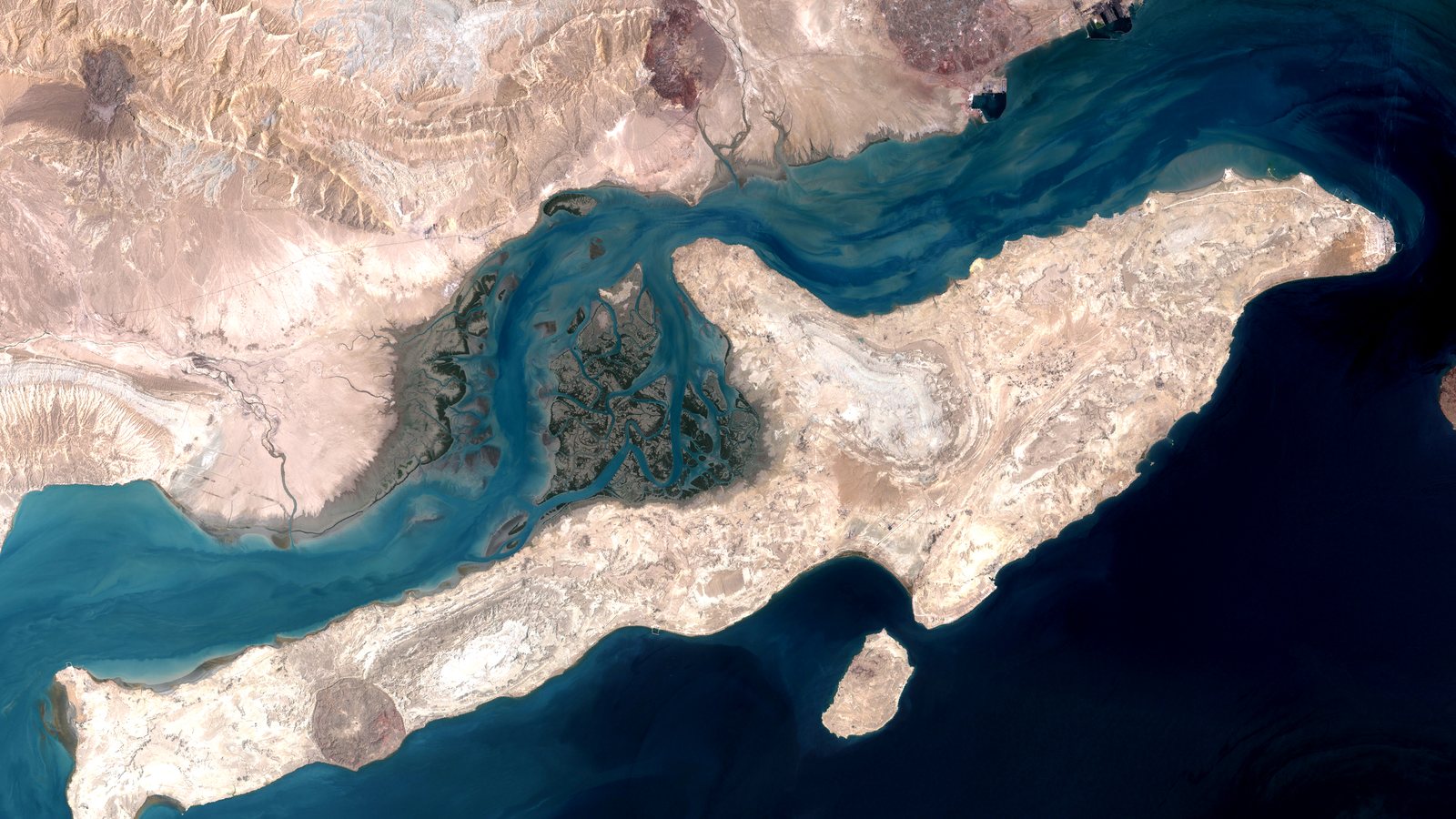

US forces struck Iran’s Qeshm Island in the Strait of Hormuz late Monday, the night before the midterm elections. Three US officials told CBS News the strikes were limited and defensive. A senior official said they followed fire from Iran’s Islamic Revolutionary Guard Corps at an American aircraft.
The Wall Street Journal first reported the strikes. Officials told several outlets they do not mark a return to major combat. No one in the Pentagon or the White House has described them on the record.
The island sits on the main sea route for Gulf oil, so even a small exchange there moves prices. Brent crude rose about 2% on Tuesday morning after falling more than 7% on Monday.
What US officials say happened
Every account so far comes from officials speaking anonymously. Two told NBC News the strikes were self-defense against Iran’s efforts to target shipping and US assets. Iran had tried again to hit a US aircraft, they said. The strike aimed to take out a launcher.
A third official told NBC it was “a defensive measure” against Iranians “using surface-to-air missiles against US assets.” One official told ABC News the strikes don’t signal a resumption of major combat operations.
The officials also described a pattern. The Revolutionary Guard has routinely shot at US manned and unmanned aircraft over the strait in recent weeks, they told NBC. The US occasionally strikes Iranian launchers in response.
The Journal called Monday’s raid the latest in a series of limited US strikes over recent weeks, which Washington has not announced, France 24 reported with AFP. ABC said the US kept the strikes quiet to avoid signaling that major combat had resumed.
The Pentagon referred questions to US Central Command, which did not respond to AFP late Monday. CENTCOM also did not respond to ABC’s requests for comment.
What Iran says, and what is disputed
Iranian state media reported explosions on the island. The state news agency IRNA said five blasts came in rapid succession, and some residents saw two aircraft overhead, according to France 24.
Iran’s account of the drones is the main dispute. Earlier on Monday, Iran claimed it had shot down two RQ-170 reconnaissance drones, ABC reported, and a US official told ABC that claim was false. Other outlets carried different drone types and places in the Revolutionary Guard’s statements. No one has independently confirmed any of them.
On Tuesday, Deputy Foreign Minister Kazem Gharibabadi said Iran “retains the right to legitimate self-defense,” according to Iran’s ISNA news agency, as reported by AFP via Naharnet. He said that right holds until the aggression ends “completely and permanently,” CBS reported. He also said “we remain in a state of war,” Il Sole 24 Ore reported.
The army spokesman, Mohammad Akraminia, went further. He said any further US aggression would meet an “immediate and overwhelming response” not limited to West Asia, according to the same report.
The two governments now describe the same conflict in opposite terms. President Donald Trump said at the Lincoln Memorial on Monday that “it’s not a war,” because there has been no fighting for months, according to CBS News’ live coverage. Tehran’s diplomats say the war never stopped.
Strikes came before the vote, not after
On Oct. 28 we reported that the US had told Gulf allies to prepare for Iran strikes after the midterms. That piece cited the AP’s finding that the US had not struck Iran since early September. NBC’s story on Monday also called early September the last known US attacks.
The Journal’s account changes that picture. If its reporting holds, the US has been trading fire with Iran around the strait for weeks, below the level of a declared campaign. Monday’s raid is the first of those to become public, and it came before the vote, not after it.
Trump had said the US would not launch strikes on Iran before the midterms, NBC noted. US officials frame Monday’s action as self-defense, not the larger campaign Washington warned allies to expect.
The White House has paired the raid with signals of a deal. Trump wrote on Truth Social on Monday that “Iran wants a settlement, as soon as possible,” NBC reported. Vice President JD Vance said “we’ve certainly made some progress,” The Times of Israel reported. Hours after the strikes, Trump told Fox News the US might still have to hit Pickaxe Mountain, a suspected nuclear site, calling it “not a big deal,” CBS reported.
Iran’s chief negotiator, Parliament Speaker Mohammad Bagher Ghalibaf, said Tehran had delivered a “firm and rational response.” He added that “the ball is now in America’s court to prevent a war,” NBC reported.
Why Qeshm sits at the center of the fight
Qeshm is the largest island in the Persian Gulf, roughly 100 kilometers long, according to NASA’s Earth Observatory. It lies off Iran’s southern coast, opposite the port city of Bandar Abbas, in the strait’s northern reaches.
CBS described the island as important to Iran’s efforts to monitor and control commercial traffic through the strait. Reports say it holds anti-ship missiles, mines, drones and attack craft in underground tunnels, CNBC noted.
The traffic it overlooks is enormous. Oil flow through Hormuz averaged 20 million barrels a day in 2024, about 20% of world petroleum liquids use, the Energy Information Administration says. About a fifth of global liquefied natural gas trade passed through it too. We looked last week at how much Gulf crude now moves through the strait, and how much goes around it.
Shipping attacks have continued around the raid. An “unknown projectile” holed a vessel about nine nautical miles off Oman, the UK Maritime Trade Operations centre said, according to CBS. India’s shipping minister said an attack on an Indian cargo vessel off Oman killed one crew member.
On Tuesday, the Revolutionary Guard navy claimed three tankers hit mines, Tasnim reported, according to The Jerusalem Post. No independent source has confirmed it.
Oil’s reaction and the Gulf’s warning
Traders priced in a deal on Monday, then partly reversed on Tuesday. Brent settled at $104.77 a barrel on Monday after dropping more than 7%, The National reported. By 12:52 p.m. UAE time on Tuesday, it was up 2.03% at nearly $107.
That still leaves Brent below the roughly $115 it fetched on Oct. 27, when the Journal reported postelection strike plans. By our math, Tuesday’s rise won back only about a quarter of Monday’s fall.
Gulf governments are hedging. At the Manama Dialogue in Bahrain, UAE presidential adviser Anwar Gargash said the two sides’ positions were far apart and warned of “the worst” if the gap isn’t bridged, The Times of Israel reported. Qatar, the main mediator, said both sides “remain committed to the negotiation process,” CBS reported.
The next marker is Qatar’s. Mediators expect feedback from Washington and Tehran on a new proposal within 36 hours, an official told Reuters, according to CBS. That answer will show whether Monday’s raid stays a single exchange or feeds the wider campaign Gulf allies have been bracing for.