
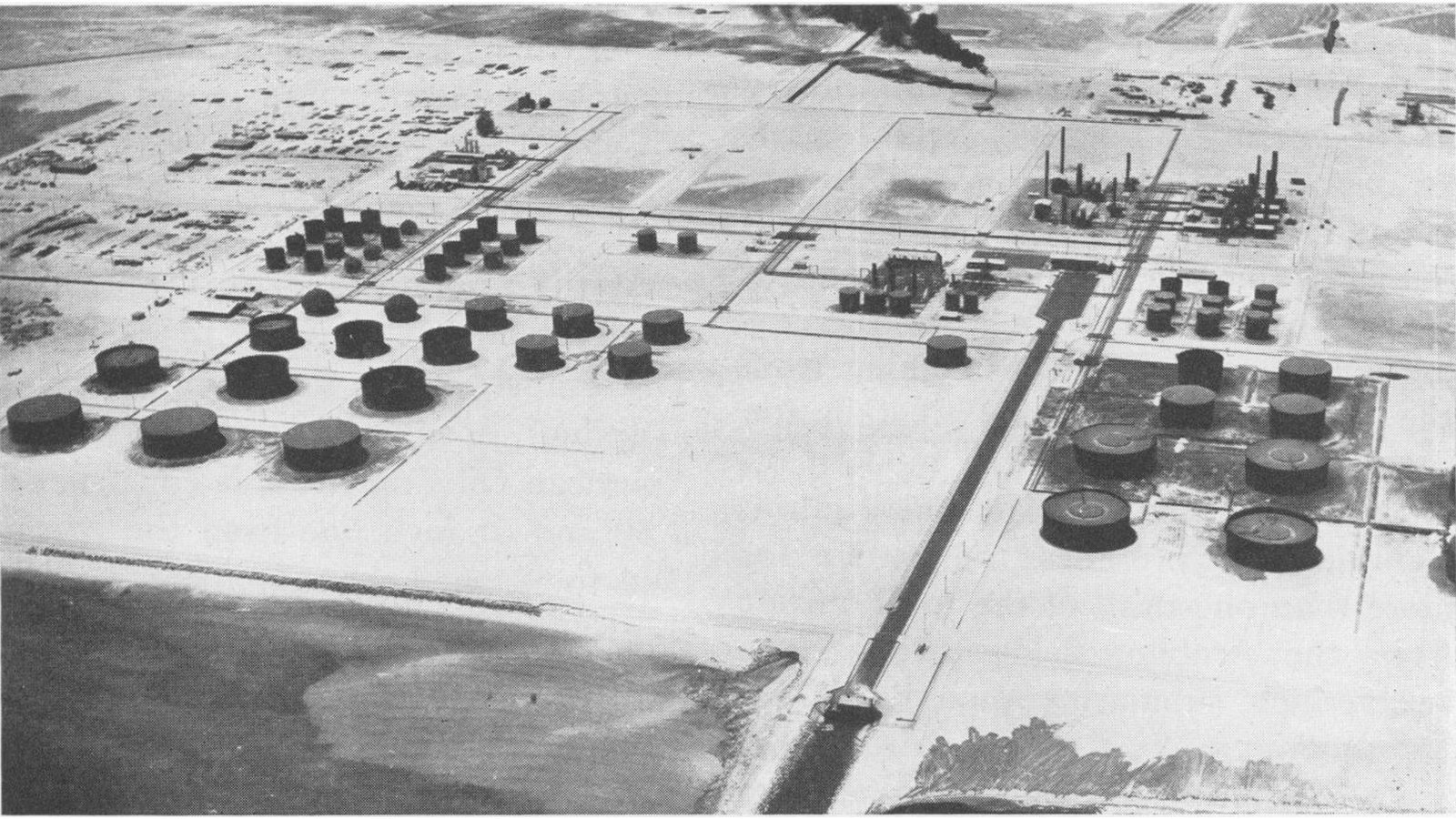

Yemen’s Houthis say a ballistic missile struck Ras Tanura, Saudi Arabia’s largest oil refinery, on Tuesday, Oct. 27, and set the complex on fire. They also claimed a direct hit on the Defense Ministry in Riyadh.
Saudi Arabia has confirmed neither. As of Thursday morning, we found no statement from the government or the state oil company, Aramco, saying the refinery was hit.
What Saudi officials did confirm is a night of interceptions over Riyadh and the oil-producing east, plus debris damage. The gap between those two accounts matters beyond the region. Ras Tanura sits beside Aramco’s biggest export terminal, and oil traders now price every claim against it.
What the Houthis claimed, and what Saudi officials confirmed
Houthi military spokesperson Yahya Saree listed five targets, Reuters reported. Besides the refinery and the ministry, he named military transport jets at bases in Najran and Khamis Mushait, and Abha airport. Saudi authorities did not immediately confirm any of them.
The Saudi-led coalition said it destroyed two ballistic missiles fired toward Riyadh. Saudi Civil Defense said falling shrapnel from those interceptions damaged a building, a construction site and a vehicle, the Associated Press reported.
Witnesses counted at least four explosions over the capital. The AP said it was unclear whether they were impacts or interceptions. It could not verify the Defense Ministry claim.
In the east, coalition spokesman Major General Turki al-Maliki said air defenses stopped three ballistic missiles aimed at the Eastern Province. They also downed four drones headed south, with no casualties, Al Jazeera reported. The AP noted he offered no evidence.
The only account of damage near Ras Tanura came secondhand. Bloomberg, citing a person familiar with the matter, reported that Saudi Arabia had contained a fire near the site’s terminal. Nobody has said publicly whether that fire came from a missile, from interception debris or from something else.
Why Ras Tanura is a target that moves markets
Ras Tanura can process 550,000 barrels a day. It supplies diesel and other transport fuels to buyers in Europe, Bloomberg reported in March. Next to it is Aramco’s largest export terminal for crude and refined products, with tanks, berths and offshore loading points.
The site has been hit before in this war. On March 2, two days after US and Israeli strikes on Iran began, a drone attack forced a precautionary shutdown. The Saudi Press Agency said debris from two intercepted drones caused a “limited” fire that was “immediately contained.” Europe’s benchmark diesel futures jumped more than 20% that day.
Ras Tanura’s location makes it more exposed now. It sits on the Gulf coast, on the inside of the Strait of Hormuz. On Tuesday, Iran’s navy said the strait stays closed to ships that don’t coordinate passage with its forces, the AP reported.
Saudi Arabia’s workaround has been to pump crude west. The East-West pipeline from Abqaiq to the Red Sea port of Yanbu has a nominal capacity of 7 million barrels a day. Yanbu exports averaged 4.4 million barrels a day in late March, Bloomberg reported. Even at the target of 5 million, it estimated, Saudi crude exports would stay about 2 million barrels a day below prewar levels.
The Houthis now threaten both of Saudi Arabia’s exits
That Red Sea route is the reason the Houthis matter so much to Riyadh. Fighting escalated in July after an airstrike hit Sanaa International Airport. Yemen’s Saudi-backed government said it carried out the strike. The Houthis responded with a “blockade for blockade” and an embargo on Saudi shipping in the Red Sea, The National reported.
So the group now claims reach over both outlets. It threatens Gulf facilities such as Ras Tanura and the Red Sea shipping lane that Yanbu depends on. That is why an unconfirmed claim about one refinery can lift prices, even before anyone confirms a hit.
The attacks have also become deadlier. A Houthi strike on Riyadh’s main airport this month killed at least 13 people and wounded more than 300, Al Jazeera reported.
The coalition says it struck back inside Yemen. It reports destroying five missile storage tunnels, four launchers and a depot. The fighting has broken the UN-brokered truce of 2022, according to Reuters.
What the claim means for US fuel prices
Oil rose on the Ras Tanura claim, but not by much. Brent crude climbed about 1.3% to around $115 a barrel early Wednesday, recovering part of Tuesday’s drop of nearly $2, Reuters reported. The modest move suggests traders are treating the claim as unconfirmed, not as lost supply.
At the pump, the national average for regular gasoline was $4.269 a gallon on Oct. 26, according to the Energy Information Administration. That’s down 1.5 cents from the week before but $1.23 higher than a year ago. Diesel averaged $6.352, up $2.63 from a year earlier.
Diesel is the number to watch if damage is ever confirmed. Ras Tanura’s output leans toward diesel and other transport fuels, so a lasting outage would matter most to diesel buyers. We broke down who profits from today’s gas prices last week.
For Americans in the kingdom, the warnings already in place still apply. The State Department last week ordered non-emergency staff to leave Saudi Arabia. Earlier this month the US Embassy urged “extreme caution” at all major Saudi airports, CBS News reported. Delta has postponed its planned Atlanta-Riyadh flights to March 2027.
Talks in Tehran ended without a deal
The missiles flew hours after a meeting in Tehran on Monday. Saudi Defense Minister Prince Khalid bin Salman led his country’s delegation. Pakistan’s army chief, Field Marshal Asim Munir, and Turkish intelligence chief Ibrahim Kalin joined him. They met Iranian President Masoud Pezeshkian and security chief Mohsen Rezaei.
The three visiting countries signed the Makkah defense pact in August.
The talks produced no agreement, The National reported, citing regional sources. Iran told the visitors it lacked the influence to make the Houthis stop attacking Saudi Arabia. The Houthis’ own condition hasn’t changed, a source in Tehran told the paper: Riyadh must first lift its air blockade on Yemen.
Iranian state media said the four countries agreed to keep talking. A source connected to Tehran told The National that a second round could be held soon, possibly in Turkey.