

Saudi Arabia offered Yemen’s Houthis $1 billion, routed through Iran, to stop attacking the kingdom, the Israeli newspaper Israel Hayom reported on Monday. The paper cited unnamed diplomatic sources in the Gulf. Riyadh has not confirmed the offer, and we found no other outlet that has independently matched it.
The figure sounds like a payoff to a group that is firing at Saudi cities. The history suggests something more specific. Saudi money for Yemen was already central to a 2023 UN-backed peace plan, and Washington is part of the reason that plan stalled.
What Israel Hayom reported, and what Riyadh said
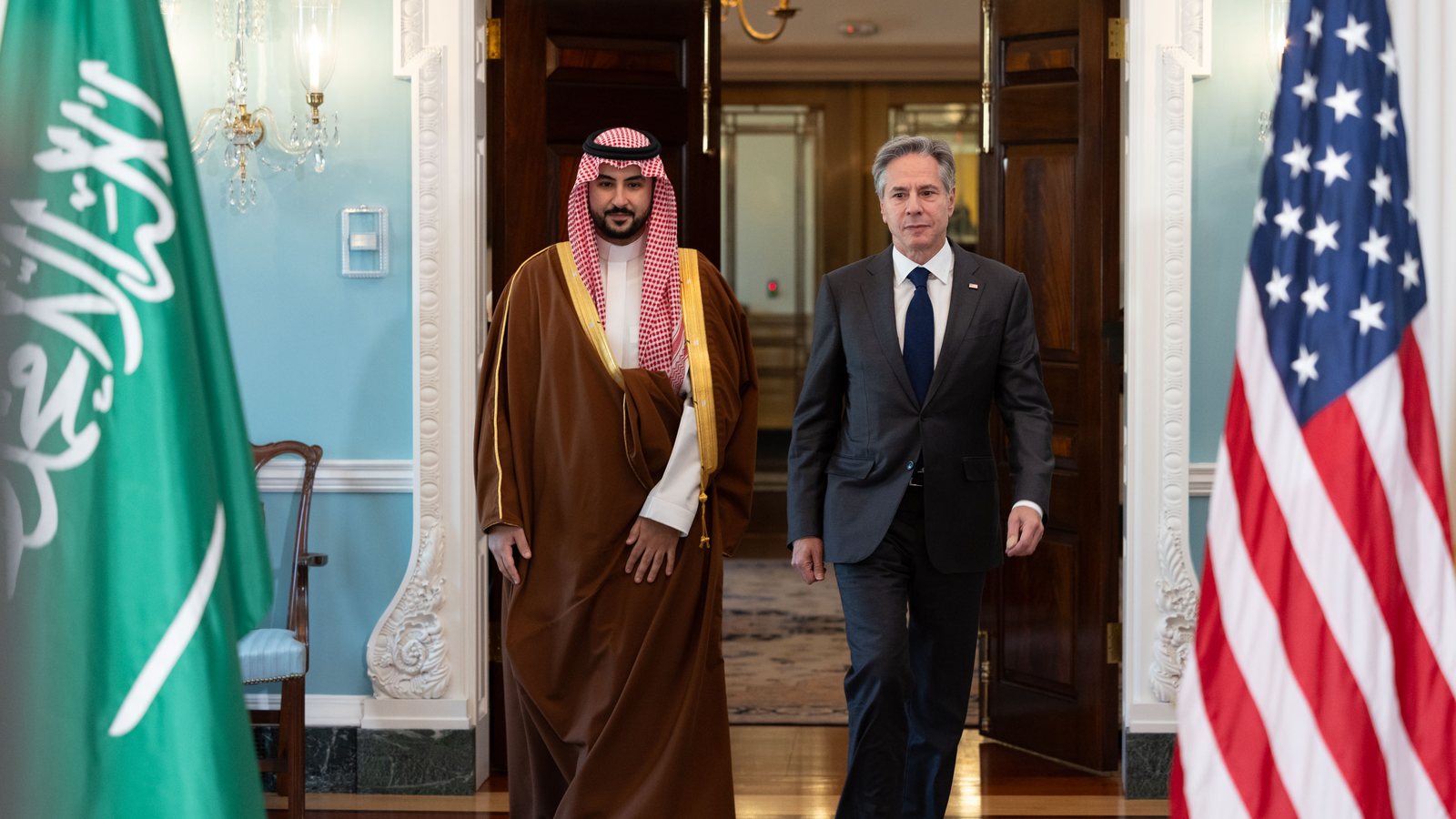
According to Israel Hayom’s report, Saudi Defense Minister Prince Khalid bin Salman went to Tehran on Monday partly to negotiate the arrangement. Iran would pass the money to the Houthis in return for a ceasefire.
One source told the paper the prince brought the cash with him on his Hercules military transport plane. It is not clear whether any money changed hands, Antiwar.com noted in its summary of the report.
A Saudi official quoted by the paper did not confirm any transfer. The official said the dispute with the Houthis is partly about a 2023 understanding that was never carried out.
Riyadh’s public line mentions no money. Raed Krimly, a senior Foreign Ministry official, said on X that the trip was part of “continuing efforts to de-escalate tensions,” Kuwait’s state news agency reported. He said it aimed to encourage dialogue and diplomatic solutions.
The money traces back to a 2023 UN deal
That 2023 understanding is on the record. On Dec. 23, 2023, UN envoy Hans Grundberg announced that the Yemeni government and the Houthis had committed to steps toward a nationwide ceasefire, according to his office.
The roadmap he planned would pay all public sector salaries and resume oil exports. It would also reopen roads in Taiz and ease restrictions on Sanaa’s airport and the port of Hudaydah. Grundberg thanked Saudi Arabia and Oman for their roles in getting there.
The salaries were the expensive part. Saudi Arabia would have paid at least $1.5 billion toward civil servants’ wages in Houthi-held areas, Bloomberg reported in June 2024, citing a person involved in the talks.
So $1 billion would not be a new kind of payment. It is less than the salary money already on the table three years ago. If the report is accurate, Riyadh would be reviving part of that plan.
The Houthis have accused the kingdom of failing to honor those understandings, Israel Hayom reported.
Riyadh also has more reason to want quiet than it did in 2023. Fighting resumed in July after an airstrike hit Sanaa International Airport, which Yemen’s Saudi-backed government said it carried out. The Houthis answered with an embargo on Saudi shipping in the Red Sea, The National reported.
That route matters because the Iran war has disrupted tanker traffic through Hormuz, pushing Saudi oil exports to the Red Sea. Earlier this month, a Houthi strike on Riyadh’s main airport killed at least 13 people and wounded more than 300, Al Jazeera reported.
Why Washington sits in the middle of any deal
The 2023 plan stalled once the Houthis began attacking ships in the Red Sea. In June 2024, US officials told the parties, including Riyadh, that key parts of the plan had to wait, Bloomberg reported. They could not go ahead until the attacks stopped.
The barrier is higher now. The State Department designated the Houthis, formally Ansarallah, a Foreign Terrorist Organization in a notice that took effect on March 5, 2025. The group is still on the department’s current list. Neither Riyadh nor Washington has said how a payment to the group would square with that listing.
Iran, for its part, is trying to bring the US into the talks. At Monday’s meeting, Tehran asked Saudi Arabia, Pakistan and Turkey to use their ties with Washington, The National reported. It wants the US to accept a two-week regional pause in fighting. In return, Iran would let talks resume and gradually reopen the Strait of Hormuz.
President Trump has kept his options open on Yemen. On Oct. 13 he posted that the Houthis were “behaving very badly.” He would not say whether the US would join the Saudi campaign, CBS News reported.
What Iran says it can and can’t deliver
The Tehran meeting brought together the three countries of the Makkah defense pact, signed in August. Pakistan’s army chief, Field Marshal Asim Munir, and Turkish intelligence chief Ibrahim Kalin joined the Saudi prince. They met Iranian President Masoud Pezeshkian and Mohsen Rezaei, secretary of Iran’s Supreme National Security Council.
The visitors asked Iran to get the Houthis to stop attacking Saudi Arabia. Iran said it lacked the influence to do that, according to The National. The paper noted that Iran is the group’s main outside backer. It cited Wall Street Journal reporting on Iranian training and targeting help.
The Houthis’ condition is unchanged, a source in Tehran told The National. Riyadh must lift its air blockade on Yemen before the fighting ends. A Yemeni source said Iran also suggested that any final deal with the Houthis be negotiated in Sanaa.
Hours after the talks ended, the Saudi-led coalition said it intercepted three ballistic missiles and four drones launched from Yemen. The next day the Houthis claimed hits on Saudi Arabia’s largest oil refinery, Ras Tanura, and the Defense Ministry in Riyadh. Saudi Arabia has not confirmed either.
Talks are set to continue, without a deal so far
Rezaei called the discussions “very good” on Iranian state television. Regional sources told The National that the meeting made no clear progress. Iranian state media said the four countries agreed to keep talking.
The Houthis have not publicly addressed the $1 billion report, as far as we could find. A source connected to Tehran told The National that a second round of talks could come soon, possibly in Turkey.