
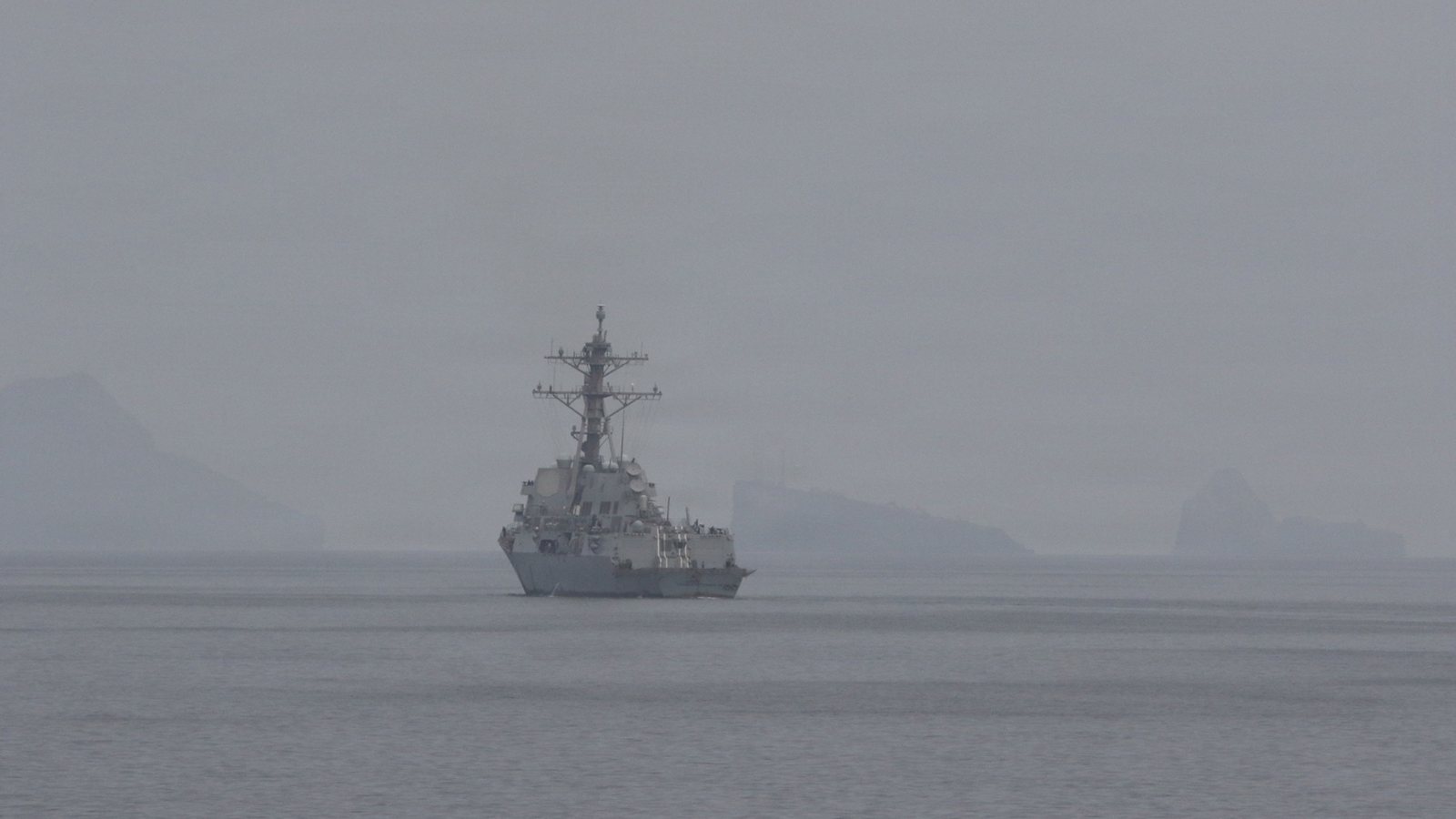

The US military says its forces have helped Gulf countries export more than 1.5 billion barrels of crude through the Strait of Hormuz “since summer.” It is the biggest number yet in Central Command’s running tally of Hormuz oil shipments.
The figure covers months, not days. Before the war with Iran, about 20 million barrels of oil a day moved through the strait. At that pace, 1.5 billion barrels is roughly 75 days of normal traffic.
The military hasn’t said when its count began or what “assisting” a tanker involves. For Americans, the bigger question is whether the oil getting out will bring down gas prices. Federal forecasters say not soon.
What CENTCOM actually claimed
Central Command made the claim in a release on Sunday, October 25. Its commander, Adm. Brad Cooper, flew over the strait that day in an Army CH-47 Chinook, the release says.
The release says more than 3,000 commercial vessels have transited the strait “with support from CENTCOM forces” over the last six months. It says the main shipping lanes are clear of sea mines, which it blames on Iran’s Revolutionary Guard. And it says more than 95% of ships have passed safely “in recent months.”
“Today, primary transit routes in the Strait of Hormuz remain free and clear of Iranian sea mines,” Cooper said. He credited “incredible efforts by our people.”
The release names no operation for the shipping support. CENTCOM calls the war itself Operation Epic Fury in other releases. It doesn’t say whether “assisting” means close escorts, air cover, mine clearing or route guidance.
The tally keeps moving its starting line
Earlier updates used different time frames, so the totals are hard to compare. On August 21, CENTCOM counted about 1,300 vessels and more than 660 million barrels since early May, Gulf News reported.
On September 19, Cooper said in a video on X that US forces had helped move more than 1 billion barrels. That covered roughly two months and more than 2,000 ship transits, JNS reported.
Iran’s armed forces spokesman, Abolfazl Shekarchi, called that claim “false and ridiculous,” according to an IANS report citing Xinhua. We found no Iranian response to Sunday’s figure.
Take the two round numbers at face value, and about 500 million barrels went through in the 36 days after September 19. That’s roughly 14 million barrels a day, by our calculation. Independent tracking shows less, as the next section explains. CENTCOM hasn’t published its method, so the gap could come from how it counts ships, cargo transfers or start dates.
The visit’s date is also unclear. CENTCOM’s own photos, now on Wikimedia Commons, date Cooper’s meeting with mine-clearance Marines to October 23. Maritime Executive questioned the timing too. It matched a tanker in the photos to a ship it placed off Sri Lanka on October 24.
1.5 billion barrels against the prewar baseline
The best yardstick is the Energy Information Administration’s estimate of normal traffic. Oil flow through the strait averaged 20 million barrels a day in 2024, EIA says. That was about a fifth of world petroleum use.
EIA’s figure counts crude and refined fuels together, while CENTCOM counts only crude. Even so, the comparison shows the scale. The 1.5 billion barrels would have taken about 75 days to pass in a normal year. CENTCOM’s count runs for three to five months, depending on when “summer” began.
The war cut traffic far deeper than that. Shipments through the strait averaged 4.9 million barrels a day from April through June, EIA estimated in August. In the last three months of 2025, they averaged 21.6 million.
Gulf crude is flowing again, but 40% skips the strait
Exports have recovered since then, largely by going around Hormuz. Gulf crude exports excluding Iran hit at least 16.5 million barrels a day in September, according to ship-tracking firm Kpler. That matches prewar levels.
Only 9.9 million barrels a day of that crossed the strait, Kpler found. Most of it moved on shuttle tankers that hand cargo to bigger ships offshore. About 40% of the region’s crude now leaves by pipeline, up from 17% before the war. Those pipelines run to Saudi Arabia’s Red Sea coast and the UAE port of Fujairah.
“The volume recovered. The route did not,” Kpler’s analysis says.
Iran is the exception. It exported about 1.7 million barrels a day before the war, Kpler says. Its shipments have stayed near zero since the US reimposed its blockade of Iranian ports in July, which tightened over the summer.
The bypass routes are targets too. Attacks on Saudi Arabia’s East-West pipeline in September briefly halted more than 5 million barrels a day of Red Sea exports, EIA said. Brent crude hit $131 a barrel on September 15, and some Saudi oil shifted back through Hormuz.
Why gas prices haven’t followed the oil
The US buys little Gulf oil directly. In 2024 it imported about 500,000 barrels a day of crude from Persian Gulf countries, EIA says. That was about 7% of its crude imports. What reaches American drivers is the world price, and it still reflects the Gulf oil that’s missing.
EIA’s October Short-Term Energy Outlook estimates that 4.8 million barrels a day of Gulf output, including Iran’s, was still shut in during September. That’s down from 10.9 million at the peak in May.
EIA assumes “convoys through the Strait of Hormuz” and bypass routes will keep exports rising. Even so, it raised its Brent forecast to $105 a barrel for the last three months of 2026.
Regular gasoline averaged $4.35 a gallon in September, the outlook says. EIA expects October to be about the same, then a slow decline to just under $3.60 on average next year. We broke down who gains from today’s $4.29 gallon on Sunday.
The risk to that forecast is the strait itself. Last week Iran claimed it hit seven tankers, a claim we could not confirm. EIA’s next weekly gas price survey, due Tuesday, October 27, will be the first to reflect last week’s jump in crude.