
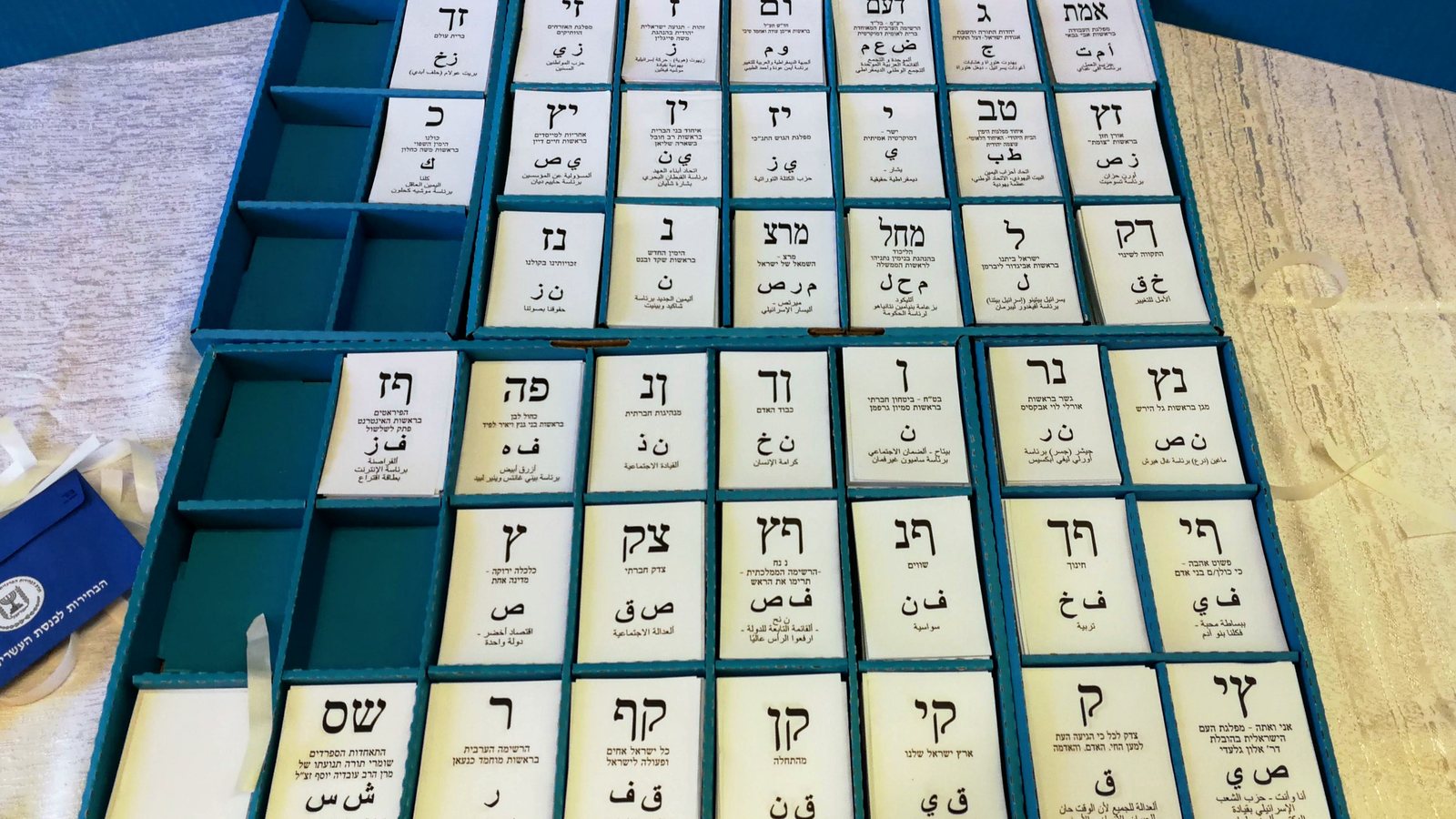

Benjamin Netanyahu’s Likud party says Arab parties stole Israel’s Oct. 27 election. Police rejected that Israel election fraud claim on Thursday morning. They said they had “no investigative or intelligence evidence to support the claims,” The Jerusalem Post reported.
That isn’t the whole picture, though. Two separate investigations are real.
Police arrested Bedouin men in the Negev over an alleged scheme to buy votes for the Arab party Ra’am. And the elections chief has asked the Shin Bet security service to look into suspected foreign funding. Neither has proved anything, and neither supports the claim that the result was stolen.
The distinction matters because of the math. With about 90% of votes counted, Netanyahu’s bloc had 53 seats and Gadi Eisenkot’s had 48, The Times of Israel reported. Both are short of the 61 needed to govern. Arab-led parties had a record 19, so any government that leans on them will face questions about how those seats were won.
What Likud alleged, and what it has filed
Likud’s Wednesday statement was blunt: “The elections in the State of Israel were stolen by Arab parties.” It cited “serious criminal offenses involving bribery, threats, violence, forgery,” The Jerusalem Post reported.
The party’s list began with thousands of cash envelopes handed out with Ra’am ballot slips. It also alleged threats against polling officials and voters entering booths together. Other items were double identities, envelope counts that didn’t match voter rolls, and banned voter-mobilization software.
Likud said it was handing “hundreds of testimonies and items of evidence” to the police, the Shin Bet and the Central Elections Committee, JFeed reported. Likud official Sagi Keizler said the party filed 1,183 complaints on election day. Those included 38 alleged bribery cases and 115 suspected double votes, Ynet reported. He also said “neither the police nor the Elections Committee called a single witness.”
The committee has opened a review, which it says it runs after every election. “The committee has received Likud’s complaint and is examining it as part of this operation,” it said, according to JFeed.
Why police say the numbers point the other way
The police went further than declining to confirm. They said election day “passed with a small number of unusual incidents” concerning electoral integrity. That was not unusual compared with past elections, The Jerusalem Post reported.
Police data backs that up. By Tuesday night, police had logged 48 complaints of fraud and impersonation nationwide, JFeed reported. The previous election drew nearly 80. That is a drop of about 40%, in a vote where JFeed says Arab turnout hit a record 80%.
A complaint isn’t evidence of fraud. Likud’s 1,183 complaints are its own count, and police decide what amounts to a crime. So far they say nothing they hold supports the “stolen election” claim.
The Negev vote-buying case is real, and small
The case Likud points to began before polls opened. Police arrested three men from Bedouin communities in southern Israel overnight, The Times of Israel reported. They are suspected of planning to pay people to vote for Ra’am. Searches of their homes turned up envelopes holding tens of thousands of shekels, some with Ra’am’s logo, according to Ynet.
A court freed one of the three, a doctor, over police objections. It kept the other two in custody for five more days. All three deny wrongdoing.
One said the money was for transportation, and another called it charity from the Islamic Movement, Ynet reported. Police made several more arrests on Thursday, but they have not accused Ra’am’s leaders.
Ra’am called them “sham arrests that aim to thwart Ra’am and bring down voting in Arab society,” The Times of Israel reported. The party said police picked up its activists at home, “not near polling stations or voters.” It also said its ballot slips went missing or were damaged at several polling stations, according to Ynet.
Tens of thousands of shekels is a serious allegation for the men charged. It isn’t a stolen election. Each Knesset seat is worth roughly 40,000 votes, The Times of Israel noted, and Ra’am stood at seven seats.
A separate Shin Bet probe into foreign money
The bigger development came from Justice Noam Sohlberg, who chairs the elections committee. In a letter dated Oct. 28, he asked Shin Bet chief David Zini to look into “serious suspicions” of “improper influence on the elections through foreign funding.” He wants findings within a week, citing deadlines for election appeals, i24NEWS reported.
Sohlberg acted after Zini briefed him on information described as “exceptionally grave.” He wrote that he “cannot attest to the nature of the above suspicions,” but said there is a duty to investigate. He added that the tip did not come from a political party and was not a response to Likud.
Ynet reported that the suspected scheme appears to involve Qatar funneling tens of millions of shekels. Committee officials called the intelligence “solid,” Ynet said. Sohlberg’s letter names no country, and the Shin Bet declined to comment.
Politicians moved fast anyway. Finance Minister Bezalel Smotrich said Arab party leaders “must be questioned by the Shin Bet,” i24NEWS reported. National Security Minister Itamar Ben-Gvir went further and called for their arrest. Eisenkot said the state “must rigorously safeguard the integrity of the elections.” His Yashar party warned against using the probe to delay the new Knesset’s swearing-in, Ynet reported.
For Washington, Qatar is no side player. Iranian strikes this year damaged US bases there and in seven other countries, according to Breaking Defense. A finding that Qatar tried to sway Israel’s vote would land in the middle of the US war with Iran.
Likud has made this claim before
This is the second time Netanyahu’s party has called an election stolen through Arab voter fraud. In 2019, he said of that April’s vote: “They stole the last election thanks to massive voter fraud at the polls.” The Times of Israel checked that claim at the time.
The record didn’t support him. Likud’s material from 140 Arab-community polling stations showed threats against its poll watchers, a law enforcement official said. But it did not amount to voter fraud. The elections committee found no significant fraud, and one known case of fake votes, in Kisra-Sumei, had helped Likud.
Our profile of Gadi Eisenkot covers the man Netanyahu is trying to stop. Our guide to the results explains how President Isaac Herzog picks who tries first to form a government. That is where these claims now bite. If one side calls the other’s partners illegitimate, coalition talks get harder, whatever the investigations find.
The full count was due Thursday, including about 430,000 to 480,000 double-envelope ballots from soldiers and others. Official results are expected by Nov. 4, The Times of Israel reported, around the same day Sohlberg’s deadline for the Shin Bet runs out.