
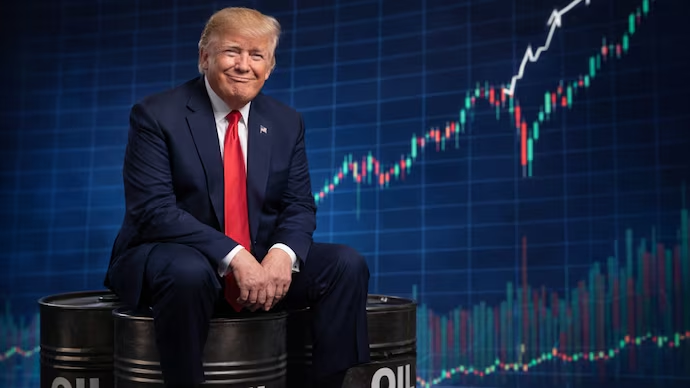
A massive $580 million wager in global oil markets, placed just minutes before Donald Trump announced “productive” talks with Iran, has triggered a wave of scrutiny across Wall Street and beyond.
The timing was precise. The profits are immediate. The explanation? Still unclear.
What Happened With the $580 Million Oil Bet?
According to multiple reports citing Financial Times data, traders executed a large batch of oil futures trades just before a major geopolitical announcement.
The Key Timeline
- 6:49–6:50 a.m. (New York time):
Around 6,200 futures contracts tied to Brent and WTI crude were traded - Approximate value: $580 million
- 7:04 a.m.:
Donald Trump posts about “productive” Iran talks and a pause in strikes
Within minutes:
- Oil prices dropped sharply
- Stock futures, including S&P 500, moved higher
The trades were effectively a bet that tensions would ease, and that oil prices would fall. That’s exactly what happened.
Why Is This Raising Insider Trading Concerns?
It’s not just the size of the trade. It’s the precision.
What Makes It Unusual
- The trades happened in a very narrow time window (about one minute)
- There was no scheduled economic data or event at that time
- The positioning matched the exact market reaction that followed
Market participants described the move as “abnormal,” noting that such aggressive positioning is rare without a clear trigger.
Markets move on information. When trades anticipate major news with near-perfect timing, questions about access to that information naturally follow.
Does This Mean Insider Trading Occurred?
Not necessarily. And that distinction is important.
What We Know
- No evidence has been presented proving illegal activity
- It’s unclear whether the trades came from:
- A single entity
- Multiple coordinated players
What Insider Trading Would Require
For this to qualify as insider trading under U.S. law:
- Traders must have used material, non-public information
- That information must have been obtained improperly
So far, there’s no confirmation of either.
What the White House Says
Officials have strongly denied any wrongdoing, calling the allegations:
- “Baseless”
- Unsupported by evidence
Suspicion alone isn’t proof. Financial markets often produce trades that look prescient in hindsight.
Could There Be Other Explanations?
Yes—and some are more common than they seem.
1. Smart Money Anticipation
Experienced traders often:
- Monitor geopolitical signals
- Track military and diplomatic patterns
- Position ahead of expected announcements
In this case:
- Rising speculation about de-escalation
- Prior signals from policymakers
- Market positioning trends
…could have led traders to bet on falling oil prices.
2. Algorithmic Trading
Modern markets are heavily driven by algorithms that:
- Scan news, sentiment, and patterns
- Execute trades in milliseconds
It’s possible that:
- Early signals triggered automated strategies
- Multiple systems reacted simultaneously
3. Coincidence—But Rare
Markets do occasionally produce:
- Well-timed large trades
- Positions that align perfectly with subsequent events
But the scale and timing here make coincidence a harder sell for many observers.
The line between informed speculation and privileged information is often thin—and difficult to prove.
Why Oil Markets React So Strongly to Iran News
To understand the trade, you need to understand the stakes.
The Strait of Hormuz Factor
- About 20% of global oil supply passes through this route
- Any conflict involving Iran can:
- Disrupt supply
- Spike prices
- Trigger volatility
When Trump hinted at easing tensions:
- Markets priced in lower supply risk
- Oil prices fell immediately
A Pattern of “Well-Timed” Trades?
This isn’t the first time markets have raised eyebrows around geopolitical events.
Recent Trends
- Similar trading patterns have been observed:
- Ahead of Iran-related developments
- Around Venezuela policy shifts
- Activity has also been noted on prediction platforms
Some analysts see a broader pattern of:
- Highly reactive markets
- Increasing overlap between politics and trading
As geopolitical events move markets faster than ever, the incentive to anticipate—or access—information grows.
What Regulators Might Look At
While no investigation has been confirmed, cases like this typically draw attention from regulators.
Potential Areas of Scrutiny
- Trade origin: Who placed the orders?
- Timing: Were there unusual communication patterns?
- Market behavior: Did other assets move simultaneously?
Regulators in the U.S. and globally may analyze:
- Trading logs
- Communication records
- Institutional activity
Even the perception of unfair advantage can undermine trust in financial markets.
What This Means for Investors
For everyday investors, this episode highlights a broader reality.
Key Takeaways
- Markets are increasingly driven by geopolitical signals
- Large institutional players can move faster—and earlier
- Transparency remains a critical concern
Practical Insight
- Expect volatility around major political events
- Diversification becomes more important in uncertain environments
- Short-term market moves may not always reflect fundamentals
TL;DR
- Traders placed a $580 million oil bet minutes before Trump’s Iran post
- The timing and size have raised insider trading concerns
- No evidence of wrongdoing has been confirmed
- Oil prices fell and stocks rose immediately after the announcement
- The case highlights growing scrutiny over market transparency in geopolitical crises