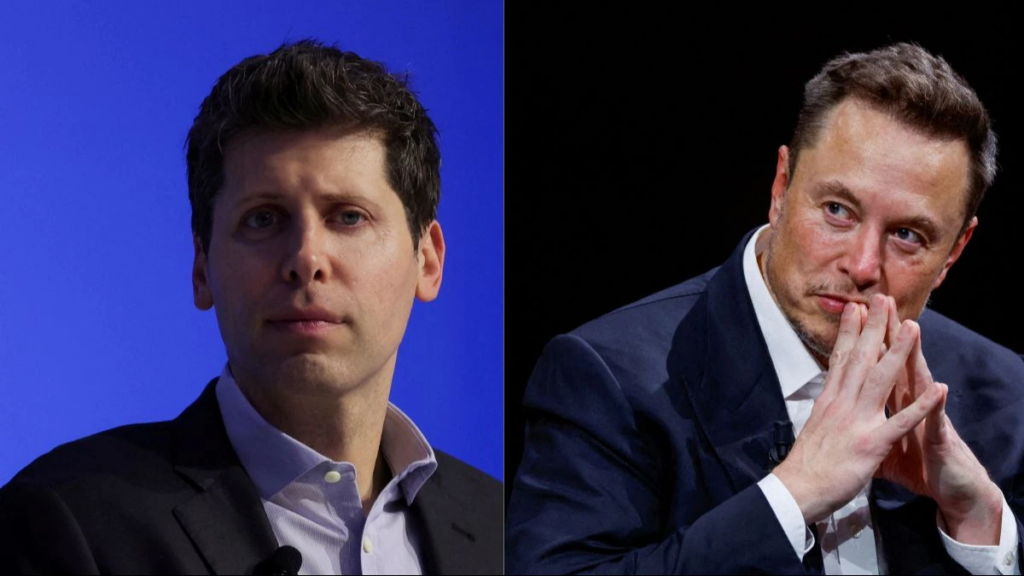
The latest Sam Altman controversy has pulled back the curtain on a deeper issue facing the artificial intelligence industry: trust. When Elon Musk publicly signaled agreement with explosive allegations against Sam Altman, it wasn’t just another Silicon Valley feud. It became a referendum on who should control technologies powerful enough to reshape economies, politics, and daily life.
At the center of the storm is a detailed investigation by Ronan Farrow published in The New Yorker, raising questions about Altman’s leadership, credibility, and the future direction of OpenAI.
What are the allegations in the Sam Altman controversy?
The reporting draws on interviews with more than 100 individuals and internal documents, painting a complex and deeply contested portrait of Altman.
Claims about honesty and leadership behavior
According to the report, several former colleagues described Altman as:
- A “pathological liar”
- Someone who exaggerated achievements and misled stakeholders
- A leader who blurred facts when communicating with board members
Specific examples cited include:
- Misrepresenting whether certain AI features had received safety approval
- Providing conflicting information about internal decisions to executives
- Allegedly overstating facts in major business negotiations
These claims, if accurate, raise serious concerns about transparency in a field where oversight is already limited.
The 2023 OpenAI firing and return
The controversy also revisits Altman’s dramatic ouster from OpenAI in 2023.
What happened?
- He was removed by the board citing a “lack of candor”
- Within days, he returned as CEO after internal and investor pressure
- The board that fired him was largely replaced
The episode has since become a case study in corporate power dynamics. Critics argue it showed how quickly governance structures can collapse when financial and strategic interests align behind a single leader.
Why did Elon Musk weigh in?
Elon Musk, who co-founded OpenAI but later split from the organization, amplified the controversy by sharing Farrow’s interview and warning that Altman should not be trusted with “superpowerful AI.”
Musk’s broader concerns about AI control
Musk’s reaction fits into his long-standing narrative:
- AI poses existential risks if mismanaged
- Leadership integrity is critical in high-stakes tech
- Corporate incentives may conflict with safety
His critique carries weight not just because of his influence, but because of his early involvement in OpenAI’s founding vision as a nonprofit focused on safe AI development.
What does the New Yorker investigation actually claim?
The article goes beyond personality critiques and attempts to establish patterns across Altman’s career.
A history of disputed conduct
From his early startup days at Loopt to his leadership at Y Combinator, the report alleges:
- Employees raised concerns about transparency
- Investors questioned conflicting roles and loyalties
- Colleagues accused him of shaping narratives to his advantage
Paul Graham was cited in the report as expressing frustration over alleged inconsistencies.
AI safety versus business expansion
One of the most consequential claims is that Altman:
- Shifted OpenAI away from its original nonprofit safety mission
- Prioritized rapid commercialization and global deals
- Pursued partnerships with geopolitically sensitive regions
Critics argue this represents a fundamental tension in AI development: safety versus scale.
Are the allegations proven?
This is where the story demands careful reading.
- Many claims are based on anonymous sources or internal notes
- Some allegations are disputed or denied by Altman
- No formal legal findings or regulatory rulings confirm wrongdoing
Even the investigation itself stops short of portraying Altman as outright malicious. Instead, it describes a leader with extraordinary ambition whose approach may strain trust.
This distinction matters. Allegations shape perception, but they are not verdicts.
Why this controversy matters beyond one person
The Sam Altman controversy is less about individual behavior and more about structural risk in AI governance.
The stakes are unusually high
Artificial general intelligence, if achieved, could:
- Automate vast sectors of the economy
- Influence geopolitical power balances
- Shape information ecosystems at scale
That makes leadership trust not just a corporate issue, but a societal one.
A fragile governance model
OpenAI’s structure was designed to balance:
- Innovation speed
- Ethical safeguards
- Public accountability
The 2023 leadership crisis exposed how fragile that balance can be.
A broader industry pattern
This isn’t isolated. Across Silicon Valley:
- Founders often retain outsized control
- Boards may struggle to enforce accountability
- Competitive pressure rewards speed over caution
The Altman episode simply makes those tensions visible.
How has Sam Altman responded?
Sam Altman has denied allegations of dishonesty and framed criticism as a byproduct of his leadership style.
His key points:
- He does not believe he lied to colleagues or stakeholders
- Conflicts may stem from communication style, not intent
- OpenAI continues to invest in safety, even if priorities evolved
He also acknowledged that personality traits are difficult to change, suggesting that some criticism reflects interpersonal friction rather than ethical failure.
What should readers watch next?
This story is still unfolding, and several developments could shape its trajectory:
Potential pressure points
- Regulatory scrutiny in the US and Europe
- Internal governance reforms at OpenAI
- Investor sentiment and funding conditions
- Competitive moves from rivals like Anthropic
Signals that matter
Watch for:
- Independent audits or reports
- Board restructuring or new oversight mechanisms
- Changes in AI safety commitments
- Public statements from key insiders
These indicators will reveal whether the controversy leads to meaningful change or fades into Silicon Valley’s long history of founder disputes.
TL;DR
- A major investigation has raised allegations about Sam Altman’s honesty and leadership
- Elon Musk amplified the controversy, questioning Altman’s suitability to lead advanced AI
- The claims remain unproven but highlight serious governance concerns
- The real issue is bigger than one CEO: it’s about trust in those building powerful AI systems