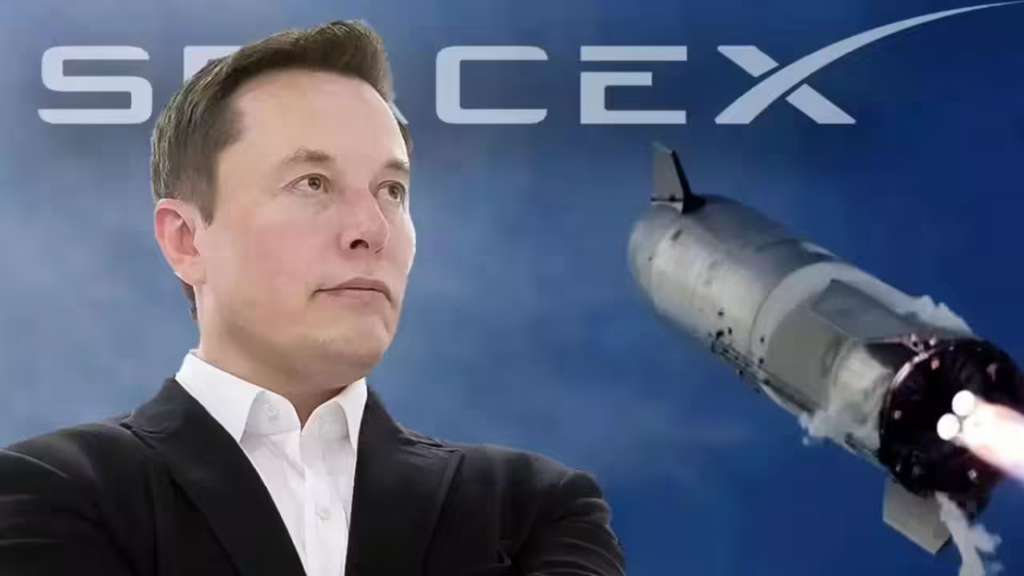
The private rocket giant SpaceX may be preparing for a financial liftoff that rivals its orbital ones. Reports suggest the company has confidentially filed for an initial public offering that could value it near $2 trillion and raise as much as $75 billion, potentially rewriting IPO history.
At that altitude, SpaceX would hover alongside giants like Apple, Microsoft, and Amazon, while possibly outpacing Tesla and Meta Platforms.
Filing signals possible June debut
According to reports, SpaceX submitted a confidential filing with the U.S. Securities and Exchange Commission on April 1. If regulatory winds stay favorable, the company could go public as early as June.
Confidential filings allow companies to quietly test investor appetite before revealing full financial details. Think of it as a dress rehearsal before stepping onto Wall Street’s brightest stage.
Could become the biggest IPO ever
The scale being discussed is staggering.
- Expected raise: $50 billion to $75 billion
- Potential valuation: up to $2 trillion
That would eclipse the record set by Saudi Aramco, whose 2019 IPO raised about $29.4 billion at a $1.7 trillion valuation.
If achieved, SpaceX would not just break records, it would stretch them like a rocket plume across the sky.
Starlink is the real engine of revenue
While rockets grab headlines, it is Starlink that fuels the business.
Why Starlink matters
- Contributes more than two-thirds of SpaceX revenue
- Provides satellite internet via low-Earth orbit
- Expanding into direct-to-cell connectivity
SpaceX is estimated to have generated $15 to $16 billion in revenue in 2025, with strong profitability driven largely by Starlink subscriptions.
A recent $19.6 billion deal with EchoStar aims to expand mobile connectivity directly from space, turning satellites into invisible cell towers orbiting Earth.
Rockets still power long-term ambition
SpaceX’s core identity still rests on rockets.
- Falcon 9 drives commercial and government launches
- Starship represents the future
Starship, designed for Mars missions and massive payload deployment, is central to future growth. Its success or delays could significantly shape investor sentiment.
xAI adds an artificial intelligence layer
SpaceX is also weaving in artificial intelligence through its connection with xAI, another venture led by Elon Musk.
The combined ecosystem is reportedly valued at around $1.25 trillion, blending:
- Satellite networks
- Launch infrastructure
- AI-driven services
This fusion hints at a future where data, connectivity, and computation orbit together.
Analysts see upside, but risks remain
Some analysts believe the company could trade at more than 90 times revenue, a valuation that demands near-flawless execution.
Key risks
- Delays in Starship development
- Regulatory hurdles
- Limited public financial transparency
- Market volatility after listing
Early investors may also sell shares post-IPO, which can create downward pressure in the short term.
A defining moment for space and markets
If the IPO proceeds as expected, SpaceX would transform from a private space pioneer into a public market titan. It would bring together rockets, satellites, and AI under one investable roof.
For investors, it is not just a company entering the market. It is an entire orbital economy asking to be priced.
TL;DR
SpaceX may launch an IPO valuing it near $2 trillion and raising up to $75 billion, making it the biggest listing ever. Starlink drives most revenue, while Starship and AI ambitions shape future growth. High rewards come with equally high risks tied to execution and market conditions.