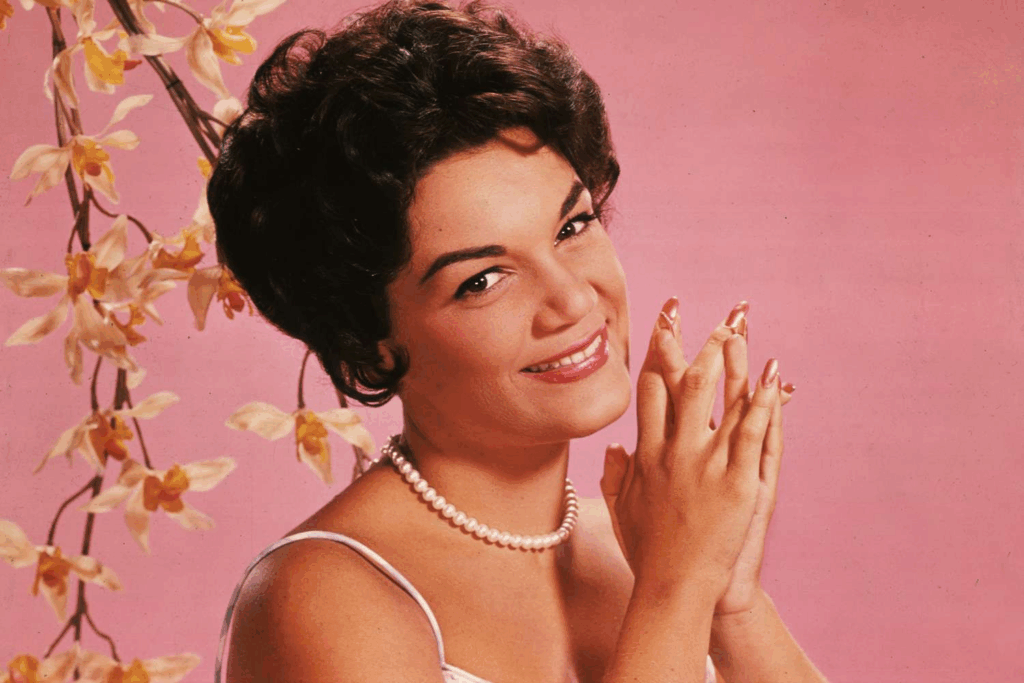
Who was Connie Francis and why does her legacy matter?
Connie Francis, the golden-voiced pop icon of the late 1950s and 1960s, passed away at the age of 87, according to a social media announcement by her close friend and copyright manager Ron Roberts. Best known for chart-toppers like “Who’s Sorry Now?” and “My Heart Has a Mind of Its Own,” Francis was more than just a singer—she was a trailblazer. She made history as the first solo female artist to top the Billboard Hot 100, paving the way for generations of women in music.
Her passing marks the end of a musical era, but her influence endures, as evidenced by the viral resurgence of her 1961 track “Pretty Little Baby” on TikTok and Instagram.
What made Connie Francis a pop pioneer?
Before female solo artists dominated the charts, Connie Francis broke barriers. In an era when the music industry was overwhelmingly male-dominated, Francis carved out a space for herself with a string of soulful, heartfelt ballads that resonated with listeners across age groups.
She rose to fame in 1958 with “Who’s Sorry Now?”—a song her father encouraged her to record. It became a surprise hit and catapulted her into stardom. Hits like “Stupid Cupid,” “Lipstick on Your Collar,” and “Don’t Break the Heart That Loves You” followed, solidifying her status as one of the defining voices of her time.
How did ‘Pretty Little Baby’ go viral six decades later?
In an unexpected twist, Francis’ 1961 song “Pretty Little Baby” experienced a resurgence thanks to Gen Z social media users. The dreamy, doo-wop inspired tune became a viral soundtrack for nostalgic and aesthetic video edits on TikTok and Instagram. By May 2025, the song had clocked over 2.4 million plays on Spotify alone, according to Billboard.
This kind of late-career revival isn’t uncommon in the streaming age, but Francis’ resurgence was unique in how seamlessly her vintage style fit into a modern aesthetic. Young creators weren’t just playing her song—they were embracing her mood, look, and sonic palette, introducing her music to audiences who hadn’t even been born when it first hit the airwaves.
What do we know about her final days?
While the exact cause of death hasn’t been made public, Francis had recently revealed on social media that she had been hospitalized in early July, undergoing tests due to severe pain. She was also recovering from hip treatment. Ron Roberts, her long-time friend and president of Concetta Records, announced her passing on Facebook, stating, “I know that Connie would approve that her fans are among the first to learn of this sad news.”
Fans and fellow musicians are now paying tribute online, sharing favorite songs and memories, further amplifying the lasting emotional connection her music created.
What set her apart from other pop stars of her time?
Francis was not just a chart-topper—she was a survivor. Her life was marked by both public acclaim and private struggles. She faced industry sexism, multiple health issues, and personal trauma, including a well-documented assault in 1974 that sidelined her career for years. Yet she remained resilient, returning to the stage and studio several times, most notably in the 1980s and 1990s.
In addition to English, she recorded songs in multiple languages, including Italian, German, and Hebrew—expanding her international appeal. Few American pop stars of her generation managed to bridge so many cultural divides through music.
What’s her legacy in today’s music world?
Artists like Adele, Lana Del Rey, and even Billie Eilish owe a debt—direct or indirect—to pioneers like Connie Francis. She demonstrated that emotional vulnerability could be a superpower in pop music, long before that became industry gospel.
In a music ecosystem now driven by algorithms, Francis’ ability to chart purely on the strength of vocal performance and songwriting offers a refreshing reminder of how artistry—when genuine—can stand the test of time.
Her viral moment in 2025 isn’t just a footnote. It’s a bookend that illustrates how digital culture can re-contextualize and re-celebrate analog icons. And in Connie Francis’ case, it was a fitting encore.