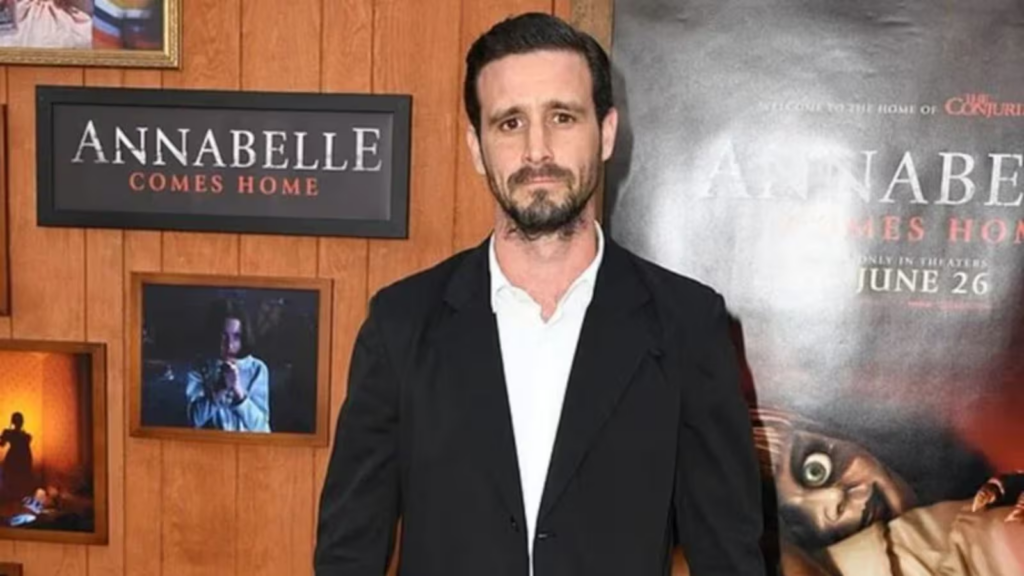
Actor James Ransone, widely respected for his intense performances in The Wire and It: Chapter Two, has died at the age of 46. The news has prompted an outpouring of grief from fans and colleagues who admired his ability to portray deeply flawed, emotionally complex characters.
Ransone’s death has also reopened conversations about mental health in the entertainment industry, particularly among character actors whose careers often unfold outside the spotlight.
What happened to James Ransone?
According to reports, James Ransone was found dead at his home in Los Angeles on Friday. The Los Angeles County Medical Examiner has ruled the cause of death as suicide. Police officials said there were no signs of foul play and no evidence suggesting third-party involvement.
The first reports were carried by outlets including TMZ, citing law enforcement sources. Authorities have not released further details, and no additional information has been made public so far.
In cases involving public figures, clarity from official agencies helps limit speculation. At this stage, investigators have confirmed their findings while maintaining privacy around personal circumstances.
If you or someone you know is struggling, help is available in the United States through the Suicide and Crisis Lifeline by calling or texting 988. International readers can refer to resources listed by the World Health Organization or local health authorities.
Why has James Ransone’s death affected fans so strongly?
Ransone built his career playing characters who felt uncomfortably real. He often portrayed men on the edge, shaped by economic pressure, trauma, or inner conflict. That honesty resonated deeply with audiences, particularly viewers who discovered him through prestige television and later through mainstream films.
Unlike many actors who rely on star personas, Ransone disappeared into his roles. For many fans, his performances felt personal, which explains the strong emotional response following news of his death.
Who was James Ransone?
Born in Baltimore in 1979, James Ransone studied acting at the Carver Center for Arts and Technology in Maryland. He began with small film and television roles before landing the part that defined his early career.
His breakout came as Chester “Ziggy” Sobotka in season two of The Wire, created by David Simon. Ziggy was a volatile dock worker struggling with failure, masculinity, and desperation. The character divided audiences, but Ransone’s performance was widely praised for its emotional fearlessness.
The role established him as an actor willing to take creative risks. He later collaborated again with Simon in the HBO miniseries Generation Kill, playing Marine Corporal Josh Ray Person.
How It: Chapter Two introduced him to a new audience
A younger generation of viewers came to know Ransone through It: Chapter Two, directed by Andy Muschietti. He played the adult version of Eddie Kaspbrak, a character defined by anxiety, loyalty, and quiet courage.
Ransone’s portrayal preserved the emotional continuity of the character while adding layers shaped by adulthood and trauma. Fans responded to his balance of vulnerability and humor, seeing Eddie as one of the film’s emotional anchors.
What were James Ransone’s most notable works?
Ransone’s career spanned independent cinema, prestige television, and studio films.
His film credits included Sinister, Sinister 2, Tangerine, Spike Lee’s remake of Oldboy, The Black Phone, and its sequel, which became his final film appearance.
On television, he appeared in Poker Face, Law and Order, Hawaii Five-0, SEAL Team, and The First.
What set him apart was consistency. Even in smaller roles, he brought emotional depth that elevated the material around him.
Did James Ransone talk about mental health struggles?
Yes. In past interviews, Ransone spoke openly about childhood trauma, substance addiction, and ongoing mental health challenges. He described acting as both a coping mechanism and a way to process difficult experiences.
This openness made him relatable to many fans, but it is important to note that public discussions about mental health do not explain or simplify the circumstances of a person’s death. They do, however, highlight the need for stronger support systems within creative industries.
For factual context, interviews published by outlets such as Variety or The Hollywood Reporter would be appropriate sources to reference here, along with research from organizations like the National Institutes of Health or the American Psychological Association.
How has the industry responded?
Following the news, tributes from fellow actors, directors, and fans spread quickly across social media. Many described Ransone as generous on set, deeply committed to his craft, and unafraid of portraying uncomfortable truths.
This would be a natural place to internally link to related coverage on mental health awareness in Hollywood or retrospectives on character actors who shaped modern television.
Who survives James Ransone?
James Ransone is survived by his wife, Jamie McPhee, and their two children. The family has not released a public statement.
Responsible coverage prioritizes confirmed information and respects the privacy of those grieving.
Why James Ransone’s legacy matters
James Ransone never chased easy roles. He chose characters shaped by failure, vulnerability, and contradiction. In doing so, he helped redefine what success looks like for character actors in modern film and television.
His work remains a reminder that quiet, emotionally honest performances can leave a lasting mark long after the final scene fades.
TL;DR
James Ransone has died at 46, with authorities ruling the death a suicide
No foul play has been reported
He was best known for The Wire and It: Chapter Two
Ransone had previously spoken openly about mental health struggles
He is survived by his wife and two children