
Quick Summary
- KPop Demon Hunters is Netflix’s most-watched film ever, with 236M views in 10 weeks.
- Its success stems from family-friendly animation, a viral soundtrack, and repeat viewing.
- Netflix and Sony are planning a sequel, spin-offs, and possibly a live-action version.
- The movie shows streaming platforms can produce true global blockbusters, rivaling theatrical releases.
Netflix Finally Has Its Own “Barbie” Moment
For years, Netflix has been chasing the kind of cultural impact that only the biggest theatrical blockbusters seem to command. It’s had plenty of hits—think Bird Box, Red Notice, Extraction—but none managed to dominate both viewing numbers and the cultural conversation at the same time. That changed with KPop Demon Hunters.
The animated film about a Korean girl group battling supernatural invaders has pulled off what no other Netflix Original has: becoming a true pop culture juggernaut. Since its June 20 release, it has racked up 236 million views in just 10 weeks, officially making it the streamer’s most-watched movie ever. And if you’ve heard children (or their parents) humming “Golden,” the film’s runaway soundtrack hit, you already know why.
What Is KPop Demon Hunters?
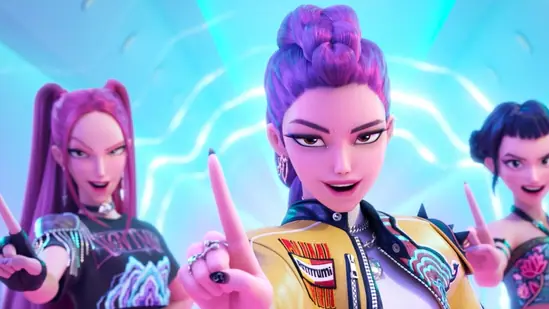
At its core, the movie is a high-energy mashup of two global obsessions: K-pop and animation. The story follows an all-girl Korean pop group who must save the world from demons sneaking into the human realm.
On paper, the premise sounds like a niche fantasy. On screen, it’s pure formula for repeat viewings:
- Music hooks: Catchy, radio-ready songs, especially “Golden,” blur the line between fictional soundtrack and real-world chart-toppers.
- Animation style: Bright, colorful visuals keep kids glued to the screen.
- Action-meets-heart: Enough fight sequences to thrill older viewers, wrapped in family-friendly storytelling.
That mix has proven irresistible for families, who often serve as the hidden driver behind streaming juggernauts.
Why Did It Become So Popular?
1. Families Drive Repeat Viewing
Unlike prestige dramas or thrillers that people watch once, kids’ movies thrive on repetition. A single household might stream the film a dozen times in a month. Multiply that across millions of families worldwide, and the numbers skyrocket.
2. The Soundtrack Became a Trojan Horse
Disney’s Frozen showed how a song can supercharge a movie’s cultural footprint. KPop Demon Hunters has its own version in “Golden,” which has gone viral on TikTok and climbed streaming charts. Parents may groan, but earworms like this keep the film in constant rotation.
3. Smart Timing and Branding
Released at the start of summer vacation, the film arrived when families had more free time. Pair that with the global appeal of K-pop—already a multibillion-dollar industry—and Netflix had the perfect storm.
How Does This Compare to Past Netflix Hits?
Netflix has marketed Bird Box, Red Notice, and The Gray Man as its crown jewels, each touted as “the biggest movie ever” at their peak. But those films leaned heavily on star power and opening-weekend buzz. They faded quickly from the cultural conversation.
KPop Demon Hunters is different. It’s sticky—living not just in Netflix’s Top 10 carousel, but in daily life through music, memes, and endless rewatches. That kind of staying power has historically belonged to theatrical releases like Barbie or Frozen.
What’s Next for the Franchise?
Netflix and Sony Pictures Entertainment, which produced the film, are already in talks for a sequel. But animation is a long game—it could take years to produce a follow-up. To keep fans engaged, both companies are reportedly exploring:
- Spin-off shorts or series to maintain momentum.
- Merchandising opportunities, from dolls to soundtracks.
- A live-action adaptation, which Netflix’s film chief has floated as a future possibility.
This strategy mirrors Disney’s playbook: build a multimedia ecosystem, not just a standalone film.
Why It Matters for Netflix—and Hollywood
For Netflix, this isn’t just about bragging rights. It signals that the platform can create a global family blockbuster without theatrical release—a major milestone as the streaming wars intensify.
For Hollywood studios, it’s another sign that family-friendly animation paired with global music culture can travel across borders better than many live-action productions. Sony, often overshadowed by Disney and Universal in animation, now has a seat at the table.
And for K-pop, already a cultural powerhouse, the movie marks another stage of mainstreaming. If BTS helped break the music charts, KPop Demon Hunters may have done the same for film.