
Quick Summary
A North Korean man swam across the maritime border using foam for buoyancy and was rescued by South Korea near Ganghwa Island after a 10-hour operation. The rare defection highlights both the physical danger and political sensitivity of such crossings. South Korea’s leadership remains diplomatic in tone, while North Korea has yet to comment.
What happened at the maritime border?
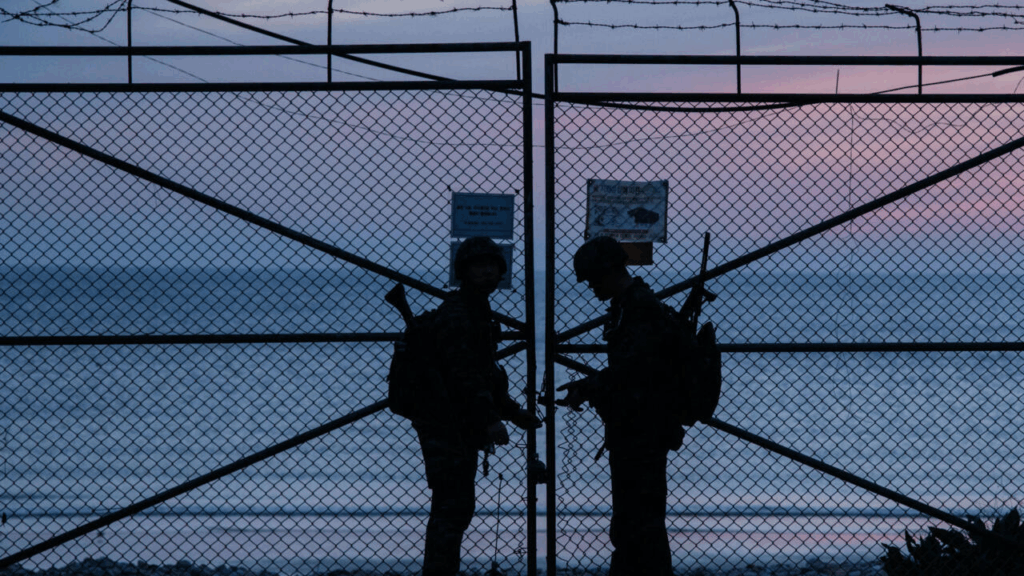
In a daring and rare escape, a North Korean man swam across the heavily guarded maritime border into South Korea using makeshift flotation gear made of plastic foam. According to South Korea’s Joint Chiefs of Staff, the defector was rescued around 4 a.m. on July 31, after a 10-hour overnight operation off the peninsula’s western coast.
The incident occurred near Ganghwa Island, a strategic border region northwest of Seoul. The man was reportedly waving for help and expressing his intent to defect, a claim confirmed by South Korean military officials and local media.
How did the defection unfold?
The defector tied chunks of Styrofoam to his body to stay afloat during the treacherous crossing. He navigated the Northern Limit Line (NLL), the de facto maritime boundary that separates North and South Korea in the Yellow Sea. The NLL is not only controversial in its legitimacy (North Korea does not recognize it), but also intensely militarized, making any unauthorized crossing a significant risk.
Key timeline:
- July 30 (Night): The man begins his sea crossing using plastic foam for buoyancy.
- July 31, 4 a.m.: South Korean forces locate and rescue him after a long overnight search.
- August 7: The rescue is made public by South Korean authorities.
Why are sea defections so rare and dangerous?
Defecting across the sea is highly unusual due to natural and man-made dangers:
- Rough waters and strong currents along the western coast.
- High surveillance and naval patrols from both sides.
- Risk of drowning or being shot on sight.
Most defectors choose overland routes through China and Southeast Asia, often relying on smuggling networks. However, in exceptional cases like this, defectors attempt maritime crossings, either due to desperation or opportunity.
Previous notable sea defection:
In 2021, a man reportedly swam for hours using diving gear without being immediately detected. That incident triggered a review of South Korea’s coastal surveillance systems.
What is Ganghwa Island’s role in such incidents?
Ganghwa Island is one of the South’s closest land points to the North, separated by just a few kilometers of sea at some points. It has been the site of:
- Past fisherman-related crossings.
- Defector rescues due to its proximity.
- Military drills due to its strategic location.
Given its geography, it’s often involved in both accidental crossings (e.g., by drifting boats) and intentional defections.
What was the political response?
The defection comes amid shifting tones in inter-Korean relations. South Korean President Lee Jae Myung, who has advocated for a more diplomatic approach to Pyongyang, recently:
- Suspended anti-North propaganda through loudspeakers.
- Halted leaflet campaigns via balloons.
These steps contrast with prior administrations that used such tactics as part of psychological operations. However, North Korea has not yet officially responded to this latest defection.
Historical perspective:
- In July 2025, six North Korean fishermen were rescued after drifting into South Korean waters. They requested repatriation and were returned home.
- In 1997, high-profile defector Hwang Jang-yop triggered a media response from North Korea’s leadership, where defectors were labelled as “cowards.”
This time, however, Pyongyang has remained silent — a common tactic to avoid acknowledging internal cracks.
What happens to the defector now?
Once rescued, defectors in South Korea typically undergo:
- Security screening by the military and intelligence agencies.
- Debriefing and background checks to rule out espionage.
- Resettlement programs including housing, language instruction, and job training.
South Korea maintains a structured protocol to integrate defectors, but challenges remain, particularly regarding social acceptance and employment.