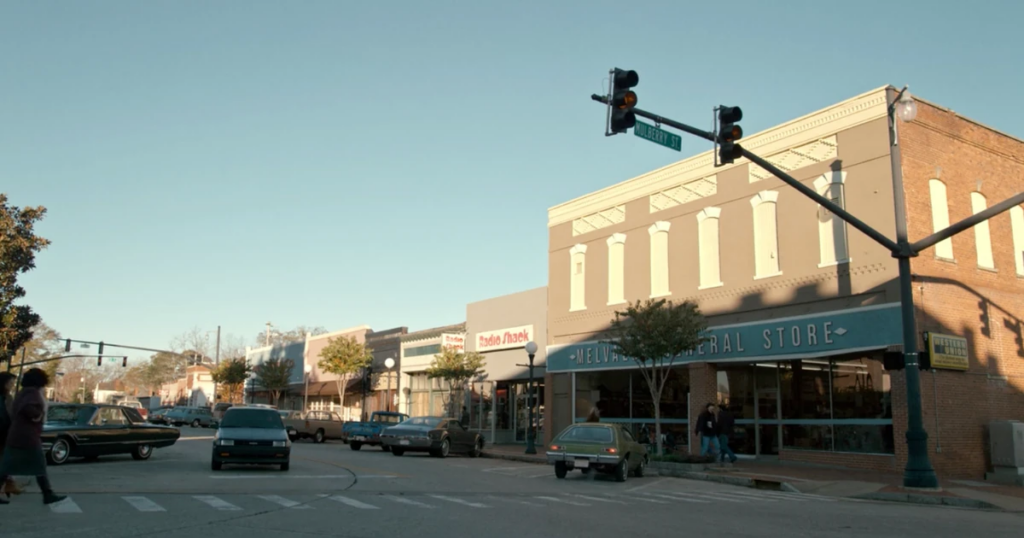
Netflix’s Stranger Things may be set in the fictional town of Hawkins, Indiana, but fans have long suspected that the show’s eerie atmosphere has roots in a very real place. That place is Montauk, a coastal community at the eastern tip of Long Island, where conspiracy theories, abandoned military structures, and Cold War secrets have fueled imaginations for decades.
Is Hawkins Based on a Real Place?
There is no town called Hawkins on the map of the United States. However, the unsettling mix of small-town life and secret government activity depicted in the show closely mirrors Camp Hero, a decommissioned military base now part of Camp Hero State Park in Montauk.
Camp Hero sits uncomfortably close to residential neighborhoods, hidden behind trees and fenced-off structures. Its isolation, combined with its restricted buildings, has made it the centerpiece of theories claiming the US government once conducted secret experiments there.
What the Stranger Things Cast Has Said
Speculation gained traction after cast members Gaten Matarazzo and Joe Keery acknowledged in an interview that the show draws inspiration from real-world rumors tied to Montauk.
Matarazzo explained that Stranger Things was influenced by stories about Camp Hero, where whispers of Cold War-era human experimentation and mind-control research have circulated for years. While not presented as historical fact, these rumors provided fertile ground for the show’s fictional narrative.
The Montauk Project Explained
The mythology surrounding Camp Hero is often referred to as the Montauk Project, popularized in the 1980s by authors Preston Nichols and Peter Moon.
Nichols claimed he had repressed memories of being forced to participate in secret government experiments at Camp Hero. According to his accounts, these experiments allegedly involved
- Mind control and psychological warfare
- Teleportation and time travel
- Contact with extraterrestrial life
These claims have never been verified and are widely regarded by scientists and historians as fiction. Still, the stories gained momentum because they intersected with real Cold War programs, including documented US research into psychological operations.
Cold War Context and Persistent Rumors
After World War II, the United States did recruit former Nazi scientists under programs such as Operation Paperclip, a historical fact that has often been cited by conspiracy theorists to support Montauk Project claims. A 2022 report published by The Roar noted that some locals believe these scientists later worked on classified US military research.
No credible evidence links Camp Hero to time travel or mind control experiments. However, the secrecy surrounding Cold War installations helped fuel suspicions that something more sinister occurred behind locked doors.
One of the most striking features at Camp Hero is the massive AN/FPS-35 Radar, built to detect Soviet aircraft during the Cold War. Conspiracy theorists claim the radar could broadcast frequencies capable of influencing the human brain, particularly children, an idea echoed in Stranger Things through the Hawkins Lab storyline.
Adding to the intrigue are structures that resemble civilian buildings but were allegedly designed to disguise military facilities. A commonly cited example is a building resembling a church that locals say was actually a military gym with a fake steeple. Beneath nearby hills, sealed bunkers and tunnels still exist, though they are welded shut and off-limits to the public.
Was Stranger Things Originally Called “Montauk”?
According to travel content creator Magical Hijinx, the Duffer brothers initially pitched Stranger Things under the title “Montauk.” The show was later relocated to Indiana to give it a more universal, small-town American feel.
The core elements, however, secret labs, government cover-ups, psychic experiments, and lurking creatures, remained intact.
The Legend of the Montauk Monster
Every good conspiracy needs a monster. In Montauk folklore, that role is filled by stories claiming a psychic test subject named Duncan Cameron accidentally manifested a creature from his subconscious. According to legend, the creature roamed the woods near Camp Hero until power to the radar system was shut down.
There is no evidence that such an event occurred, but the narrative bears an uncanny resemblance to the Upside Down mythology in Stranger Things, further blurring the line between fiction and folklore.
Can You Visit the Real-Life “Hawkins”?
Yes. Camp Hero State Park in Montauk is open to the public year-round. Visitors can:
- Hike and bike along coastal trails
- Fish and birdwatch
- Explore the area around the abandoned military structures
However, access inside the former military buildings is strictly prohibited.
Why the Montauk Connection Still Fascinates Fans
Hawkins may be fictional, but Montauk’s blend of documented history and speculative lore makes it an ideal real-world parallel. The town’s Cold War past, combined with decades of conspiracy theories, offers just enough mystery to make Stranger Things feel unsettlingly plausible.
That tension, between what is known and what is hidden, is exactly what the series thrives on.
TL;DR
Hawkins, Indiana, doesn’t exist, but its inspiration likely comes from Camp Hero in Montauk, New York. Cold War radar installations, abandoned bunkers, and long-standing conspiracy theories about secret experiments helped shape the mythology behind Stranger Things. While there’s no proof of mind control or monsters, the real history of Montauk is strange enough to keep fans intrigued.