
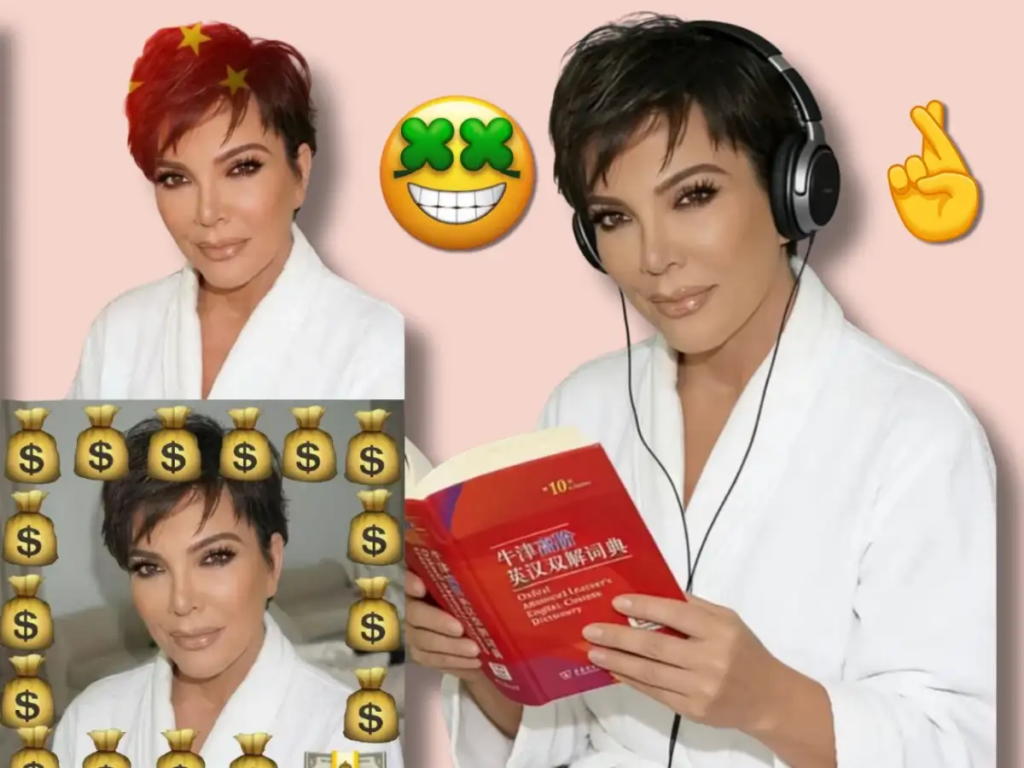
Scroll through TikTok or Chinese social platforms right now, and you might notice something oddly consistent: countless users have swapped their profile pictures for Kris Jenner.
It’s not a coincidence, and it’s not just fandom either. The Kris Jenner profile picture trend is a mix of internet humor, cultural values, and Gen Z’s evolving take on manifestation.
What is the Kris Jenner profile picture trend?
At its core, the trend is simple:
- Users change their display picture (DP) to Kris Jenner
- They believe it can bring luck, wealth, or career success
- Some customize the image to match their goals (e.g., “Doctor Kris” and “CEO Kris”)
It’s part meme, part superstition, and fully viral.
How it shows up online
- TikTok feeds filled with Kris Jenner DPs
- Comment sections where almost everyone has the same profile image
- Users jokingly “reporting success” after switching their DP
What makes it stand out is how quickly it spread—and how seriously (or semi-seriously) people are taking it.
Why Kris Jenner specifically?
This is where culture and perception come into play.
1. She represents success and hustle
Kris Jenner is widely known as the mastermind behind the Kardashian-Jenner empire. To many young users:
- She symbolizes business success
- She’s seen as a strategic, hardworking figure
- She embodies the idea of turning opportunity into wealth
In Chinese culture, hard work and financial success are highly respected values, which makes her image resonate even more.
2. A modern “lucky charm”
Instead of traditional symbols of luck, Gen Z is turning to pop culture.
- Kris Jenner becomes a digital talisman
- Using her image is like signaling ambition and confidence
- It blends irony with belief—people don’t fully believe it, but they don’t fully dismiss it either
Think of it as a 2026 version of carrying a lucky coin—just online.
How Gen Z is redefining manifestation
The Kris Jenner profile picture trend is part of a bigger shift in how younger users think about success and mindset.
From vision boards to memes
Traditional manifestation involved the following:
- Journaling goals
- Visualization exercises
- Affirmations
Now, it looks more like:
- Changing your profile picture
- Participating in viral trends
- Using humor as a tool for self-belief
Why this works (psychologically)
Even as a joke, the trend taps into real effects:
- Confidence boost: Users feel more motivated
- Placebo effect: Believing something helps, even ironically, can influence behavior
- Community reinforcement: Seeing others participate strengthens belief
In short, it’s playful, but not meaningless.
The role of Chinese social media culture
The trend didn’t just happen anywhere, it gained traction specifically in Chinese digital spaces before spilling over globally.
Why did it take off in China
- Strong cultural emphasis on success and upward mobility
- High engagement with symbolic trends and shared rituals
- Rapid amplification through platforms similar to TikTok
Influencers like Marcelo Wang helped explain and spread the trend internationally, turning it into a cross-cultural phenomenon.
Is this just a joke or something more?
That depends on who you ask.
On the surface
- It’s funny
- It’s absurd
- It’s clearly a meme
Underneath
- It reflects an aspirational culture
- It shows how Gen Z blends irony with intention
- It highlights the growing influence of AI and digital identity trends (similar to viral AI-generated profile images)
Many users openly joke about it, while still participating, “just in case it works.”
What this says about internet culture in 2026
The Kris Jenner profile picture trend is a perfect snapshot of how online behavior is evolving.
Key takeaways
- Memes are becoming belief systems
- Identity is increasingly fluid and performative
- A successful culture is being gamified
And perhaps most importantly:
People are looking for simple, low-effort ways to feel in control of uncertain outcomes—whether that’s career growth, confidence, or luck.
TL;DR
- The Kris Jenner profile picture trend involves users adopting her image to “manifest” success
- It started gaining traction on Chinese social media and spread globally
- The trend blends humor, superstition, and cultural respect for hard work
- It reflects Gen Z’s modern approach to manifestation and identity
- Whether or not it “works,” it’s undeniably viral