
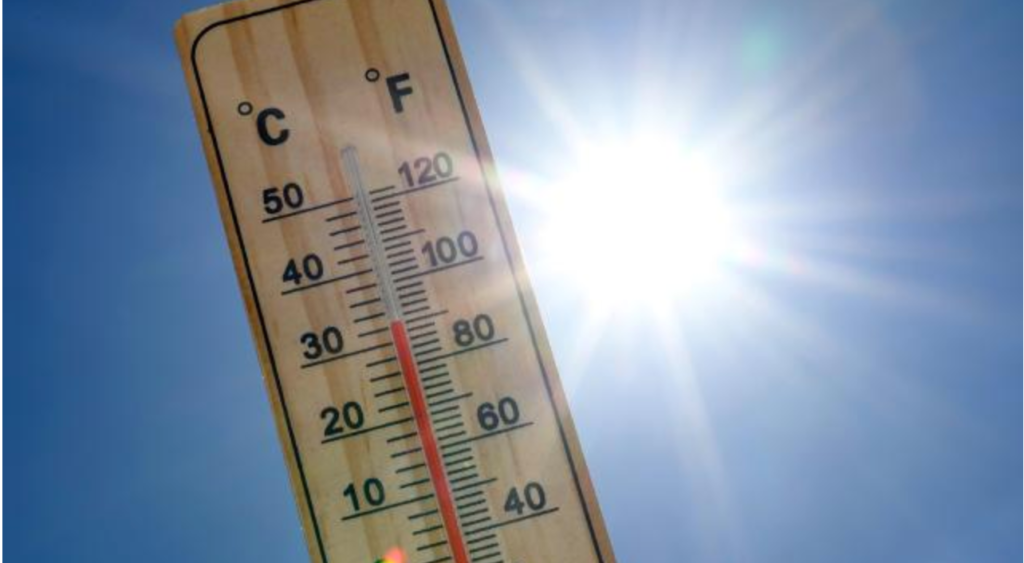


Severe weather conditions are about to get worse. 25 percent of the US could fall under an extreme heat belt. Here’s all about what it means and the US states coming under it.
Climate change and risk assessment
In July people across the UK, Europe, and the US experienced record-setting temperatures with a series of hot and humid days. New research and a simultaneous planning tool revealed that the local hottest seven days will become the 18 hottest days by 2053. By then, about 1,023 counties in the US will experience temperatures exceeding 125 F. According to First Street, this will cover 25 percent of American land, the home to 107.6 million people. The First Street Foundation is a nonprofit whose property-level climate change risk research is used by homebuyers.
The risk factor tool is available to use for free. It is also increasingly incorporated into house listings through a Realtor.com partnership. They were the first to cover the risk of wildfires and floods. However, with the new peer-reviewed release, the tool includes an extreme heat risk parameter. (napavalley.com) It is created based on the duration, frequency, and intensity of extremely hot days. They are also looking into how they will expand over the next three decades.
What is an ‘Extreme heat belt’? How does this work?


As per First Street, the Extreme heat belt is an area stretching from northern Texas and Louisiana borders to Indiana, Illinois, and Wisconsin. For example, the most extreme shift in local temperatures was found in Florida’s Miami-Dade county. The county experienced seven hottest days at 103F. However, by 2053, they are expecting this to increase to 34 days. They assess this by using high-resolution measurements of tree canopy cover, land cover, surface temperatures, impervious surfaces, and the proximity to water bodies. Using this, they analyze the current heat exposure and adjust them for future scenarios. Hence, this makes determining the number of hot days at a given property easy.
“Increasing temperatures are broadly discussed in yearly averages. But the focus should be on the extension of the extreme tail events expected in a given year. We need to be prepared for the inevitable, that a quarter of the country will soon fall inside the extreme heat belt. With temperatures exceeding 125°F and the results will be dire,” stated Matthew Eby. Eby is the CEO and founder of First Street.
“We’re talking about 125 degrees, when the joints of bridges swell, railway lines buckle and become a hazard for trains, when airplanes need extended runways to take off or sink into the tarmac because it’s so hot,” Cement and steel will go to over 140 degrees. Which would instantly burn your skin or if your dog goes outside, it would burn its paws. These are the crazy temperatures we’re talking about,” he added.