
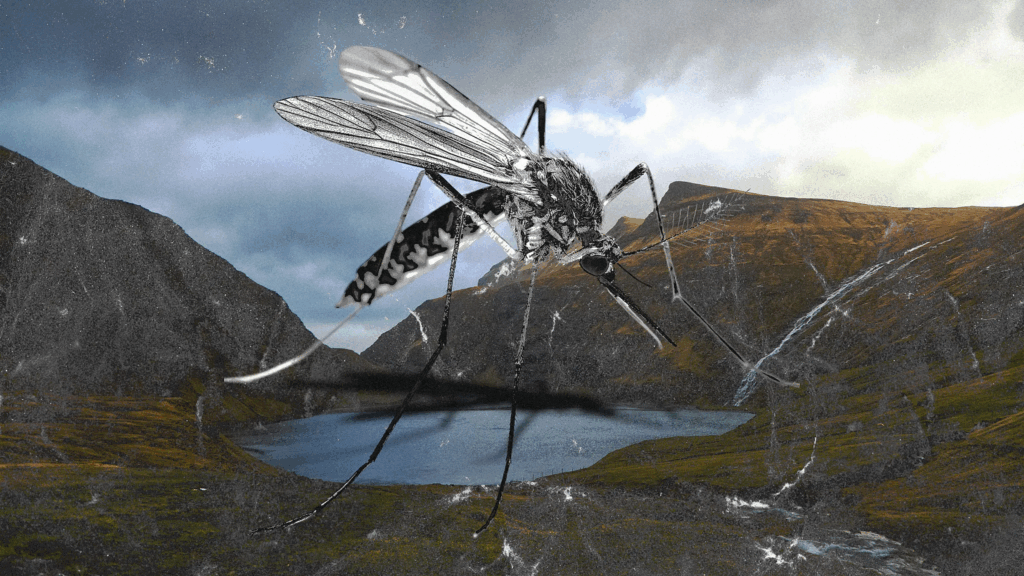
For the first time in recorded history, mosquitoes have been found in Iceland, one of the world’s last mosquito-free places. The discovery, confirmed by entomologists this month, follows an unusually warm spring that shattered temperature records across the island. Scientists say this small but symbolic event could mark a turning point for Arctic ecosystems, signaling how far climate change is reshaping even the coldest corners of the planet.
TL;DR:
Three mosquitoes of the species Culiseta annulata were discovered in Iceland after an unprecedented 10-day heatwave and record May temperatures. Experts believe the arrival could be linked to rising global temperatures and changes in insect migration. Iceland, previously one of only two mosquito-free zones in the world (along with Antarctica), may now face ecological and public health adjustments if the insects establish a permanent population.
What Happened: A Historic First for Iceland’s Ecosystem
In early summer, Icelandic insect enthusiast Björn Hjaltason made an unusual discovery in Kjós, a glacial valley just northwest of Reykjavik. Using wine-soaked ropes to attract moths, he noticed “a strange fly” hovering nearby, something he had never seen before. Upon capturing and photographing the insects, Hjaltason shared his findings on a local wildlife Facebook group. The post quickly spread, with users marveling and worrying about what he called “the fall of the last fortress.”
Hjaltason collected two female mosquitoes and one male, later identified as Culiseta annulata by the Icelandic Institute of Natural History. This species is known to survive colder climates across northern Europe, thanks to its ability to overwinter in sheltered areas and emerge in early spring.
Until now, Iceland’s cold, dry climate and lack of stagnant water had prevented mosquitoes from completing their breeding cycles. Even when visitors accidentally brought them in by ship or plane, they couldn’t establish a population. That barrier may be weakening.
Why This Discovery Matters
Iceland’s mosquito-free status has long been a point of pride and scientific interest. Its frigid conditions made it one of only two places on Earth, along with Antarctica, where mosquitoes were naturally absent. The sudden appearance of Culiseta annulata is therefore not just a curiosity but a sign of deeper environmental change.
Iceland’s Met Office reported that May temperatures exceeded 20°C (68°F) for ten consecutive days in several regions, a streak nearly unheard of. The eastern town of Egilsstaðir hit 26.6°C (79.8°F), setting a national record. These extended warm spells create exactly the kind of microclimates mosquitoes need to survive and reproduce.
According to Matthías Alfreðsson, the entomologist who confirmed the species, it remains uncertain whether the insects have formed a breeding population. But if they have, this could mark the start of a permanent ecological shift in Iceland’s insect landscape.
The Science Behind Culiseta annulata
Culiseta annulata, sometimes called the banded mosquito, is widespread in Europe, North Africa, and parts of Asia. Unlike tropical species that rely on year-round warmth, this mosquito can survive freezing winters by hibernating as an adult female in protected areas such as caves or basements. Once temperatures rise above 10°C, it becomes active again.
Here’s a breakdown of what makes this species uniquely suited to cold climates:
| Trait | Description | Relevance to Iceland |
|---|---|---|
| Cold tolerance | Adults hibernate through winter | Could survive Icelandic winters if temperatures stay mild |
| Habitat flexibility | Breeds in containers, puddles, or meltwater pools | Iceland’s thawing ice and increased rainfall may create breeding sites |
| Long lifespan | Females live several months, longer than most mosquito species | Increases survival during short northern summers |
| Wide distribution | Found from the UK to Russia | Indicates adaptability to temperate and subarctic conditions |
The discovery of this hardy mosquito suggests that Iceland’s recent record-breaking warmth provided a rare window of opportunity for survival and possibly reproduction.
Climate Change: The Real Culprit Behind the Buzz
To scientists, the arrival of mosquitoes in Iceland is part of a much larger pattern. As global average temperatures rise, species are migrating northward, following new zones of climatic comfort. What once seemed impossible, tropical or temperate insects surviving in Arctic environments, is now increasingly common.
The Global Heat Health Information Network warned in a June report that warming in traditionally cold ecosystems could have “significant and rapid effects” on biodiversity. Organisms adapted to stable cold conditions are especially vulnerable because they have few evolutionary defenses against new competitors, parasites, or diseases.
For Iceland, the concern isn’t just about annoyance. Mosquitoes are vectors of disease elsewhere, though Culiseta annulata itself is not a major carrier of human pathogens. However, its presence suggests that other, more dangerous species could follow if temperatures continue to rise.