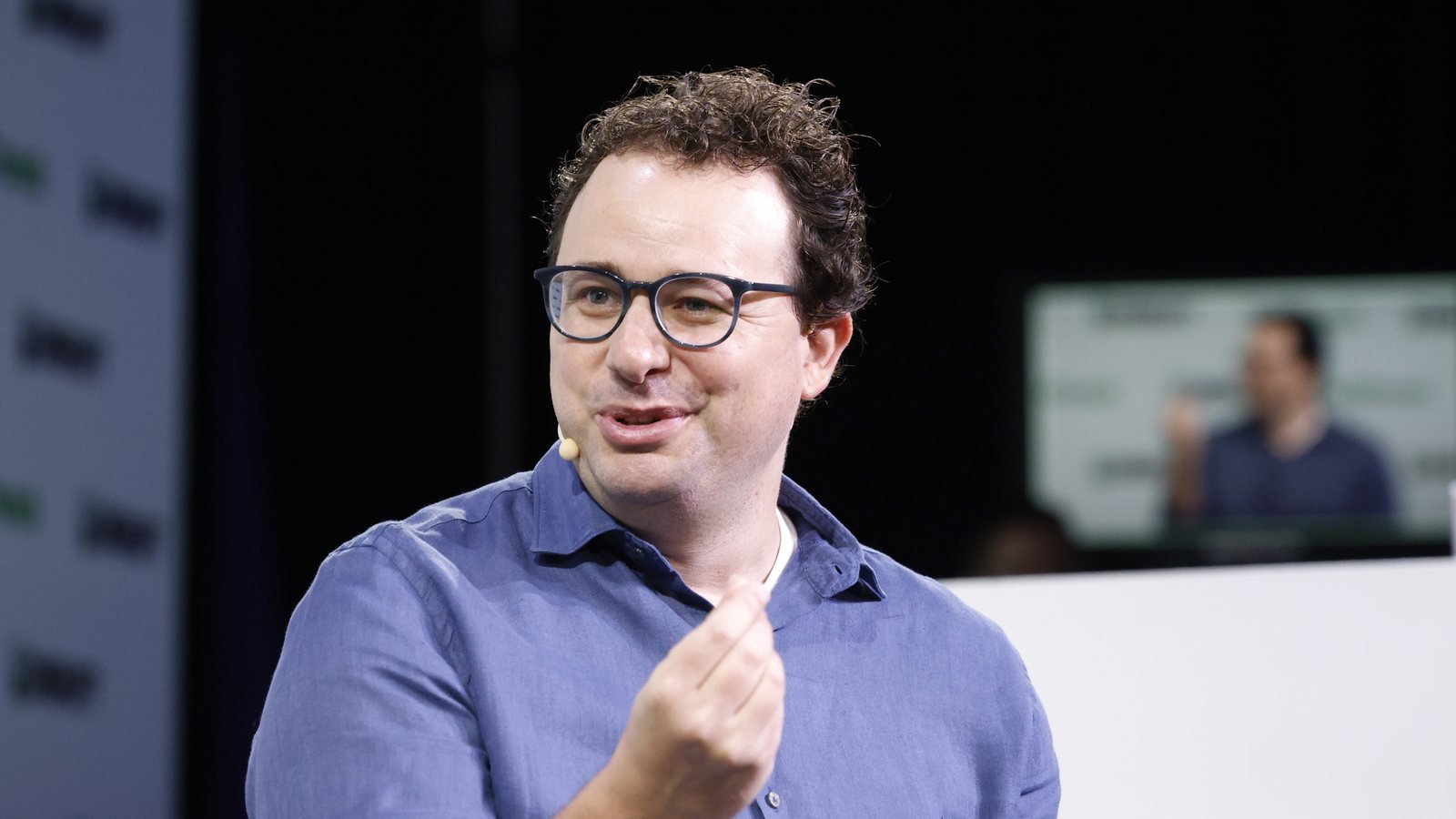
Can AI cure cancer, Alzheimer’s and heart disease within 10 years? Anthropic chief executive Dario Amodei says yes. In a 42-minute IPO roadshow video released on Nov. 10, he named those diseases and mental illness and said they “will be relics of the past in, I think, less than a decade,” Business Insider reported (via AOL).
The evidence so far supports a narrower claim. AI is producing drug candidates faster, and some are doing well in early trials. But no drug that its makers call AI-discovered has yet won FDA approval, and the average medicine takes about 10.5 years to get from first human tests to approval.
What Anthropic told investors, and what it wrote down
The video is on Anthropic’s IPO website, which carries no transcript. The written pitch is more careful than the spoken one.
The founders’ letter, filed with the SEC as part of a free writing prospectus, says AI will “profoundly accelerate the rate of progress in biology and medicine.” It says that could mean “potentially curing diseases that have plagued humanity for millennia, including cancer, Alzheimer’s disease, heart disease.” It gives no date.
The letter also lists what Anthropic has done so far. That includes cutting the time to write clinical trial reports “from months to minutes” and finding with Claude “a molecular machine” that might become a gene-editing tool. Those are research aids, not treatments.
The 10-year figure traces to Amodei’s October 2024 essay, Machines of Loving Grace. There he predicted AI could “compress the progress that human biologists would have achieved over the next 50-100 years into 5-10 years.” The clock in the essay starts only “after powerful AI is developed.”
Amodei called cancer “likely the hardest of these diseases to fully destroy.” He also wrote that “Everything I’m saying could very easily be wrong.”
The roadshow version dropped those hedges. Amodei himself wrote on X in August that “saying that AI will cure cancer is more a cliché than it is inspiring, and most people think it is deceptive,” as The Next Web noted.
Anthropic’s shares are due to start trading on Nasdaq on Nov. 19, and some critics read the new claim as IPO hype. We broke down Anthropic’s IPO numbers earlier this month.
The AI-made drugs already in human trials
AI’s lab record is real. Google DeepMind’s AlphaFold database now holds more than 200 million predicted protein structures. Human researchers took about 50 years to do half that work for human proteins by hand, Transformer notes. Companies are using similar tools to pick drug targets and design molecules.
We checked company and trial records for the most advanced candidates. Half are cancer drugs, and most are years from a decision.
| Drug | Company | Disease | Stage | How the company describes the AI role |
|---|---|---|---|---|
| Zasocitinib (TAK-279) | Takeda (found by Nimbus and Schrödinger) | Plaque psoriasis | FDA priority review; decision due Q1 2027 (Takeda) | Designed on Schrödinger’s computational platform (Schrödinger) |
| Rentosertib | Insilico Medicine | Idiopathic pulmonary fibrosis | Phase 3; first patient dosed Sept. 9, 2026 (News-Medical) | Target and molecule found with generative AI |
| GB-0895 | Generate Biomedicines | Severe asthma | Phase 3 (Generate) | Antibody from its machine-learning “generative biology” platform |
| REC-4881 | Recursion | Familial adenomatous polyposis, a precancerous condition | Phase 2 (Recursion) | Target picked by its Recursion OS |
| REC-1245 | Recursion | Solid tumors and lymphoma | Phase 1 (Recursion) | Target from its “AI-native product engine” |
| IAM1363 | Iambic Therapeutics | HER2-driven cancers | Phase 1/1b (Iambic) | AI drug-discovery company; role not specified |
None targets Alzheimer’s or heart disease. The furthest along, zasocitinib, treats a skin condition, and its “AI” label is loose: it came from physics-based computer modelling.
Why trials, not discovery, set the timeline
The early trial results are encouraging. A 2024 study in Drug Discovery Today found AI-discovered molecules passed Phase 1 trials 80% to 90% of the time, well above historic averages. In Phase 2, where drugs must show they work, the rate was about 40%. The authors call that “comparable to historic industry averages,” on “a limited sample size.”
That Phase 2 finding is the crux. AI is good at making molecules that are safe and drug-like. Whether they treat disease is still learned slowly, in patients.
The biotech industry’s own data show how slow. A February 2021 report by BIO, Informa Pharma Intelligence and QLS Advisors tracked 12,728 phase transitions from 2011 to 2020. Only 7.9% of drugs entering Phase 1 reached FDA approval. The average trip took 10.5 years, including 3.3 years in Phase 3 alone.
The three diseases Amodei named do worse than average:
- Cancer: 5.3% of drugs that enter trials are approved, after about 10.3 years.
- Neurology, which includes Alzheimer’s: 5.9%.
- Cardiovascular: 4.8%, and the longest Phase 3 trials of any field at 4.2 years. Heart drugs must prove they prevent heart attacks and deaths over long periods.
Run the arithmetic from today. A drug starting Phase 1 this month would, on the average path, reach approval around 2037. That is after Amodei’s deadline, and it has to clear trials that 19 of 20 cancer drugs fail. A pancreatic cancer vaccine that triggered immune responses in 89 of 90 patients still missed its main trial goal, as we reported in October.
Cancer is also many diseases. The National Cancer Institute says scientists have found “hundreds” of genetic changes that drive it, and “every person with cancer has a unique combination.”
What scientists say about the 10-year promise
Doctors and drug developers reacted fast. Karl Lauterbach, a physician and Germany’s former health minister, wrote on X that curing these diseases “can definitely benefit from AI. But that is impossible in just 10 years,” according to Business Insider. Biotech executive Rami Elghandour said, per the same report: “I’ve taken two companies public. These are insane things to say in an IPO pitch.”
Researchers interviewed by Transformer in August described the same bottleneck. “AI will be bottlenecked for questions that require us to generate data that we can’t scale,” said Martin Borch Jensen, chief scientist at Gordian Biotechnology. Eric Kelsic, CEO of Dyno Therapeutics, put it plainly: “Will AI cure cancer? No.” He added that AI would still be a critical part of getting there.
What the record supports is steadier progress rather than relics. Personalized treatments like the mRNA melanoma therapy that cut relapse risk by 42% show how cancer care improves: one tumor type and one trial at a time.
The tests coming before 2036
The first hard checks come soon. The FDA is due to rule on zasocitinib in the first quarter of 2027, the first decision on any drug in the table above. Insilico’s 52-week rentosertib trial, planned for 320 patients, will then show whether an AI-chosen target holds up. Anthropic’s molecular machine is, by the company’s own account, a possible research tool and not yet a treatment.
Disclosure: Anthropic makes Claude, which BreezyScroll uses to help draft articles.