
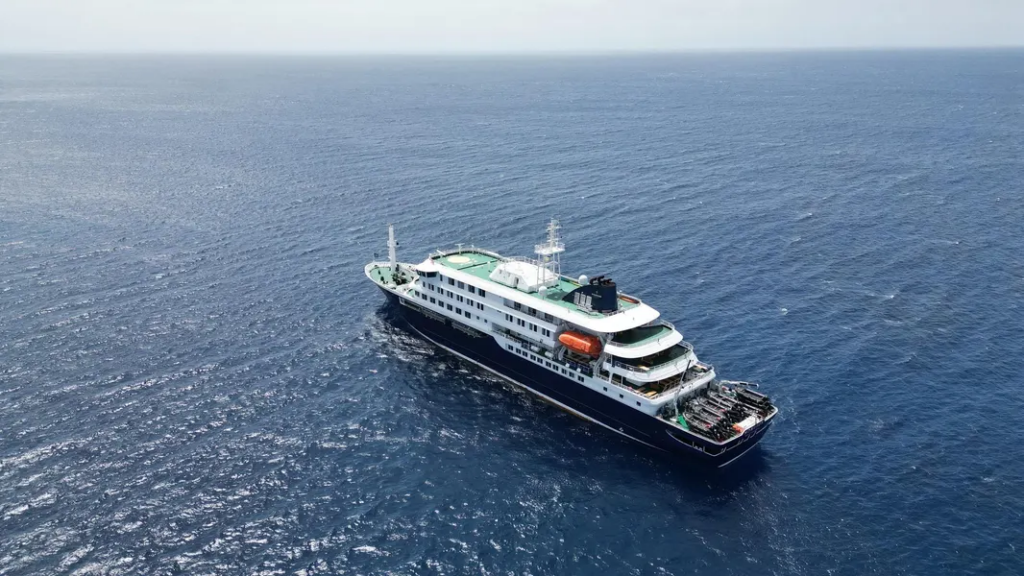
Health authorities in South Africa have confirmed that two passengers aboard the cruise ship MV Honidus were infected with the Andes strain of hantavirus, a rare variant known for its ability to spread between humans.
The confirmation has triggered international concern because most hantavirus strains are transmitted only through contact with infected rodents or contaminated environments. The Andes strain is considered uniquely dangerous because it is the only known hantavirus variant with documented human-to-human transmission.
South African Health Minister Aaron Motsoaledi told a parliamentary committee that preliminary testing identified the Andes strain in a passenger evacuated from the ship.
The outbreak has already resulted in multiple deaths and emergency medical evacuations, while health authorities continue monitoring passengers and crew aboard the vessel.
What happened aboard the MV Honidus cruise ship?
The cruise ship MV Honidus reportedly departed from Argentina roughly a month ago on a transatlantic voyage before multiple serious illnesses emerged onboard.
Authorities said three people connected to the outbreak have died, while several others remain critically ill.
The ship was later permitted to dock in the Canary Islands by Spanish authorities, though passengers were reportedly not allowed to disembark freely as health officials assessed the situation.
Medical evacuations were arranged for several individuals requiring urgent treatment, including crew members and contacts linked to confirmed cases.
The outbreak drew international attention after laboratory testing conducted by South Africa’s National Institute for Communicable Diseases confirmed the presence of the Andes strain.
What is hantavirus?
Hantavirus Pulmonary Syndrome is a potentially deadly viral disease caused by hantaviruses, a family of viruses typically carried by rodents.
Humans usually become infected after exposure to:
- Rodent urine
- Saliva
- Droppings
- Contaminated dust particles
Most infections occur when people inhale airborne viral particles stirred up in enclosed or poorly ventilated spaces contaminated by rodents.
Symptoms often begin like the flu but can rapidly become severe.
Common early symptoms include:
- Fever
- Muscle aches
- Fatigue
- Headache
- Chills
- Nausea
In severe cases, the infection can progress into life-threatening respiratory failure, fluid buildup in the lungs, or cardiovascular collapse.
According to the World Health Organization and the Centers for Disease Control and Prevention, some forms of hantavirus carry mortality rates ranging between 38% and 50%.
Why the Andes strain is different
Most hantavirus strains are not known to spread directly from one person to another.
The Andes strain is the major exception.
First identified in Chile and Argentina during the 1990s, the Andes virus has previously been linked to clusters of human-to-human transmission, particularly among close family contacts or caregivers.
That makes outbreaks involving the Andes strain especially sensitive in crowded environments like cruise ships, where passengers share dining areas, ventilation systems, cabins, and recreational spaces.
Health officials believe transmission between humans likely requires close contact, especially exposure to respiratory secretions or bodily fluids.
Importantly, experts stress that hantavirus does not spread as easily as highly contagious airborne viruses such as COVID-19 or measles.
Still, the confirmation of the Andes strain aboard a confined vessel has heightened concern because cruise ships can amplify infectious disease outbreaks rapidly.
Why cruise ships create unique outbreak risks
Cruise ships function almost like floating cities, with thousands of people sharing enclosed spaces for extended periods.
That environment can complicate infection control efforts because passengers and crew often share:
- Dining facilities
- Air-conditioned indoor spaces
- Elevators
- Recreational areas
- Medical facilities
Historically, cruise ships have faced outbreaks involving norovirus, COVID-19, influenza, and other infectious diseases due to the difficulty of isolating cases quickly.
The Andes hantavirus situation presents an additional challenge because the virus is comparatively rare outside parts of South America, meaning many healthcare systems have limited real-world experience handling it.
What health authorities and WHO are saying
The World Health Organization said it is working with countries to strengthen:
- Disease surveillance
- Laboratory testing capacity
- Early detection systems
- Outbreak response coordination
- Infection control protocols
WHO also emphasized that hospital-based transmission risk remains low when proper precautions are followed.
The organization recommends standard infection-control measures, particularly during aerosol-generating medical procedures involving infected patients.
Public health agencies are also monitoring close contacts of confirmed cases to identify potential symptoms early.
Is there a vaccine or treatment?
Currently, there is no licensed vaccine or specific antiviral treatment approved for hantavirus infections.
Treatment mainly focuses on supportive care.
In severe cases, patients may require:
- Oxygen support
- Intensive care monitoring
- Mechanical ventilation
- Cardiovascular stabilization
Doctors emphasize that early diagnosis is critical because patients can deteriorate rapidly once respiratory complications develop.
That urgency partly explains why authorities moved quickly to evacuate critically ill passengers from the ship.
What precautions help prevent hantavirus spread?
Health experts say prevention primarily centers on avoiding rodent exposure and maintaining good hygiene practices.
Recommended precautions include:
- Keeping homes and workplaces clean
- Sealing holes or entry points where rodents may enter
- Storing food in sealed containers
- Avoiding dry sweeping rodent droppings
- Dampening contaminated areas before cleaning
- Washing hands thoroughly after potential exposure
During outbreaks or suspected human-to-human transmission events, authorities may also implement:
- Isolation of infected individuals
- Monitoring of close contacts
- Enhanced infection-control measures
- Medical observation protocols
Why the outbreak is drawing global attention
Several factors make this outbreak especially alarming.
The Andes strain is rare
Human-to-human hantavirus transmission is extremely uncommon globally.
Cruise ship environments increase risk
Enclosed, densely populated settings create challenges for containment.
No vaccine currently exists
Without a licensed vaccine or targeted treatment, prevention and rapid supportive care become critical.
Severe illness can develop quickly
Patients may deteriorate rapidly once cardiopulmonary complications emerge.
The outbreak also arrives during a period of heightened global sensitivity toward infectious disease surveillance after the COVID-19 pandemic, meaning even relatively rare outbreaks now attract intense international scrutiny.
What experts are watching next
Public health officials are now focused on several key questions:
- Whether additional passengers develop symptoms
- How close contacts are monitored
- Whether transmission occurred directly between humans
- How effectively onboard containment measures work
The answers could shape future cruise industry health protocols and international infectious disease preparedness strategies.
For now, experts continue stressing that while the Andes strain is serious, confirmed human-to-human transmission historically requires close contact and does not appear to spread casually through ordinary public interaction.
TL;DR
South Africa confirmed that two cruise ship passengers were infected with the Andes strain of hantavirus, the only known hantavirus variant capable of spreading between humans. The outbreak aboard the MV Honidus has resulted in multiple deaths and raised concerns because the virus has no approved vaccine or specific treatment. Health authorities are monitoring passengers closely while WHO supports surveillance and outbreak response efforts.