The pancreatic cancer vaccine behind this week’s “89 of 90 patients” number did something real. It taught almost every evaluable patient’s immune system to recognize the mutations that drive the disease. What it didn’t do, in a randomized trial of 144 people, was clearly keep the cancer from coming back.
Both facts are in Mayo Clinic’s October 23 announcement of the results, published the same day in Nature Medicine. The second one sits several paragraphs down: the trial “did not meet its primary goal.”
That gap matters. The American Cancer Society estimates 67,530 Americans will learn they have pancreatic cancer this year. It causes about 8% of US cancer deaths. Only 13% of patients survive five years, according to the ACS.
A treatment that stops it returning after surgery would be a major advance. This trial hasn’t shown that yet.
Two numbers that measure different things
The vaccine is camupepimut, also called ELI-002 7P, made by Boston biotech Elicio Therapeutics. Elicio sponsored, funded and designed the study with academic researchers, the paper says. Mayo Clinic oncologist Ben George is the lead author.
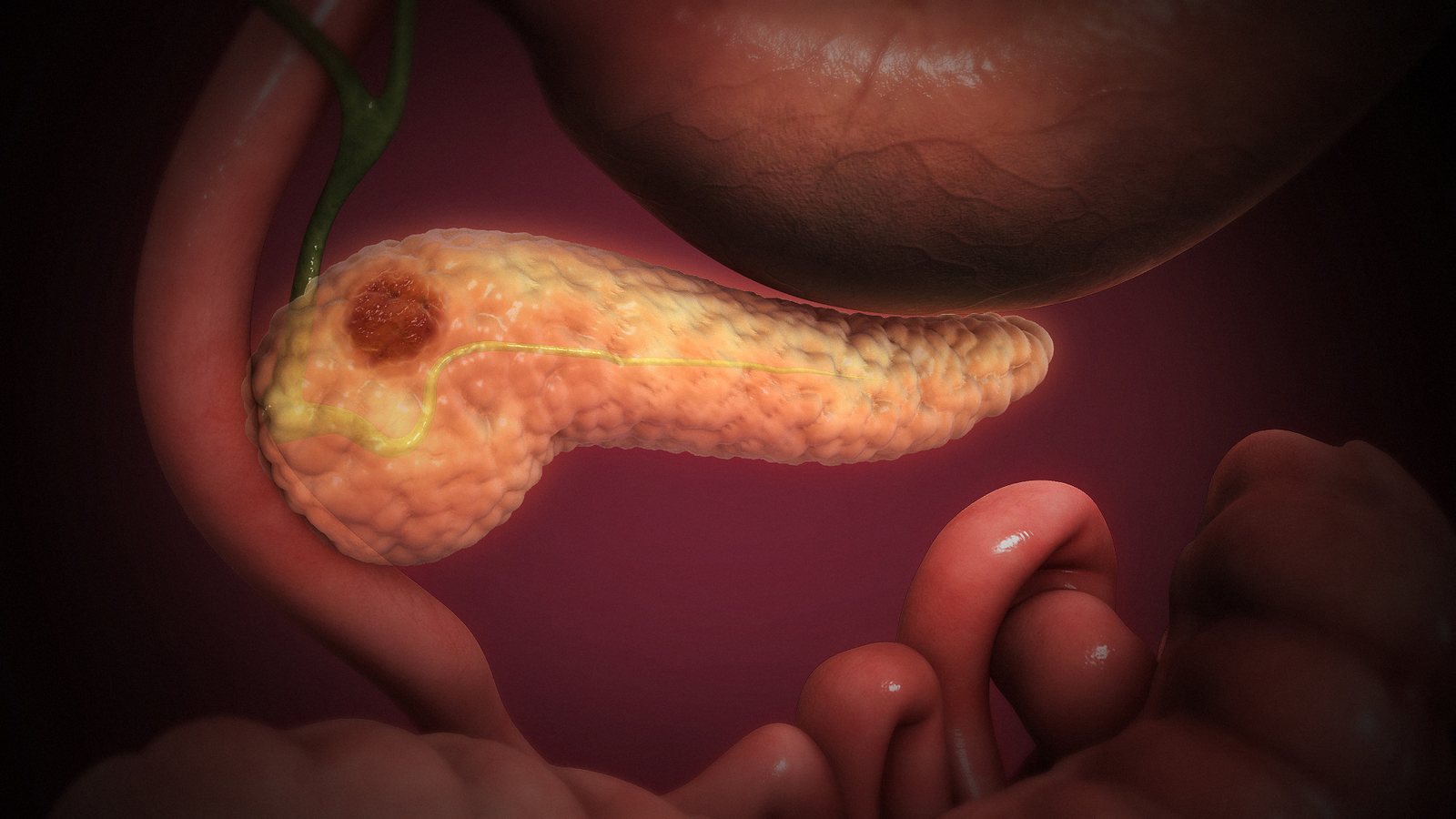
It targets KRAS, a gene that carries mutations in about 90% of pancreatic ductal adenocarcinomas, the most common type. The shot covers seven of the most common KRAS mutations, and its makers designed it to travel to the lymph nodes. There it trains T cells, the immune cells that can recognize and kill altered cells.
Every patient had stage 1 to 3 disease and had finished surgery and chemotherapy. None showed cancer on scans.
Researchers randomly assigned 96 to the vaccine and 48 to observation. The vaccine group got six injections over eight weeks, then four weekly boosters after a two-month break.
The 89 of 90 figure is a lab result. Researchers could test 90 vaccinated patients. Of those, 89 (98.9%) showed a stronger T-cell response to mutated KRAS than before treatment. That means the vaccine does its biological job inside the body.
The trial’s real test was disease-free survival, meaning how long patients lived before the cancer returned. Median disease-free survival was 23.8 months with the vaccine and 21.2 months with observation. The paper puts the hazard ratio at 0.85, with a P value of 0.53.
In plain terms, the vaccine group did slightly better, but by a margin that could easily be chance.
The trial was also built with a lenient bar. The paper sets its statistical threshold at 0.1, twice as loose as the usual 0.05. The result still fell well short.
Why stronger responders aren’t proof the vaccine works
The most encouraging finding is a correlation. About 82% of evaluable vaccinated patients (74 of 90) reached a T-cell response more than 9.17 times their starting level.
At the data cutoff, fewer than half of them had relapsed, so their median was still unknown. Patients below that line had a median of 6.08 months.
That looks dramatic, but it compares vaccinated patients with each other, not with the untreated group. Patients whose immune systems respond strongly may simply be healthier to begin with. The study’s own data point that way.
Patients who had received radiation had fewer lymphocytes, a type of white blood cell, and weaker vaccine responses, Mayo said.
George chose his words carefully in the release. “In an exploratory analysis, patients with greater immune responses to the vaccine appeared protected with longer disease-free survival times,” he said. “The next step is finding out whether doing that can change the course of the disease for patients.”
The paper lists its own limits. The trial was open-label, so patients and doctors knew who got the shot, and median follow-up was 19.4 months.
The subgroup analyses weren’t adjusted for running many comparisons at once. Overall survival data aren’t mature yet. And because the design let observation patients switch to the vaccine, that comparison will be muddier later.
The subgroups Elicio is pointing to
Elicio has offered different explanations for the miss. In its June 15 topline release, it highlighted an imbalance in surgical margins. Some 19% of vaccinated patients had microscopic tumor left at the surgical edge, versus 10% of the observation group.
In a post-hoc look at the 121 patients whose tumors were fully removed, with clean surgical edges, the hazard ratio was 0.65 (p=0.048).
By October 23, when researchers presented the data at the ESMO cancer congress in Madrid, the emphasis had moved to circulating tumor DNA.
That is cancer DNA in the blood, a sign disease remains even when scans look clear. It was more common in the vaccine arm, 20.8% versus 12.5%.
Take the 93 patients with no tumor DNA at the start. In that group, 27.4% of vaccinated patients relapsed or died, versus 48.4% under observation (hazard ratio 0.51).
Patients who hadn’t had radiation also did better on the vaccine. After adjusting for baseline differences, the paper estimates a 53% lower risk, but calls that post-hoc model “hypothesis generating.”
These signals are why researchers want another trial. But slicing a missed trial into subgroups is also how false hopes start.
We saw the same pattern in a recent study tying meat to living to 100. The only way to know is to test a chosen subgroup from the start.
An off-the-shelf shot, unlike the melanoma vaccine
This vaccine works differently from the personalized melanoma vaccine we explained on October 23. Moderna and Merck make intismeran from each patient’s own tumor. In a 1,137-patient phase 3 trial, it cut the risk of relapse or death by 42% when added to Keytruda.
Camupepimut is “off the shelf.” One product could serve any patient whose tumor carries one of its seven KRAS mutations. Nothing needs custom manufacturing. Elicio argues that could make it cheaper and faster to deliver.
But it is at an earlier stage. Unlike the melanoma shot, it hasn’t yet beaten its comparison group on the main measure.
Safety looked reassuring. Severe side effects (grade 3 or higher) hit 10.4% of vaccinated patients and 14.6% of those under observation, the paper reports.
Phase 3 depends on money and the FDA
No one can get this vaccine outside a trial. Elicio’s June release said that “subject to financing” it plans a phase 3 study. It would enroll only patients whose tumors were fully removed, and add doses beyond the current schedule.
Its October 23 release goes no further than a “potential” phase 3. First, Elicio says, it will discuss the findings with the FDA.
Money is the constraint. Elicio raised $15 million in July. Its August 13 earnings release said its cash should last into the first quarter of 2027.
The nearer milestone is in sicker patients. In August, Elicio said it expected to start a phase 1 study in metastatic pancreatic cancer this quarter. It pairs the vaccine with a RAS-blocking drug.
Meanwhile, the phase 2 trial (NCT05726864) keeps tracking overall survival. That number will decide whether teaching T cells to spot KRAS helps people live longer.