
Quick Summary
Chinese researchers attempted the world’s first pig-to-human lung transplant in a brain-dead patient. The experiment lasted nine days before organ rejection set in. While the study demonstrates feasibility, major hurdles like immune rejection and infection remain. Unlike pig heart valves—already used safely for decades—lungs are proving harder to adapt.
What Happened in China’s Pig Lung Transplant?
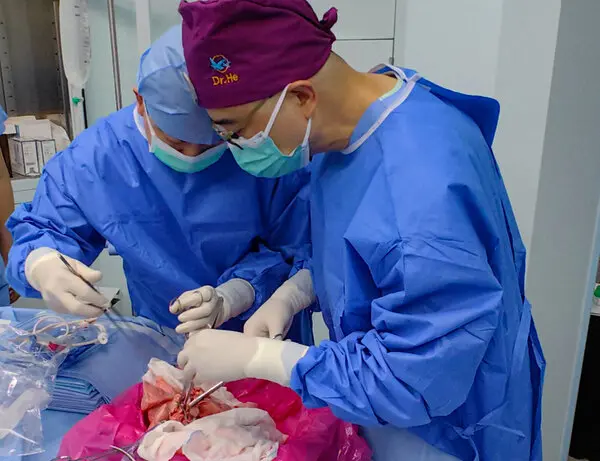
In a medical first, surgeons at Guangzhou Medical University First Affiliated Hospital transplanted a genetically modified pig lung into a brain-dead man.
The patient was a 39-year-old man declared brain-dead after suffering a brain haemorrhage. With his family’s consent, researchers implanted the pig lung in an effort to study whether such a procedure could one day be viable for living patients.
The findings were published in Nature Medicine this week, marking the first documented attempt at a pig-to-human lung transplant.
How Was the Pig Lung Prepared?
- Genetic modifications: The donor pig’s lung had been altered six times to reduce the risk of immune rejection.
- Controlled environment: The animal was raised in a sterile setting to minimise exposure to pathogens.
- Post-surgery care: The patient received multiple medications to prevent infection and dampen the immune response.
Despite these precautions, complications began almost immediately. Within 24 hours, doctors noticed severe swelling across the patient’s body, likely caused by poor blood circulation in the transplanted organ.
Why Did the Experiment Fail?
By day nine, the man’s body was actively rejecting the lung.
The rejection process highlights the lung’s unique complexity:
- Lungs are more vulnerable than other organs. Their vast surface area is exposed to air, bacteria, and pollutants, making infection risk much higher.
- Immune response is harder to control. Even with genetic modifications and drugs, the human immune system quickly recognized the organ as foreign.
Researchers concluded that while pig-to-human lung transplantation is biologically possible, the barriers to success are still steep.
Why Are Scientists Trying Pig Organs in the First Place?
The motivation is clear: organ shortages.
- In the United States alone, more than 100,000 people are on transplant waiting lists.
- Last year, roughly twice as many people waited as those who actually received transplants.
Pig organs are seen as a potential solution because pigs are plentiful, their organs are similar in size to humans’, and genetic engineering can make them more compatible.
Have Other Pig Organ Transplants Worked?
Yes—some with surprising success:
- Pig heart valves: Surgeons have implanted them in humans for more than 30 years, with excellent long-term outcomes.
- Pig kidneys: In January, Massachusetts General Hospital transplanted a genetically modified pig kidney into a man named Tim Andrews, who is still alive months later.
- Pig hearts: Several experimental cases have extended patients’ lives, though not all attempts have succeeded.
But lungs remain the hardest organ to adapt. Unlike kidneys or valves, lungs face constant exposure to external environments, which increases the risk of infection and rejection.
What Comes Next for Pig Lung Transplants?
The authors of the study stressed caution:
- More studies are essential. This first attempt was in a brain-dead patient, not someone seeking lifesaving treatment.
- Better genetic engineering may be needed. Future pigs may require more than six genetic modifications to make their lungs fully compatible.
- Immune suppression drugs must evolve. Current medication may not be strong—or precise—enough to prevent rejection without exposing patients to deadly infections.
If researchers can overcome these hurdles, pig lungs could someday offer hope to patients with end-stage lung disease.
Why It Matters
For now, this nine-day experiment is more a proof of concept than a medical breakthrough. But even failure carries value: it shows what’s possible, what isn’t, and where science must go next.
As one researcher noted in the study, every unsuccessful trial still moves the field closer to a future where no patient dies waiting for an organ.