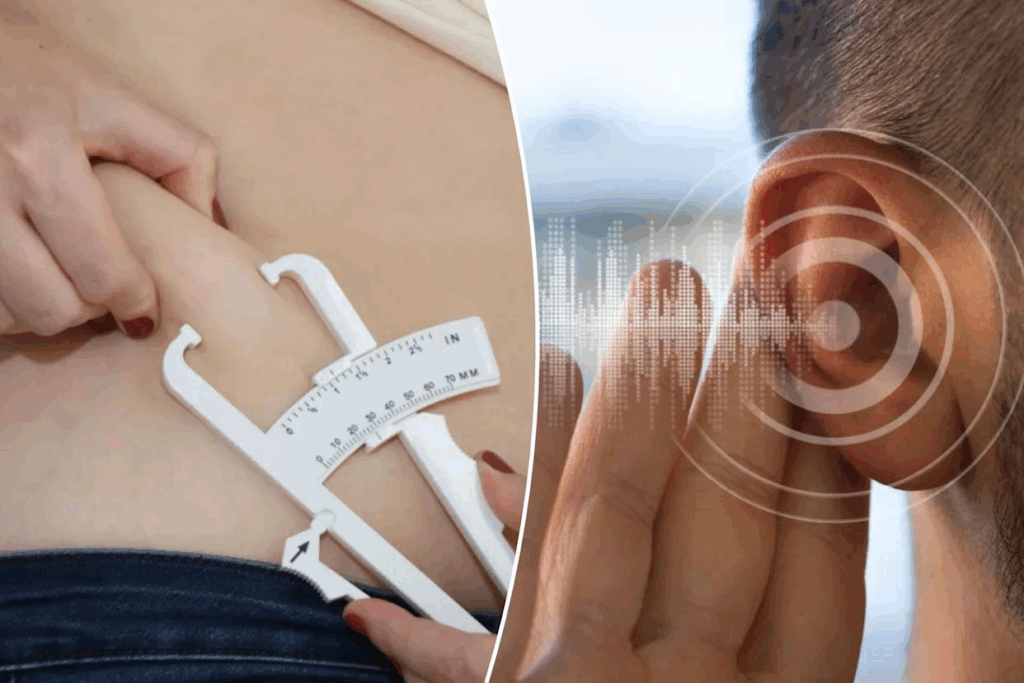
Groundbreaking research from Japan has revealed that sound waves may potentially inhibit fat cell development, opening a new frontier in weight management therapies that doesn’t involve traditional diet and exercise regimens.
How acoustic stimulation affects fat cell development
Published in the prestigious journal Communication Biology, the study demonstrates that specific sound frequencies can alter cellular behavior at the genetic level, potentially disrupting the body’s fat storage mechanisms.
“In this study, we investigate how cells respond to the physiological range of acoustic irradiation that defines the biological significance of sound as a mechanical stimulation and uncover the fundamental relationships between life and sound,” the researchers explained in their paper.
The revolutionary approach leverages the properties of mechanical sound waves, which can travel through various substances including air, water, and human tissue. To test their hypothesis, scientists designed an experimental system that bathes cultured cells in carefully controlled acoustic waves.
Remarkable genetic changes observed in laboratory testing
Using mouse muscle cells as their experimental model, the research team exposed the cells to three distinct sound profiles: white noise, a 440 Hz tone (equivalent to the “A” note on a piano), and a high-pitched 14 kHz tone (approaching the upper limit of human hearing).
The results were striking. Within just two hours of sound exposure, 42 genes had already shown altered activity patterns. Even more impressive, after a 24-hour exposure period, the activity of 145 genes had been modified by the acoustic stimulation.
Potential breakthrough in non-invasive weight management
The most significant finding was that sound waves effectively inhibited adipocyte differentiation—the biological process through which preadipocytes (precursor cells) develop into mature fat cells capable of storing fat. Furthermore, those fat cells that did complete the maturation process contained approximately 15 percent less fat than normal cells.
The researchers discovered that cellular responses varied based on multiple acoustic factors, including the frequency, intensity, and pattern of the sound waves. Different cell types also showed varying levels of sensitivity to acoustic stimulation.
“Since sound is non-material, acoustic stimulation is a tool that is non-invasive, safe, and immediate and will likely benefit medicine and healthcare,” the study noted, highlighting the potential clinical applications of this technology.
Current applications and future potential
While this research remains in its early stages, the findings suggest promising possibilities for developing non-invasive treatments that utilize sound to influence cellular activity throughout the body.
Acoustic wave therapy already has established medical applications in treating conditions such as chronic pain, erectile dysfunction, and soft-tissue injuries by enhancing circulation and reducing inflammation. This new research extends the potential applications into metabolic health and weight management.
For individuals who have struggled with traditional weight loss methods, these findings offer a glimpse of potentially groundbreaking alternative approaches that target the cellular mechanisms of fat storage directly, rather than relying solely on dietary restriction or increased physical activity.
As research in this field advances, acoustic stimulation could potentially join the arsenal of tools available for addressing obesity and metabolic disorders—conditions that affect millions worldwide and contribute to numerous health complications.