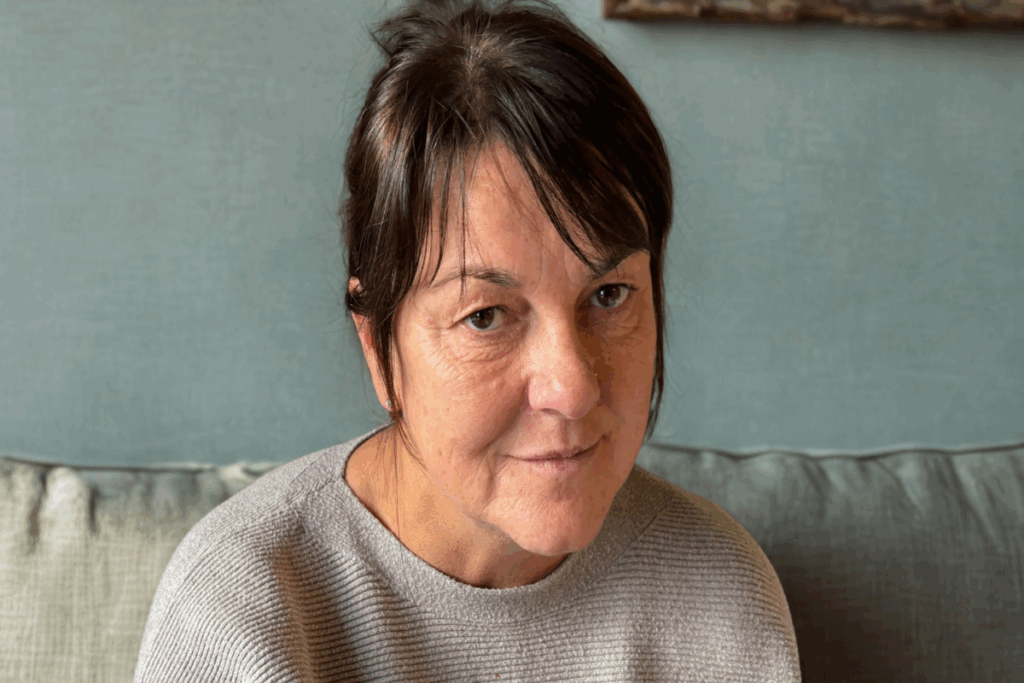
A British woman who was told she had lung cancer and underwent major surgery later discovered that she had been misdiagnosed. What doctors believed to be a malignant tumor was actually pneumonia, a finding that came only after part of her lung had already been removed.
How the misdiagnosis unfolded
Erica Hay, a resident of South Yorkshire, first sought medical help in 2020 after experiencing persistent pain in her shoulders and chest. Following several scans, doctors informed her they were “99.9% certain” she had lung cancer.
Due to the COVID-19 pandemic, she was unable to undergo a biopsy at the time, which could have confirmed the diagnosis before surgery. “I had to go home and tell my children and parents that I had cancer. I tried to be strong for them, but I just fell to pieces,” Hay told the BBC.
Surgery and a shocking revelation
In September 2020, surgeons removed the lower lobe of Hay’s right lung at a local hospital. Two weeks later, however, she received a life-changing update. Doctors told her she was among the “one percent” of patients whose results did not confirm cancer. The mass in her lung was caused by pneumonia.
“At my two-week review, the surgeon told me it was likely an infection,” she recalled. “I was just as shocked to find out I didn’t have cancer as I was when they first told me I did.”
Living with lifelong consequences
The unnecessary surgery has left Hay struggling with lasting physical and emotional effects. She now suffers from severe breathing problems and describes her lungs as feeling heavy, saying it sometimes feels “like I’ve had the operation again.”
Having worked for over 30 years in the National Health Service as a neonatal nurse assistant at Doncaster Royal Infirmary, Hay is now contemplating early retirement on health grounds. “The problem could have been treated with medicine,” she said, expressing disbelief at how events unfolded.
Legal action and hospital response
Hay pursued a clinical negligence claim through the Sheffield-based firm Medical Solicitors. The firm confirmed that the case was settled, though the hospital trusts involved did not admit liability or causation.
Dr Nick Mallaband, acting executive medical director at Doncaster and Bassetlaw Teaching Hospitals NHS Trust, issued a formal apology to Hay and her family. “We are sorry for the distress caused,” he said in a statement to the BBC.
The case underscores ongoing concerns about diagnostic accuracy during the COVID-19 pandemic, when restricted hospital access and limited testing capacity led to delayed or incomplete medical assessments.
Broader questions about diagnostic standards
Medical experts have long warned about the risks of overreliance on imaging without confirmatory biopsies in diagnosing lung conditions. Pneumonia, tuberculosis, and benign nodules can often mimic cancer on scans, leading to potentially devastating errors.
In Hay’s case, pandemic-related limitations played a decisive role, but the situation raises broader questions about how healthcare systems balance urgency with diagnostic certainty, especially when procedures are irreversible.
A reminder for patients and physicians
Hay’s story highlights the importance of second opinions and thorough testing before major surgeries. Experts recommend that patients facing high-stakes diagnoses — particularly cancer — seek multidisciplinary evaluations that include radiologists, oncologists, and pathologists.
While her case has settled, the long-term consequences continue to affect her daily life. “It’s changed everything,” she said. “I’ll never get that part of my lung back.”