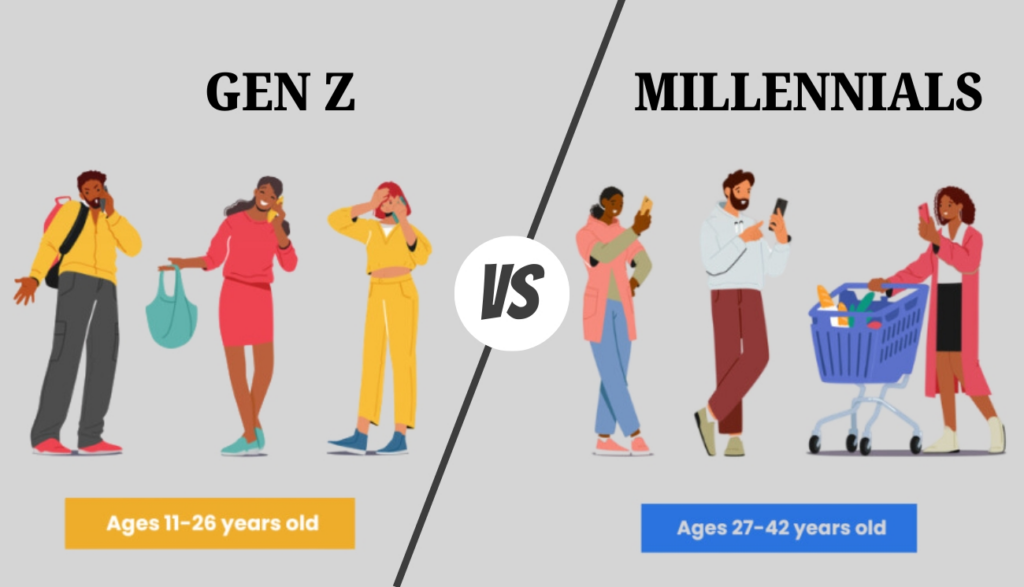
For more than a century, each new generation tended to outperform the one before it on standard measures of intelligence. That long-running pattern, known to researchers as the Flynn effect, has now stalled and reversed. According to multiple datasets cited by neuroscientists and education experts, Gen Z is the first generation to score lower than its immediate predecessor, millennials, across several core cognitive measures.
The finding has sparked a heated debate about what intelligence really means in the digital age, whether IQ scores still capture it accurately, and how modern education and screen-heavy lifestyles may be reshaping the human brain.
What does the data actually say about Gen Z intelligence?
Claims of an intergenerational IQ drop are not based on a single test or country. Researchers point to a convergence of evidence from standardized assessments, long-term cognitive tracking studies, and national education data.
Where the decline shows up most clearly
According to experts who have testified before the US Senate, Gen Z underperforms millennials in several key areas:
- sustained attention and focus
- working memory and recall
- reading comprehension
- basic and applied math skills
- complex problem-solving
- overall IQ scores
The most striking aspect is timing. Data suggests the decline began around 2010, aligning closely with the rapid spread of smartphones, social media platforms, and digital-first education tools.
Why does this break a historical pattern
Throughout the 20th century, average IQ scores steadily rose, driven by better nutrition, improved schooling, and more cognitively demanding environments. Millennials benefited from this upward curve. Gen Z did not.
That makes Gen Z the first generation on record to score lower than the one before it, a reversal researchers describe as historically significant rather than marginal.
Why neuroscientists are pointing to screens and EdTech
One of the most cited voices in this debate is Dr. Jared Cooney Horvath, a former classroom teacher turned neuroscientist, who has studied learning, memory, and attention for over a decade.
What Horvath told US lawmakers
Speaking to the US Senate Committee on Commerce, Science, and Transportation, Horvath argued that the issue is not a lack of schooling. In fact, Gen Z has spent more time in formal education than previous generations.
The problem, he said, is how learning now happens.
Educational technology, from tablets to learning apps and AI-powered summaries, dominates modern classrooms. Horvath argues that these tools conflict with how the human brain evolved to learn.
His conclusion was blunt. Despite more years in school, Gen Z shows lower cognitive development than millennials.
Why short videos and summaries are a problem
Horvath and other researchers emphasize that the brain does not absorb knowledge efficiently through fragmented inputs.
- short videos prioritize speed over depth
- summaries remove cognitive struggle, which is essential for learning
- constant novelty trains the brain to expect stimulation, not concentration
Deep learning, they argue, requires long-form reading, sustained effort, and mental discomfort. These are precisely the skills eroded by scroll-based digital environments.
How much time Gen Z spends on screens
Screen exposure is not a minor factor in this discussion. It dominates daily life for teenagers and young adults.
The scale of screen use
Horvath told US media that teenagers now spend more than half of their waking hours staring at screens, including phones, tablets, and laptops. That includes both entertainment and education.
This level of exposure is unprecedented in human history.
Unlike television, which was largely passive and limited to certain hours, smartphones deliver constant stimulation, rapid feedback, and algorithm-driven content loops.
Why constant stimulation matters
Neuroscientists argue that attention functions like a muscle. When it is never required to hold steady, it weakens.
Heavy screen use has been linked to:
- reduced attention span
- difficulty with delayed gratification
- increased cognitive fatigue
- poorer memory consolidation
These changes do not show up immediately but accumulate over the years, shaping how the brain processes information.
Why face-to-face learning still matters
Another core argument made before Congress is that humans are biologically wired to learn socially.
The evolutionary basis of learning
For tens of thousands of years, knowledge passed from human to human through storytelling, imitation, debate, and shared problem-solving. Eye contact, tone of voice, and emotional cues played a crucial role.
Screens remove most of these elements.
Horvath and other experts told lawmakers that while technology can supplement education, it cannot replace human interaction without cognitive costs.
What digital classrooms miss
Fully or heavily digital learning environments often lack:
- real-time feedback from teachers
- peer discussion and disagreement
- emotional engagement with material
- structured attention without distraction
This matters because learning is not just information transfer. It is a social and emotional process.
Is technology itself the problem?
One of the most controversial claims made by Horvath is that better technology will not fix the issue.
Why upgrading EdTech may not help
According to his research, the problem is not outdated software or poor implementation. It is the medium itself.
Digital tools prioritize efficiency, speed, and accessibility. Human learning, by contrast, thrives on slowness, repetition, and effort.
In his view, even the most advanced AI tutors cannot replicate the cognitive benefits of deep reading and in-person instruction.
Global data backs the concern
Horvath cited data from at least 80 countries showing a similar pattern. Once digital technology becomes widespread in classrooms, academic performance begins to decline.
A six-decade trend analysis shared with lawmakers showed a consistent relationship between increased classroom technology use and reduced learning outcomes.
Are IQ tests the full story?
Critics of the narrative caution against oversimplification.
What IQ measures and what it does not
IQ tests are good at measuring certain abilities, such as:
- logical reasoning
- pattern recognition
- verbal comprehension
They are less effective at capturing creativity, emotional intelligence, adaptability, or digital fluency, areas where Gen Z often excels.
Some researchers argue that intelligence is not declining but changing.
Why the concern still holds weight
Even critics acknowledge that declines in attention, memory, and reading comprehension are real and measurable. These skills underpin almost every form of higher learning.
If they weaken, performance across disciplines suffers, regardless of how intelligence is defined.
Why this debate matters beyond generational rivalry
This is not about declaring one generation smarter than another. It is about understanding how environments shape cognition.
Long-term implications for work and society
If current trends continue, employers may face a workforce that:
- struggles with sustained focus
- relies heavily on external tools for thinking
- avoids complex problem-solving
That has implications for productivity, innovation, and even democratic participation, which depends on informed, attentive citizens.
What experts say needs to change
Most neuroscientists agree on several steps:
- reintroducing long-form reading into education
- limiting screen use in early learning
- prioritizing in-person teaching
- teaching students how to focus, not just what to learn
TL;DR
Gen Z is the first generation to score lower than millennials on IQ and several cognitive measures, marking a historic break from a century-long trend. Neuroscientists link the decline to heavy screen use, short-form content, and digital-first education that conflicts with how the human brain learns. While intelligence itself may be evolving, experts warn that losses in attention, memory, and deep learning carry serious long-term consequences.