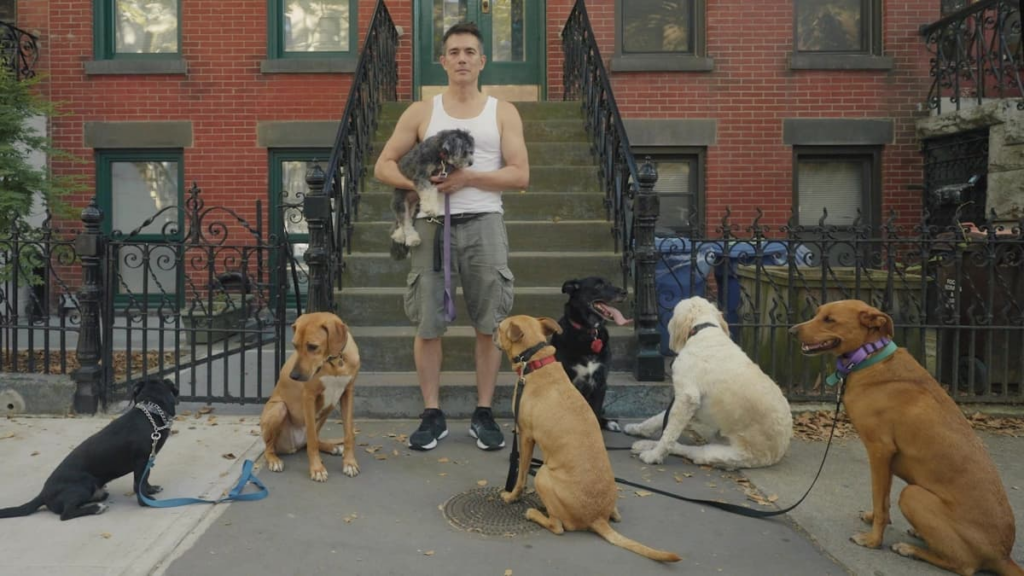
For many people, walking a dog is a break from work stress. For 28-year-old Coby Goodhart, it became the foundation of a booming side hustle bringing in more than $6,000 a month — while he still works a full-time engineering job.
The New York City-based tech professional has transformed a simple love for animals into Goodhart Dog Co., a premium dog-walking and pet-care service operating across Lower Manhattan. What started as casual neighbourhood walks has now evolved into a growing “luxury” business that Goodhart says earns “north of six figures” annually.
His story is resonating online because it taps into several modern realities at once: burnout from corporate work, the rise of side hustles, and a growing demand for high-end pet services in major cities.
How a Full-Time Engineer Built a Luxury Dog-Walking Business
In an interview with People Magazine, Goodhart explained that he carefully designed the business around the schedule of his engineering career.
According to his LinkedIn profile, Goodhart works as an engineering consultant at RER Solutions Inc., where he reportedly manages multi-million-dollar clean energy loan applications tied to the U.S. Department of Energy.
But outside office hours, he’s walking dogs across Manhattan.
What His Daily Schedule Looks Like
Goodhart said his days typically include:
- Early morning dog walks before work
- Additional walks during lunch breaks
- Evening appointments after office hours
- Weekend pet-care sessions
To keep the business running smoothly, he has also hired and trained another dog walker to cover midday appointments while he focuses on his engineering role.
“Goodhart Dog Co. is something I’ve built completely around that schedule,” he told People.
That structure reflects a growing trend among younger professionals who are building second income streams around flexible or passion-based work.
Why Luxury Pet Services Are Booming
Goodhart’s success is also tied to a larger shift in how Americans spend money on pets.
In cities like New York, many pet owners increasingly treat dogs as family members — and are willing to pay premium prices for reliable, personalized care.
Rather than positioning his company as a basic dog-walking service, Goodhart intentionally markets it as a luxury experience.
“I’m not trying to be everything to everyone,” he explained.
That strategy appears to be working.
What Makes a Dog-Walking Service “Luxury”?
Premium pet-care businesses often differentiate themselves through:
- Personalized attention
- Smaller dog groups
- Flexible scheduling
- Constant communication with owners
- Specialized care for anxious or elderly pets
- High-end branding and customer service
In wealthy urban neighbourhoods, convenience and trust can command premium pricing.
Goodhart said factors like:
- Dog size
- Behavior
- Client location
- Scheduling needs
all influence pricing for his services.
“It’s a luxury service, so I price accordingly and make sure every client feels that in the experience,” he said.
Why Side Hustles Continue to Grow Among Young Professionals
The story has struck a chord online partly because it reflects the changing nature of work among millennials and Gen Z professionals.
Rising living costs in cities like New York have pushed many workers to seek secondary income streams, even when they already hold well-paying corporate jobs.
But not every side hustle becomes a sustainable business.
Why Goodhart’s Business Worked
Several factors likely helped Goodhart scale quickly:
- High demand in Lower Manhattan
- Strong word-of-mouth referrals
- Existing disposable-income clientele
- A niche luxury positioning
- Consistent social media marketing
He also said he actively distributes business cards to building doormen and residents — a simple but effective local marketing tactic in dense New York neighborhoods.
“When you do great work in a small area, people talk,” he said.
The Hidden Challenges of Professional Dog Walking
While social media often romanticizes side hustles, Goodhart acknowledged that the work can be physically demanding.
“Rain, heat, cold — the dogs still need their walks,” he said, joking that “early mornings in January are humbling.”
Dog walking may appear simple from the outside, but professionals in the industry often manage:
- Multiple animals at once
- Behavioral issues
- Tight schedules
- Extreme weather
- Liability concerns
- Emergencies
In a fast-paced city environment like Manhattan, reliability becomes one of the most valuable services a pet-care provider can offer.
Why Clients Pay Premium Rates
Goodhart believes his role goes beyond exercise.
“In a neighborhood like Lower Manhattan, where people are busy and high-stress, being the person who takes great care of their dog means a lot to clients,” he said.
That emotional trust is a major reason luxury pet services continue expanding nationwide.
For many owners, a dependable dog walker is not viewed as a convenience — but as an essential extension of their household routine.
America’s Expanding Pet Economy
The broader pet-care market has exploded over the past decade.
Americans now spend billions annually on:
- Pet grooming
- Boarding
- Veterinary care
- Dog walking
- Training
- Specialty foods
- Pet insurance
Urban professionals, especially younger adults without children, have helped drive much of that growth.
Experts say premium pet-care services are particularly thriving in:
- New York City
- Los Angeles
- San Francisco
- Chicago
- Miami
where long work hours and apartment living increase demand for outside help.
Could a Side Hustle Become His Full-Time Career?
Despite already earning substantial income from the business, Goodhart has not yet left his engineering role.
But he says that remains the long-term goal.
“The goal is to grow it to the point where it becomes my full-time focus,” he said.
His story reflects a growing shift among younger professionals who increasingly prioritize flexibility, personal fulfillment, and ownership over traditional career paths.
For some, success no longer means climbing a single corporate ladder.
It means building something independently — even if it starts with a leash and a few neighborhood dogs.
Why the Story Resonates Online
The viral appeal of Goodhart’s journey comes from the contrast at its center:
a highly educated engineer managing energy finance projects by day and walking dogs across Manhattan before and after work.
In an era defined by hustle culture, economic anxiety, and burnout, stories like his offer a version of entrepreneurship that feels both modern and relatable.
Not everyone can launch a startup backed by investors.
But many people can imagine turning something they genuinely enjoy into meaningful income.
And in Goodhart’s case, that passion just happened to involve dogs.