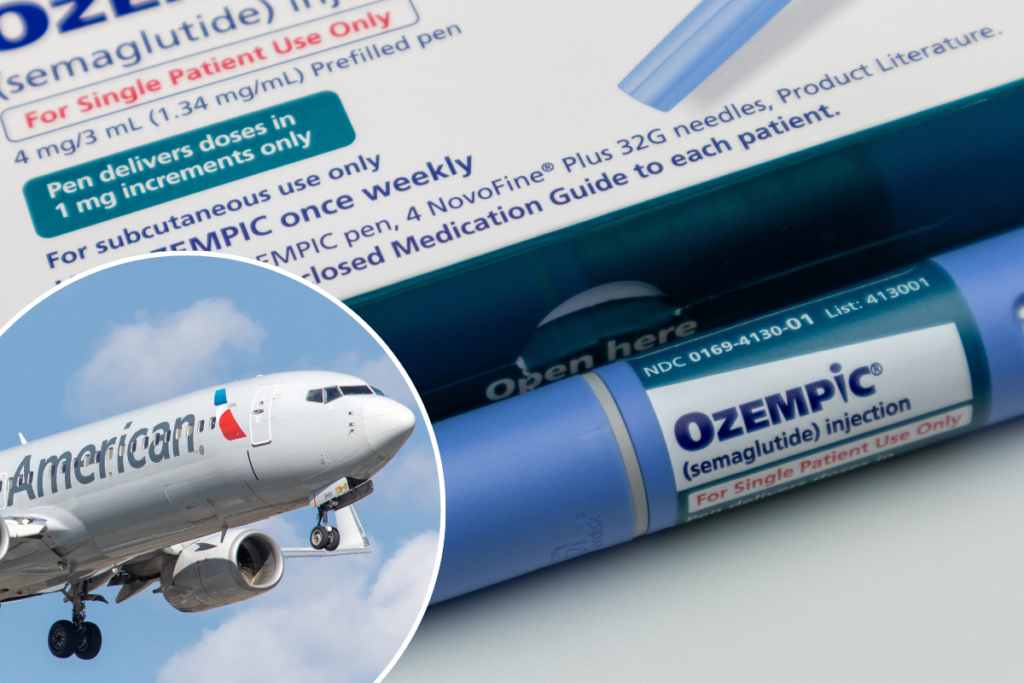
It sounds like a punchline, but it is turning into a real numbers story. As millions of Americans shed pounds using prescription weight loss drugs, airlines could quietly benefit from lower fuel costs. When passengers weigh less, planes burn less fuel, and fuel remains the single biggest operating expense for most carriers.
Analysts are starting to crunch the numbers, and while no one expects overnight windfalls, the long-term impact could be substantial. A few pounds per passenger, multiplied across millions of flights every year, adds up fast in an industry where shaving ounces already matters.
TL;DR
Weight loss drugs like Ozempic and Wegovy are reshaping more than waistlines. As passenger weight declines across the US, airlines could see incremental but real fuel savings, reinforcing how deeply body weight factors into aviation economics.
What’s changing with weight loss drugs in the US
Prescription weight loss drugs have moved from niche treatments to mainstream cultural forces. Medications such as Ozempic and Wegovy, both part of the GLP-1 class, are now widely discussed, widely prescribed, and increasingly covered by employers and insurers.
These drugs work by suppressing appetite and slowing digestion, often leading to sustained weight loss rather than short-term drops. For the first time in decades, US obesity rates are showing early signs of stabilizing in some demographics, driven largely by pharmaceutical intervention rather than lifestyle shifts alone.
That matters because air travel is built around averages. Airlines do not calculate fuel based on individual passengers. They rely on standard assumed passenger weights that influence flight planning, fuel loads, and cost modeling.
If the national average changes, even slightly, the economics shift with it.
Why passenger weight matters so much to airline fuel costs
Fuel burn is physics, not marketing. The heavier an aircraft is, the more thrust it needs to stay airborne and the more fuel it consumes over the course of a flight.
Airlines have obsessed over weight for decades, often in ways passengers never notice. Removing seat-back screens, switching to lighter beverage carts, serving pit-less olives, using thinner paper for in-flight magazines, and even repainting planes with lighter coatings have all been tried.
The reason is simple. Fuel can account for 25 to 35 percent of an airline’s operating costs in a normal year and far more when oil prices spike. Any weight reduction, even measured in pounds rather than tons, compounds across thousands of flights.
Passenger weight is one of the few variables airlines cannot directly control. That is what makes the rise of weight loss drugs so unusual. This is a systemic change happening outside aviation, with potential inside benefits.
How small weight changes scale across an airline network
Here’s a breakdown of how modest per-passenger weight reductions can snowball into operational savings:
| Factor | Why it matters |
|---|
| Average passenger weight | Fuel calculations rely on standard weight assumptions |
| Number of passengers per flight | Wide-body jets carry 200 to 350 people |
| Flights per day | Major airlines operate thousands daily |
| Annual flight volume | US carriers fly millions of segments yearly |
| Fuel burn per mile | Weight directly increases fuel consumption |
If the average passenger weighs five to ten pounds less over time, airlines do not need to change a single policy to benefit. The effect is baked into the physics of flight.
What Wall Street analysts are starting to notice
The idea moved from novelty to serious analysis when investment researchers began quantifying it. Analysts at Jefferies recently highlighted that widespread adoption of GLP-1 weight loss drugs could reduce average passenger weight enough to have a measurable effect on fuel usage.
The report emphasized that airlines already treat weight as a critical cost driver. Lower average passenger weight could improve margins without requiring higher ticket prices, layoffs, or service cuts.
No airline is publicly revising guidance based on slimmer passengers yet, but investors tend to spot second-order effects early. This is one of them.
Airlines have been chasing weight savings for decades
This is not a new obsession. Airlines have a long history of extreme weight optimization.
Seats have been redesigned to weigh less. Galleys have been reconfigured. Even the amount of water loaded into lavatory systems is calculated carefully. Every pound saved reduces fuel burn, especially on long-haul routes.
The difference now is scale. Past savings came from engineering and design changes that took years and millions of dollars. Weight loss drugs operate at the population level. They require no airline investment and no aircraft modification.
That is why analysts are paying attention.
What this does not mean, at least not yet
It is important to keep expectations grounded.
Passengers are not suddenly becoming dramatically lighter overnight. Adoption of weight loss drugs varies by income, insurance coverage, and geography. Many users also regain some weight after stopping treatment.
Airlines will not lower fares because of Ozempic. They will not advertise slimmer planes. Regulators will not revise passenger weight standards immediately.
The impact is incremental, not revolutionary. But aviation is an industry built on increments. A one percent improvement in fuel efficiency can mean hundreds of millions of dollars across a large carrier.
How does this trend fit into broader airline economics
Fuel efficiency improvements usually come from three places: newer aircraft, better routing, and lower weight.
New planes take years to order and deliver. Air traffic control modernization is slow. Weight reduction is the fastest lever, which is why airlines never stop chasing it.
If average passenger weight trends downward over a decade, airlines benefit automatically. It also strengthens the case for longer routes, higher payload efficiency, and tighter fuel planning.
This trend could quietly reinforce profit margins, especially for carriers with dense domestic networks and high flight frequency.
Why this matters beyond airlines
The ripple effects go further than airline balance sheets.
Lower fuel burn means slightly lower emissions, aligning with climate targets without new regulation. Airports benefit from marginally reduced fuel logistics. Aircraft manufacturers get another data point reinforcing lightweight design priorities.
This is a rare example of a public health trend intersecting with transportation economics in a way that benefits both sides, even if unintentionally.
How could this show up in future data?
Over time, this trend may surface in subtle ways. Airlines could quietly revise assumed passenger weight figures used in flight planning. Fuel efficiency metrics may improve without an obvious explanation. Analysts may cite a “mix shift” rather than explicitly mentioning weight loss.
How airlines, investors, and travelers should think about this
For airlines, this is not a strategy but a tailwind. No action required, just awareness.
For investors, it is another reminder that second-order effects matter. Trends outside an industry can quietly reshape cost structures inside it.
For travelers, it is a strange footnote in the Ozempic era. Slimmer bodies, lighter planes, and marginally cheaper fuel, all without anyone boarding a flight differently.
Final takeaway
Weight loss drugs were designed to change lives, not aviation spreadsheets. But as millions of Americans get lighter, airlines may end up burning less fuel simply because physics says they will.
In an industry where ounces already count, a few pounds per passenger could eventually mean millions saved, quietly and without a single announcement.
If nothing else, it proves one thing. In aviation, everything weighs something, even trends that start far from the runway.