
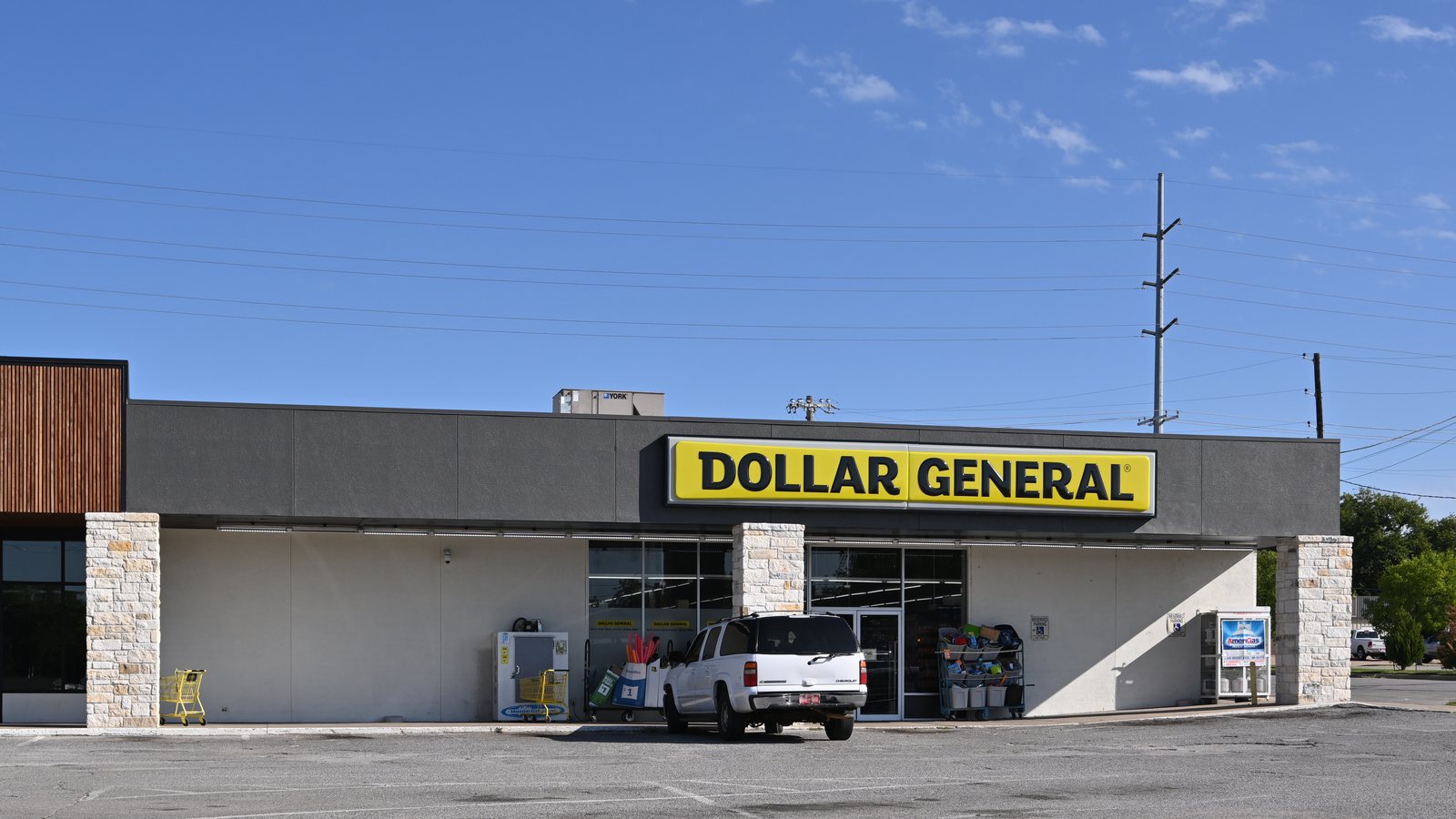

The Federal Trade Commission and 20 states sued Dollar General on Monday, October 26. They accuse the country’s largest dollar-store chain of charging shoppers more at the register than the prices on its shelves, tags and ads. The 95-page complaint was filed in federal court in Tennessee’s Middle District. It seeks a court order, refunds and civil penalties.
These are allegations, not findings, and Dollar General says it will fight them. But the case reaches a lot of people. About 75% of Americans live within five miles of one of its 20,000-plus stores, the complaint says. Households earning $35,000 or less bring in 60% of its revenue.
What the FTC says it found inside Dollar General’s stores
The core claim is that the chain routinely charged customers more at checkout than the price it advertised. The complaint alleges the company knew and didn’t fix it. Christopher Mufarrige, who runs the FTC’s Bureau of Consumer Protection, said Dollar General “has betrayed the trust of millions of American consumers.”
Part of the evidence is the FTC’s own shopping. From January 16 to April 1, investigators made undercover purchases in Ohio, Pennsylvania, Missouri and Maryland. Every trip produced overcharges on several items, according to the complaint.
The Cleveland figure in early coverage needs unpacking. The Guardian reported that 8 of 58 items there rang up higher than the label, nearly 14%. The complaint’s full count is 13 of 58 items at the wrong price, an error rate of 22.4%. Five were undercharges, so the FTC’s shopper came out $3.25 behind.
Then there are the complaints. Dollar General logged 29,265 of them labelled “Did Not Honor Marked Price” from January 2023 to March 2026, the FTC says. They came from all 48 states where it operates.
The best-known figure isn’t the FTC’s. The Guardian’s December 2025 investigation counted more than 4,300 failed government price inspections at Dollar General stores. Those failures came in 23 states from January 2022 on. The complaint cites the article and says it caused “significant internal deliberation” at the company.
Is your state one of the 20 suing Dollar General?
The FTC’s announcement lists the plaintiff states. They are Alabama, Arizona, Arkansas, California, Connecticut, Florida, Illinois, Iowa, Kansas, Louisiana, Michigan, Mississippi, Nebraska, New Jersey, North Carolina, Ohio, Oklahoma, Tennessee, Utah and Wisconsin.
“The prices that folks see displayed when they’re shopping should be the same as the prices they’re charged when they check out,” Wisconsin Attorney General Josh Kaul told Spectrum News. Connecticut’s William Tong said the company “knew it was overcharging customers and failed to do anything about it.”
If your state isn’t listed, the FTC’s claims still cover shoppers nationwide. The states add their own consumer-protection and weights-and-measures claims, which carry state penalties.
Some states have already settled. The complaint lists seven pricing settlements since 2019, worth more than $6 million in all. They involve Wisconsin (twice), Vermont, New Jersey, Ohio, Colorado and Pennsylvania.
New York isn’t in the federal case. On October 15 its attorney general announced a separate $1.875 million settlement. Dollar General is paying it as food and personal items for Foodlink, a Rochester food bank.
Why a banking law is in a price-tag case
The complaint has two federal counts. The first is deception under Section 5 of the FTC Act. The second cites the Gramm-Leach-Bliley Act, a 1999 banking law that bans false statements used to get people’s financial information.
The FTC’s theory is that a false shelf price is exactly that kind of statement. It is used to get a shopper’s card or bank details at checkout. That sounds like a stretch, but there’s a practical reason for it.
In 2021 the Supreme Court ruled in AMG Capital Management v. FTC that Section 13(b) of the FTC Act doesn’t let the agency win restitution in court. So the complaint leans on Section 19 instead. It says that section allows “the refund of money” for violations of the banking law.
That’s our reading of why the count is there. Because it’s built around card and check details, it leaves open how cash purchases would be treated. Whether a judge accepts the theory at all is one of the first things to watch.
How to check a Dollar General receipt, and what to do if you’re overcharged
The complaint explains why mistakes slip through. Prices “flash quickly on the screen,” it says. In one store the full item list faced only the cashier. Several shoppers quoted in the filing spotted the overcharge only at home.
There is no claims process, and you don’t need to file anything now. Any refunds would come from a court judgment or a settlement, which officials would announce. Meanwhile, these steps help at any store:
- Photograph the shelf tag or sale sign, especially on buy-one-get-one deals.
- Check the receipt before you leave. New York’s attorney general found Dollar General receipts used “various confusing formats.”
- Ask for the shelf price at the register. Dollar General says its staff are “instructed, empowered and expected to make things right for the customer.” Its settlements in Colorado, Pennsylvania and New York require it to honor the lowest posted price there.
- If the store won’t fix it, report it. State and local weights-and-measures offices check prices, and NIST lists them by state. You can also contact your attorney general or use the FTC’s ReportFraud.ftc.gov.
Coverage is patchy, though. As of last December, Illinois and South Carolina didn’t inspect store prices at all, the Guardian found. Some states inspected only after a complaint, so shopper reports matter.
Suing on your own is harder. In 2025 a federal judge in New Jersey halted one shopper’s class action, the Guardian reported. Dollar General had argued that customers who create an account, such as in its app, agree to arbitration.
Dollar General’s answer, and what happens next
Dollar General rejects the case. “Our goal is 100% accuracy between shelf and register prices in every store,” it said in a statement quoted by the Guardian. It said the FTC never answered its counteroffer, and it “will defend this litigation vigorously.”
In a filing with the SEC, the company said the FTC sent it a draft complaint on September 23. The agency also demanded “significant monetary relief.” Dollar General said those demands “materially overstate any alleged consumer harm.” Its shares fell about 4% after the announcement, CNBC reported.
The case lands as shoppers face higher electricity bills and pricier staples, down to Halloween candy. Dollar General’s next move is its formal answer in the Nashville court. Under federal rules that’s normally due 21 days after it is served, unless the judge allows more time.