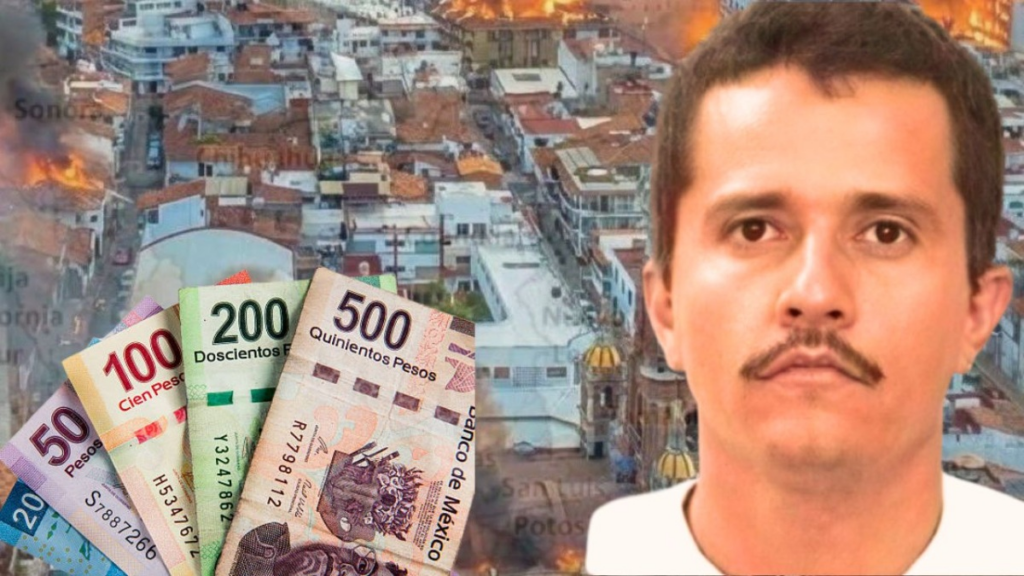
The reported killing of Nemesio Rubén Oseguera Cervantes, better known as El Mencho, marks a dramatic chapter in Mexico’s long war against organized crime. Mexican security forces confirmed he was killed on February 22, 2026, in Jalisco, with intelligence support from U.S. agencies, including the Drug Enforcement Administration (DEA) and United States Northern Command (Northcom), according to statements attributed to the U.S. Embassy in Mexico.
As the longtime leader of the Jalisco New Generation Cartel (CJNG), El Mencho was considered one of the most powerful and violent drug traffickers in the Western Hemisphere. His death is being described as a major blow to one of Mexico’s most expansive criminal networks.
Who Was El Mencho?
Nemesio Rubén Oseguera Cervantes rose from modest beginnings to become one of the most wanted fugitives in the world. A former police officer, he later became a central figure in Mexico’s drug trade and eventually led the CJNG, which grew into a global trafficking organization dealing in:
- Cocaine
- Methamphetamine
- Heroin
- Fentanyl
- Synthetic drug precursors
The United States had placed a $15 million bounty on him, one of the highest rewards ever offered for a drug trafficker. Mexico also offered rewards for information leading to his capture.
His rise coincided with the fragmentation of older cartels, allowing the CJNG to expand aggressively across Mexico and into international markets.
El Mencho Net Worth: What Do We Know?
There is no official, audited figure for El Mencho’s net worth. Drug empires do not publish balance sheets.
However, law enforcement estimates provide a rough range.
DEA Estimates
In 2019, reporting by Univision cited assessments from the DEA suggesting:
- El Mencho controlled at least $500 million
- His wealth could exceed $1 billion
Those estimates were based on drug profits, money laundering operations, seized assets, and intelligence assessments tied to CJNG operations.
It’s critical to note: these figures are estimates, not verified financial disclosures.
The Cartel’s Economic Power
While El Mencho’s personal fortune may have been in the hundreds of millions or possibly over $1 billion, the CJNG’s overall economic footprint was far larger.
Authorities have described the cartel’s operations as generating tens of billions of dollars collectively through:
- Multi-ton cocaine shipments
- Methamphetamine superlabs
- Fentanyl trafficking into the U.S.
- Extortion, fuel theft, and illegal mining
- International money laundering networks
Seized Luxury Assets
A 2019 investigation uncovered:
- Luxury cabins along Mexico’s Pacific coast
- More than 100 Japanese restaurants allegedly used as fronts
- Shopping malls
- Newspapers
- Real estate companies
- A tequila brand
- Gold bars
- A ranch housing exotic animals, including a Bengal tiger
Authorities stress these seizures likely represented only a fraction of the cartel’s holdings.
Why Estimating a Drug Lord’s Net Worth Is So Difficult
Unlike corporate executives whose assets are publicly tracked, cartel wealth operates in shadow economies.
Several factors make precise calculation impossible:
1. Hidden Revenue Streams
Cartels operate through shell companies, intermediaries, and offshore accounts.
2. Asset Diversification
Investments may include legitimate businesses, real estate, commodities, and front companies across multiple countries.
3. Cash-Based Operations
Large volumes of cash never enter formal financial systems.
4. Shared Organisational Wealth
Not all cartel revenue flows directly to its leader. Funds are distributed among:
- Regional commanders
- Logistics networks
- Corrupt officials
- Operational expenses
This means the cartel’s valuation is not the same as El Mencho’s personal wealth.
How CJNG Became One of the Most Powerful Cartels
The Jalisco New Generation Cartel rapidly expanded after splintering from older criminal groups.
Key factors behind its growth:
- Highly militarized structure
- Aggressive territorial expansion
- Control of Pacific trafficking routes
- Dominance in synthetic drug production
Unlike some legacy cartels, CJNG leaned heavily into fentanyl production — a drug that has fueled the U.S. overdose crisis.
What His Death Means for the Drug Trade
History shows that eliminating a cartel leader does not automatically dismantle a criminal organization.
Past examples in Mexico suggest:
- Cartels may fragment into smaller, violent factions
- Power vacuums can trigger turf wars
- Supply chains often adapt quickly
That said, removing a figure like El Mencho — who had centralized operational control — could temporarily disrupt:
- International trafficking logistics
- Financial coordination
- Leadership cohesion
Whether CJNG weakens or reorganizes remains to be seen.
How the US and Mexico Coordinated the Operation
According to statements, U.S. agencies provided intelligence support, including the Drug Enforcement Administration and United States Northern Command.
Such cross-border cooperation reflects broader U.S.-Mexico security coordination, particularly around fentanyl and synthetic drug flows.
TL;DR
- El Mencho, leader of the Jalisco New Generation Cartel, was reportedly killed in February 2026.
- He had a $15 million U.S. bounty on his head.
- DEA estimates previously suggested his personal net worth ranged from $500 million to over $1 billion.
- The CJNG’s broader operations may be worth tens of billions collectively.
- Precise figures remain unverifiable due to the hidden nature of cartel finances.