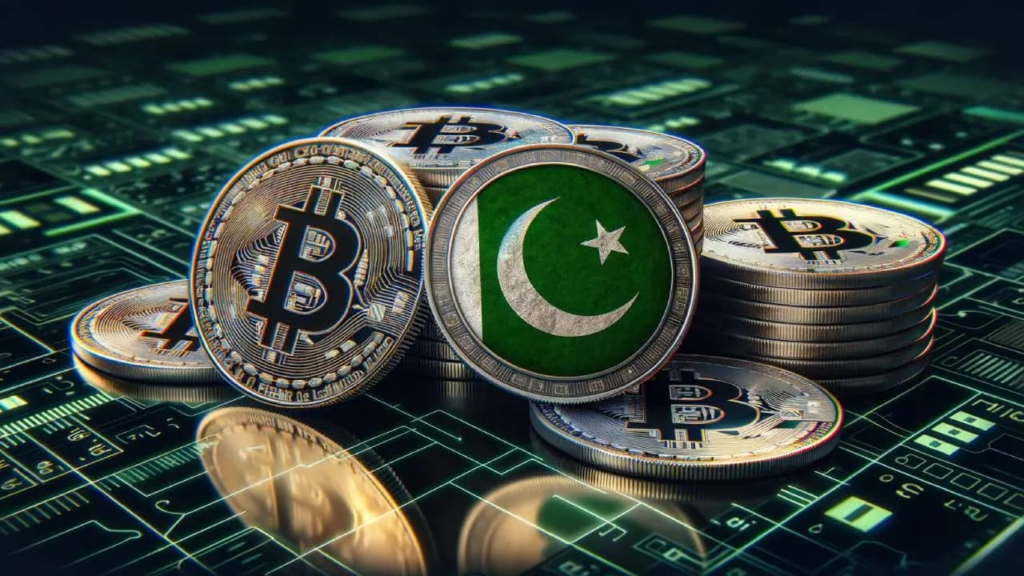
The decision to lift the Pakistan crypto banking ban marks a sharp turn in the country’s financial policy. After years of keeping cryptocurrency businesses at arm’s length, regulators are now allowing them limited access to the formal banking system. The timing has sparked a bigger question: is this shift driven by global crypto momentum, domestic economic pressure, or what some are calling the “Trump effect”?
What changed in Pakistan’s crypto policy?
For nearly seven years, Pakistan maintained a restrictive stance on cryptocurrencies. Banks were instructed to avoid any dealings with crypto-related entities, effectively pushing the entire ecosystem into informal channels. That wall has now been partially dismantled.
From ban to controlled access
Under the new framework introduced by the State Bank of Pakistan:
- Banks can open accounts for registered Virtual Asset Service Providers (VASPs)
- Crypto-linked businesses can access financial infrastructure legally
- Transactions can flow through regulated channels instead of informal networks
However, the door is only half open. - Banks are still prohibited from trading or holding cryptocurrencies
- Direct investment exposure remains restricted
- Full legal status for crypto assets has not been granted
This creates a hybrid model. Crypto is no longer exiled, but it is not fully embraced either.
Why now? The timing behind lifting the Pakistan crypto banking ban
Policy shifts of this scale rarely have a single cause. Pakistan’s move appears to be the result of overlapping pressures rather than a single trigger.
A massive, hard-to-ignore user base
Despite the ban, crypto adoption in Pakistan never really slowed down. Estimates suggest:
- 15 million to 40 million users
- Heavy reliance on peer-to-peer platforms
- Significant activity on offshore exchanges
In other words, the ban didn’t eliminate crypto. It just pushed it underground.
Bringing it into the banking system allows regulators to monitor, tax, and control activity that was already happening at scale.
Remittances and the stablecoin appeal
Pakistan receives roughly $36 billion in remittances annually. Traditional channels often involve:
- High fees
- Settlement delays
- Currency conversion inefficiencies
Stablecoins, typically pegged to the U.S. dollar, offer an alternative.
They function like digital dollars that move at internet speed. For a remittance-heavy economy, that’s not just convenient. It’s strategic.
A young, digital-first population
More than 60 percent of Pakistan’s population is under 30. This demographic is:
- Mobile-first
- Digitally literate
- Open to alternative financial systems
Crypto adoption in such an environment is less of a trend and more of a natural evolution.
What is the “Trump effect” in crypto policy?
The phrase “Trump effect” has entered the conversation as a shorthand for geopolitical alignment through financial and technological partnerships.
How U.S. policy influences global crypto adoption
Since returning to power, Donald Trump has positioned cryptocurrency as part of a broader economic strategy. Policies have leaned toward:
- Integrating digital assets into financial systems
- Encouraging private-sector crypto innovation
- Expanding U.S.-linked digital financial ecosystems
Countries looking to align with U.S. economic priorities may see crypto as an entry point.
Pakistan’s reported links to U.S.-aligned crypto ventures
Pakistan’s outreach to entities connected with World Liberty Financial (WLF) has added fuel to the “Trump effect” narrative.
Key developments include:
- A letter of intent signed with WLF-linked entities
- A memorandum of understanding involving affiliated financial firms
- Engagement through a newly formed crypto council
From one perspective, this looks like strategic positioning. Aligning with U.S.-linked crypto networks could open doors to investment, technology, and diplomatic goodwill.
Is the “Trump effect” overstated?
Attributing Pakistan’s policy shift solely to U.S. influence oversimplifies a more complex reality.
Domestic economic pressures are impossible to ignore
Pakistan’s economy has been navigating:
- Balance-of-payments challenges
- Limited foreign exchange reserves
- Dependence on external financial support
Recent financial assistance from Gulf countries underscores the urgency of stabilizing inflows and modernizing financial systems.
Crypto, especially stablecoins, offers a parallel infrastructure that can ease some of these pressures.
Regulation is catching up with reality
Another way to read this shift is regulatory pragmatism.
Authorities may have realized that:
- Enforcement of a total ban was ineffective
- Informal markets posed greater risks
- Controlled integration is safer than exclusion
This is not unique to Pakistan. Countries across Asia, the Middle East, and Africa are adopting similar “regulated access” models.
What does this mean for the global crypto landscape?
Pakistan’s move is part of a broader pattern where emerging economies are rethinking their stance on digital assets.
A shift toward “regulated adoption”
Instead of outright bans or full legalization, many countries are choosing a middle path:
- Allow access through licensed entities
- Restrict institutional exposure
- Build regulatory frameworks gradually
This approach balances innovation with risk management.
Stablecoins as financial infrastructure
Stablecoins are increasingly being treated not as speculative assets, but as tools for:
- Cross-border payments
- Liquidity management
- Currency hedging
For economies with volatile currencies or high remittance dependence, they offer a compelling alternative.
What should investors and businesses watch next?
The lifting of the Pakistan crypto banking ban is just the first step. The real story will unfold in how the framework is implemented.
Key signals to monitor
- Licensing of Virtual Asset Service Providers
- Compliance and anti-money laundering standards
- Integration with global crypto exchanges
- Further clarification on taxation and legality
If the system works smoothly, Pakistan could transition from a grey market to a regulated crypto hub.
If not, the hybrid model could create confusion and friction.
TL;DR
Pakistan has lifted its crypto banking ban, allowing regulated firms into the financial system while maintaining strict limits. While some link the move to the “Trump effect,” domestic economic pressures, a massive user base, and remittance needs are likely the real drivers. The shift reflects a global trend toward controlled crypto adoption rather than full legalization.