
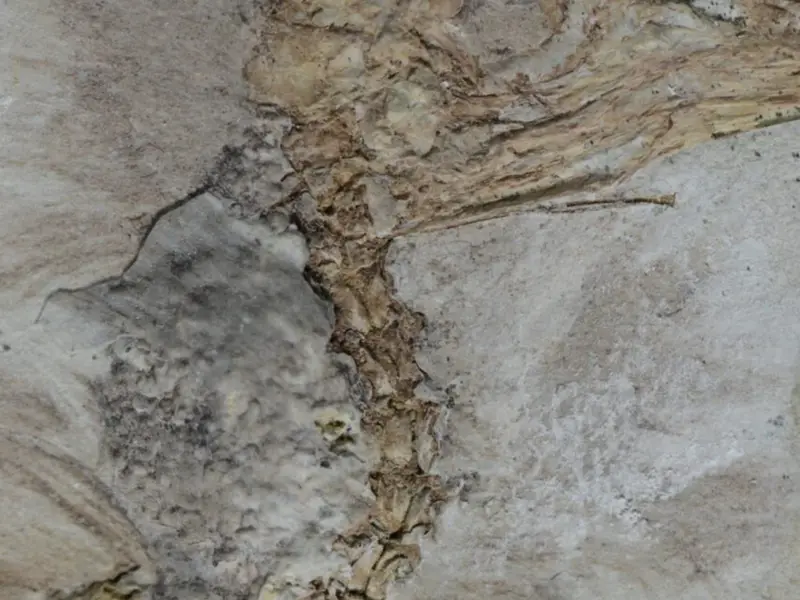
Palaeontologists studying a tiny bird fossil from China were stunned to discover an unlikely cause of death: the animal appears to have suffocated after swallowing more than 800 rocks. The 120-million-year-old creature has now been identified as a new species, offering a rare and unsettling glimpse into the vulnerabilities of early birds that lived alongside dinosaurs.
The discovery, led by researchers at Chicago’s Field Museum, will be detailed in an upcoming paper in the peer-reviewed journal Palaeontologia Electronica. It has already sparked debate about animal behavior, illness, and survival in the age of dinosaurs.
What is Chromeornis funkyi?
The fossilized bird has been named Chromeornis funkyi, a nickname researchers translate loosely as the “Funky Chromeo bird.” Despite being classified as a bird, it was still very dinosaur-like in anatomy, reflecting a transitional period in avian evolution.
Where and when it lived
Chromeornis funkyi lived around 120 million years ago, during the early Cretaceous period. The fossil was discovered in China and is now housed at the Shandong Tianyu Museum of Nature, which holds one of the world’s largest collections of bird fossils from the dinosaur era.
Birds from this lineage were among the most widespread toward the end of the dinosaur age, making this specimen especially valuable for understanding how early birds lived and died.
How scientists identified a new species
Field Museum curator Jingmai O’Connor and her team encountered the fossil while reviewing bird specimens in the museum’s collection. At first glance, the fossil resembled Longipteryx, a known early bird with large teeth at the tip of its beak.
But something did not add up.
The fossil was much smaller, closer in size to a sparrow. The proportions, combined with subtle anatomical differences, signaled that it was not a juvenile of a known species but an entirely new one.
What made this fossil so unusual?
The real mystery lay not in the bird’s bones, but inside its throat.
Over 800 stones in the oesophagus
When researchers examined the fossil more closely, they found an “unusual mass of stones” lodged inside the bird’s oesophagus, extending all the way up to its neck bones.
In total, there were more than 800 tiny stones. Some were clearly rocks, while others resembled compact clay pellets.
Their placement showed that the stones were swallowed during the bird’s life, not deposited later during fossilization.
This finding immediately raised red flags.
Why birds eat stones, and why this case is different
Modern birds such as chickens and owls intentionally swallow small stones, known as gastroliths. These stones sit in a muscular organ called the gizzard, where they help grind food.
But there were two major problems with this explanation:
- The stones were lodged in the throat, not the gizzard
- No other fossil bird from this group has ever been found with gizzard stones
O’Connor noted that among hundreds of related bird fossils, this was the first time stones of any kind had been found inside the digestive tract.
Why did the bird swallow so many rocks?
The question that continues to puzzle researchers is not whether the bird swallowed the stones, but why it swallowed so many.
A possible sign of illness
According to the research team, illness may be the key.
“We found over 800 tiny stones in this bird’s throat, way more than we would have expected in other birds with gizzards,” O’Connor said in comments reported by Gizmodo.
The leading hypothesis is that the bird was already sick. In modern animals, illness or neurological stress can trigger abnormal feeding behavior, including the ingestion of non-food items.
In this case, the bird may have:
- Begun swallowing stones compulsively
- Attempted to regurgitate them as one mass
- Failed because the mass was too large
The result, researchers believe, was suffocation when the stone mass became lodged in the oesophagus.
What this discovery reveals about early birds
Beyond its bizarre cause of death, Chromeornis funkyi offers important insight into the fragility of early bird species.
Survival was not guaranteed
Birds from this group were among the most numerous in the final chapters of the dinosaur era. When an asteroid struck Earth 66 million years ago, it wiped out all non-avian dinosaurs, while birds survived.
But fossils like this one show that survival was far from easy, even long before that catastrophe.
Early birds faced:
- Disease without evolutionary safeguards
- Behavioral vulnerabilities
- Environmental stressors, we are only beginning to understand
Studying how they lived and died helps scientists understand which traits allowed some birds to survive mass extinction and which left others exposed.
Lessons for today’s extinction crisis
O’Connor has emphasized that learning about vulnerability in ancient species has modern relevance. Understanding how animals responded to stress, illness, and environmental pressure in the past can help scientists predict outcomes in today’s accelerating biodiversity loss.
This is particularly relevant as Earth enters what many researchers describe as a sixth mass extinction, driven largely by human activity.
Why this fossil matters to science
At first glance, a bird that died from eating rocks might sound like a curiosity. But fossils like Chromeornis funkyi do more than surprise.
They challenge assumptions.
They show that behavior, not just climate or predators, could be deadly. They also remind scientists that the fossil record preserves not just anatomy, but moments of crisis frozen in time.
TL;DR
- Scientists discovered a 120-million-year-old bird fossil that died after swallowing more than 800 stones.
- The new species, named Chromeornis funkyi, was identified by researchers at the Field Museum.
- The stones were lodged in the bird’s throat, not its gizzard, suggesting abnormal behavior.
- Researchers believe the bird may have been sick and suffocated while trying to regurgitate the stones.
- The discovery offers insight into the vulnerabilities of early birds and why some species survived while others did not.