Radical theory proposes that consciousness may never truly die
What if death is not the end, but merely a doorway to another reality? Scientists are exploring a provocative concept known as quantum immortality, which suggests that consciousness could survive physical death by transitioning into alternate universes.
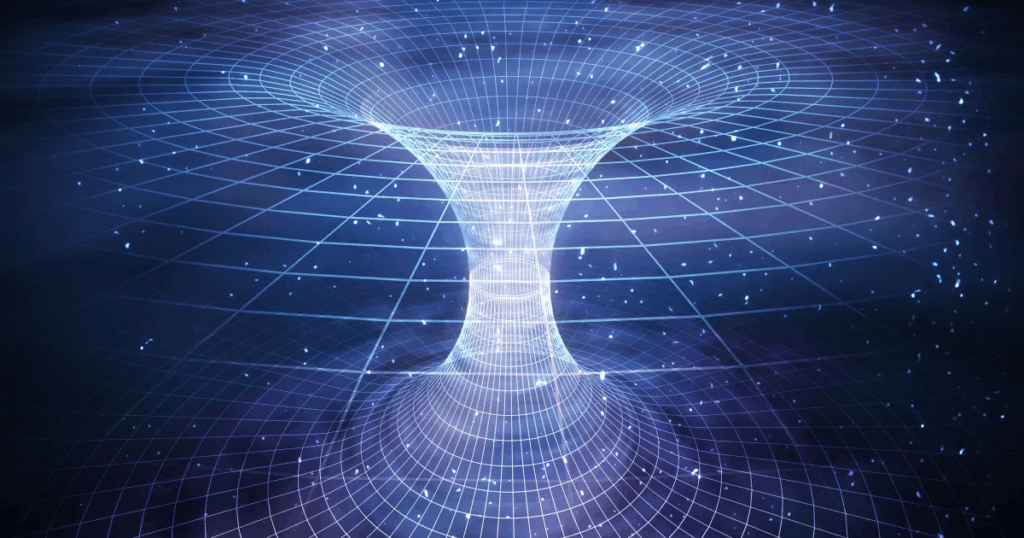
This theory is based on physicist Hugh Everett’s many-worlds theory, which proposes the existence of multiple parallel universes.
The many-worlds theory and consciousness
Quantum immortality builds on Everett’s revolutionary idea that every possible outcome of a quantum event exists in its own distinct universe. In this framework, if a person encounters a fatal event in one universe, their consciousness might simply continue in another, slightly different reality where survival occurred.
This concept opens up a startling possibility: individuals may have unknowingly survived countless catastrophic events, existing across a sprawling web of alternate realities.
A recent surge of public interest was sparked by a TikTok video posted by user @joli.artist, igniting widespread debate on social media about the potential implications of quantum immortality. Some users have speculated about personal experiences of improbable survival, linking them, however loosely, to this mind-bending idea.
Physics offers unexpected clues
Adding depth to the conversation, physicists Frank Pollman and Ruben Verresen have explored related quantum phenomena in their research. Their studies reveal that, under certain conditions, strong quantum interactions might prevent decay entirely, resulting in a continuous cycle of death and rebirth at the subatomic level.
“Until now, the assumption was that quasiparticles in interacting quantum systems decay after a certain time,” said physicist Frank Pollman of the Technical University of Munich in June 2019.
“We now know that the opposite is the case: strong interactions can even stop decay entirely.”
Expanding on these findings, Ruben Verresen of the Technical University of Munich and the Max Planck Institute for the Physics of Complex Systems explained, “The result of the elaborate simulation: admittedly, quasiparticles do decay; however, new, identical particle entities emerge from the debris.”
“If this decay proceeds very quickly, an inverse reaction will occur after a certain time, and the debris will converge again. This process can recur endlessly, and a sustained oscillation between decay and rebirth emerges.”
Beyond science fiction: The future of quantum immortality
Though the theory remains highly speculative, quantum immortality forces both scientists and philosophers to reexamine deeply held assumptions about life, death, and consciousness. For now, it remains a fascinating theoretical frontier, with further research needed to validate—or refute—its dramatic implications.
One thing is certain: if consciousness can indeed hop between realities, our understanding of life and death may be far more complex—and astonishing—than ever imagined.