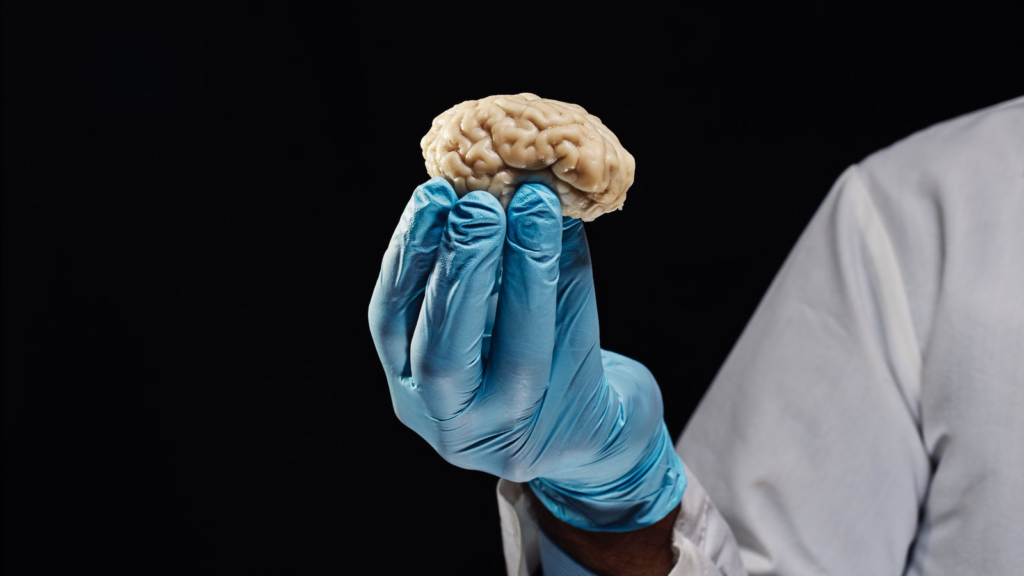
A breakthrough experiment in Germany is pushing the boundaries between science fiction and real-world biology. Researchers report that they have successfully revived frozen brain tissue, with its cellular structures and electrical activity largely intact.
The work, conducted by scientists at the University of Erlangen, Nuremberg, demonstrates a new cryopreservation method that prevents the ice crystal damage that normally destroys brain tissue during freezing.
The study, published in the Proceedings of the National Academy of Sciences, shows that delicate brain cells can survive deep-freezing and regain functional activity after thawing.
While the research involved mouse brain tissue rather than whole brains, scientists say the results mark a significant step toward preserving complex biological structures.
What Happened in the Frozen Brain Experiment?
Scientists managed to freeze brain tissue and later restore it, with many of its biological functions still working.
After thawing the tissue, researchers observed:
- Neurons generating electrical activity
- Mitochondria functioning normally
- Cell membranes remain intact
- Neural circuitry largely preserved
These signs suggest that the brain tissue retained much of its biological functionality after being frozen and revived.
The breakthrough addresses a long-standing challenge in cryobiology: freezing delicate tissues without destroying their microscopic structure.
Why Freezing the Brain Is So Difficult
Preserving brain tissue is particularly challenging because the brain is made of extremely delicate networks of neurons.
When biological tissue freezes, water inside cells forms ice crystals. These crystals expand and tear through cell membranes, permanently damaging the tissue.
This problem is especially severe in the brain because:
- Neurons rely on fragile connections called synapses
- Electrical signaling requires intact cellular structures
- Even minor structural damage can disrupt neural circuits
Because of these factors, frozen brain tissue has historically lost its ability to function after thawing.
The Technique That Made It Possible
The German research team used a method known as vitrification to prevent ice formation.
Vitrification freezes biological material so rapidly that water molecules do not form crystals. Instead, the liquid transforms into a glass-like solid state.
In this state:
- Molecular movement stops almost instantly
- Cell structures remain preserved
- Ice crystal damage is avoided
To achieve this, scientists cooled the tissue using liquid nitrogen at extremely low temperatures.
How Scientists Froze and Revived the Brain Tissue
The experiment focused on thin slices of the hippocampus taken from mouse brains.
The hippocampus is a key region involved in learning and memory.
Researchers froze the tissue using liquid nitrogen at approximately -196 degrees Celsius.
The samples were then stored for periods ranging from 10 minutes to one week.
Equally important was the thawing process. Scientists warmed the tissue rapidly to prevent ice crystals from forming during the transition back to liquid form.
After thawing, researchers examined the tissue for signs of cellular activity.
What the Scientists Found After Thawing
The revived tissue showed several signs of preserved biological function.
Researchers observed that:
- Neurons produced electrical signals
- Synaptic membranes remained structurally intact
- Mitochondria inside the cells were still functioning
- Neural circuits continued to respond to stimulation
Only a small difference appeared in how some cells reacted to electrical stimuli.
This suggests the tissue was not perfectly identical to its original state, but it retained a remarkable level of functionality.
The results indicate that complex brain tissue can survive cryopreservation under carefully controlled conditions.
Why This Matters for Cryopreservation Research
Cryopreservation is a long-standing goal in medicine and biotechnology.
Scientists hope the technology could eventually allow long-term storage of biological materials such as:
- Organs for transplantation
- Brain tissue for neurological research
- Cells used in regenerative medicine
In theory, the same technology could also help protect the brain after severe trauma or stroke by slowing cellular damage.
The new findings suggest that preserving complex neural structures may be more feasible than previously thought.
Does This Mean Frozen Brains Can Be Revived?
Despite the dramatic implications, scientists caution that the experiment does not mean entire brains, let alone humans, can be frozen and revived.
The study focused on thin slices of mouse brain tissue, not whole organs.
Preserving a complete brain would require maintaining billions of neurons and trillions of connections without damage.
Experts say that the goal remains far beyond current capabilities.
Mechanical engineer and cryobiology specialist Mrityunjay Kothari told Nature that the research represents meaningful progress but emphasized that long-term preservation of large organs or mammals is still out of reach.
Potential Medical Applications
Although reviving frozen human brains remains speculative, the research could lead to important medical advances.
Possible applications include:
Brain Injury Treatment
Cryopreservation techniques could help protect brain tissue after traumatic injuries by slowing cellular deterioration.
Organ Preservation
The methods developed for brain tissue may eventually improve the storage of transplant organs.
Currently, most organs can only be preserved for a few hours before transplantation.
Neurological Research
Preserving brain tissue without structural damage could allow scientists to study neurological diseases in greater detail.
This could help researchers investigate conditions such as:
- Alzheimer’s disease
- Parkinson’s disease
- traumatic brain injuries
Why Scientists Call It a “Science Fiction Moment”
For decades, the idea of freezing a brain and reviving it later has largely belonged to science fiction.
Cryonics companies already offer long-term storage of human bodies or brains after death, hoping future technology may restore them.
However, there has never been proof that complex brain structures could survive freezing intact.
The new experiment does not validate cryonic claims, but it shows that certain neural structures can survive deep freezing under laboratory conditions.
For researchers studying life preservation technologies, that is a major milestone.
TL;DR
- Scientists in Germany successfully revived frozen brain tissue with functioning neurons.
- The study used vitrification to prevent damaging ice crystals.
- Brain slices were frozen at -196°C using liquid nitrogen.
- After thawing, neurons showed electrical activity and intact cellular structures.
- The research does not mean whole brains or humans can be revived, but it advances cryopreservation science.
The Bottom Line
The successful revival of frozen brain tissue represents an important step forward in cryobiology.
While the experiment involved only small slices of the mouse brain, it demonstrates that delicate neural structures can survive deep freezing under the right conditions.
For now, the idea of freezing and reviving a complete brain remains far from reality.
But with each breakthrough in cryopreservation technology, the line between science fiction and scientific possibility continues to blur.