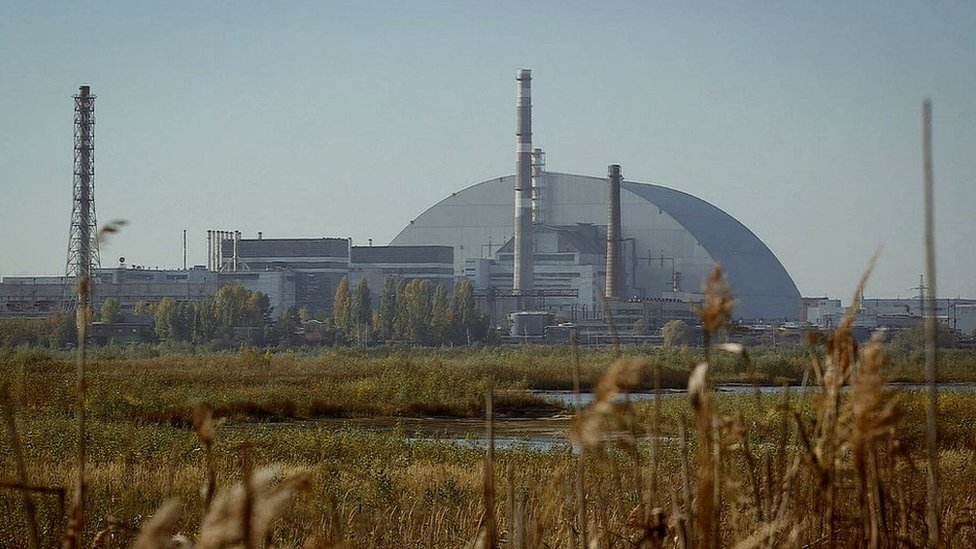
Nearly four decades after the Chornobyl nuclear disaster, scientists have discovered that some microscopic fragments of nuclear fuel remain remarkably intact, continuing to hold radioactive substances within their original structures.
Researchers from Leibniz University Hannover and the Helmholtz-Zentrum Dresden-Rossendorf in Germany examined six radioactive particles collected from contaminated locations around the Chornobyl disaster site in Ukraine. Their analysis revealed that the internal crystalline structure of some particles had changed far less than scientists expected, despite decades of exposure to the environment.
The findings, published in the Journal of Hazardous Materials in 2026, could help researchers better understand how radioactive contamination behaves in soil and how long certain particles may continue releasing dangerous substances.
The results also carry an important caveat. The team examined only six particles from two locations, so the findings cannot be generalized to every radioactive fragment scattered across the Chornobyl Exclusion Zone.
What are the radioactive particles found at Chornobyl?
The particles, often referred to as “hot particles”, are microscopic fragments of nuclear fuel released during the explosion and subsequent fire at Reactor No. 4 on April 26, 1986.
The disaster sent radioactive material into the surrounding environment, contaminating soil, vegetation, buildings and areas far beyond the power plant.
Some of the released material consisted of tiny fragments of the reactor’s nuclear fuel. These particles can contain radioactive isotopes produced during the fission process, along with uranium and other elements associated with the fuel.
The particles examined in the latest study measured approximately 8 to 50 micrometres across. A micrometer is one-millionth of a meter, meaning these fragments are far too small to be seen clearly without specialized equipment.
Despite their tiny size, they can contain concentrated radioactive material.
Their behavior matters because radioactive elements may remain trapped inside a particle for an extended period or become available to the surrounding environment as the material breaks down.
Why are scientists concerned about their stability?
Radioactive contamination is often discussed in terms of radioactive decay, the process through which unstable atomic nuclei transform over time.
But radioactive decay and the physical breakdown of the material containing those atoms are not the same thing.
A particle can continue to undergo radioactive decay while retaining much of its original crystalline structure. Its stability may affect how quickly radioactive substances escape into nearby soil, groundwater or the air.
Scientists had limited information about how individual Chornobyl fuel fragments changed structurally after decades in the environment.
The new research provides some of the first detailed phase analyses of individual highly radioactive fuel particles from the disaster.
The researchers found that the internal structures of some particles remained largely intact. This suggests that certain fragments may continue to retain radioactive substances rather than releasing them rapidly into their surroundings.
However, other particles can weather more quickly. The study does not establish that every fragment is stable or that the radioactive contamination around Chornobyl is no longer dangerous.
Scientists examined six particles using advanced X-ray techniques.
The research team used high-resolution synchrotron X-ray diffraction to study the internal crystalline structures of individual particles.
Synchrotron facilities generate extremely intense X-rays that can reveal how atoms are arranged within crystalline materials.
For the experiment, researchers isolated the radioactive particles from soil samples and secured them to tungsten electrodes inside multiple protective containment layers.
The samples were then examined at the Rossendorf Beamline at the European Synchrotron Radiation Facility in Grenoble, France.
The researchers rotated each particle through numerous angles while measuring how the X-rays scattered from its internal structure. This allowed them to reconstruct diffraction patterns and identify the crystalline compounds present in the fragments.
The team detected several uranium oxide phases, including uranium dioxide, triuranium octoxide, and uranium tetroxide-related structures, alongside phases containing zirconium.
These measurements offered a detailed view of the fuel fragments’ present-day structure, helping researchers assess how much the material had changed since the 1986 accident.
Three types of radioactive particles were identified
The research identified three broad categories of particles, reflecting the different conditions experienced by nuclear fuel during the disaster.
The first group retained chemical and physical characteristics similar to uranium dioxide, the principal material used in the reactor fuel.
The second group consisted of particles that were partially or completely encased in zirconium, or fused with a zirconium-containing protective layer. This category reflects the extreme temperatures reached during the accident, which caused fuel and surrounding materials to melt and interact.
The third group formed under conditions associated with the burning of the reactor’s graphite moderator.
Graphite was used in the reactor to slow neutrons and sustain the nuclear chain reaction. During the disaster, the graphite caught fire and continued burning for around 10 days.
The intense heat and exposure to the surrounding environment changed the chemical composition of the fuel, producing different uranium oxide compounds.
These differences matter because chemical composition and physical structure can influence how radioactive particles behave as they weather.
What did the researchers discover about uranium dioxide?
Uranium dioxide is an important component of nuclear fuel.
In several of the Chornobyl particles, researchers found that the original fuel structure had remained largely intact after almost 40 years.
The study also detected uranium oxide phases whose structures can act as containment matrices for fission products and actinides, groups of radioactive substances produced or present in nuclear fuel.
In practical terms, this means that some radioactive materials may remain enclosed within the fuel fragments rather than immediately dispersing into the environment.
That finding could be useful when scientists develop models to estimate how radioactive substances move through contaminated soil.
It also highlights why the environmental behavior of nuclear fuel fragments cannot be predicted from radioactive decay alone. Researchers need to understand the physical and chemical properties of the material holding the radioactive elements.
Can radioactive particles become airborne?
Yes, under certain conditions.
Not all of the uranium oxide phases found in the study are equally stable. The researchers noted that triuranium octoxide, or U3O8, can be mechanically unstable and may form smaller particles that can be carried by wind.
That creates a potential inhalation hazard.
If contaminated particles become airborne, they may enter the respiratory system. Depending on their radioactive composition, activity, size and the amount inhaled, they can expose internal tissues to radiation.
The risk is therefore not determined solely by whether a fragment has survived for four decades.
Its chemical composition, physical stability, location and potential to release radioactive material all matter.
This is one reason researchers continue to study fuel fragments rather than treating all contamination from the Chernobyl disaster as a single category.
Does the discovery mean Chernobyl is becoming safer?
The study does not support such a broad conclusion.
The discovery that certain particles retain their structures could be favorable in one respect: radioactive substances trapped inside stable fuel matrices may be released more slowly than expected.
But other particles can break down, allowing radioactive material to enter the surrounding environment.
The six samples also came from only two locations. That is far too small a sample to establish the average behavior of particles throughout the exclusion zone.
The researchers explicitly warned that some particles could be unusually persistent and release radioactive substances much later than others.
Consequently, the results should not be interpreted as evidence that Chornobyl’s contaminated areas are safe for unrestricted human activity.
Instead, the study provides a more detailed understanding of one part of the problem: how individual fragments of nuclear fuel survive and change in the environment.
Why does the research matter nearly 40 years later?
The Chornobyl disaster remains a major case study in long-term nuclear contamination.
The accident released radionuclides and fuel material into the environment, creating contamination patterns that have persisted for decades.
Understanding the behavior of individual hot particles can help improve environmental monitoring and estimates of how radioactive substances move through soil and water.
It could also help researchers distinguish between materials that retain radioactive elements and those more likely to release them.
That distinction is important for planning remediation work, managing radioactive waste, and estimating potential exposure pathways.
The findings may also have wider applications. Scientists studying nuclear accidents need reliable information about how fuel fragments change under real environmental conditions, rather than relying exclusively on laboratory models or assumptions about the rate of chemical degradation.
What remains unknown about Chornobyl’s radioactive legacy?
Several questions remain unanswered.
Researchers still need to establish how representative the six analyzed particles are of the wider contaminated landscape, including differences between locations and soil conditions.
They also need to understand why some particles weather more quickly than others and determine how much radioactive material different types release over time.
The study’s authors cautioned that even a larger collection of samples would not automatically provide a universal assessment of health risks. Unusually persistent particles could behave differently from the average, releasing radionuclides long after other fragments have degraded.
Further experiments are already underway to investigate highly radioactive transuranic phases in material left behind by the accident.
These follow-up studies could help refine contamination models and improve long-term radioactive-waste management strategies.
Chornobyl’s legacy is more complex than radioactive decay
The central finding is that some microscopic fragments of nuclear fuel have retained much of their original internal structure for nearly four decades.
That persistence may help explain why certain radioactive elements remain trapped within the material, while other particles can gradually break down and release contamination.
It is a reminder that the environmental aftermath of a nuclear accident cannot be measured by the passage of time alone.
Radioactive isotopes decay at different rates, fuel fragments react differently with their surroundings, and the movement of contaminated material depends on a combination of physical and chemical processes.
The new research gives scientists a more precise way to examine those processes at the level of individual particles.
But the researchers’ message is cautious: six samples cannot describe an entire exclusion zone, and the discovery does not remove the need for long-term monitoring.
Nearly 40 years after the Chernobyl disaster, scientists are still learning how the smallest remnants of the destroyed reactor behave, and those details could prove important for managing the accident’s radioactive legacy for decades to come.