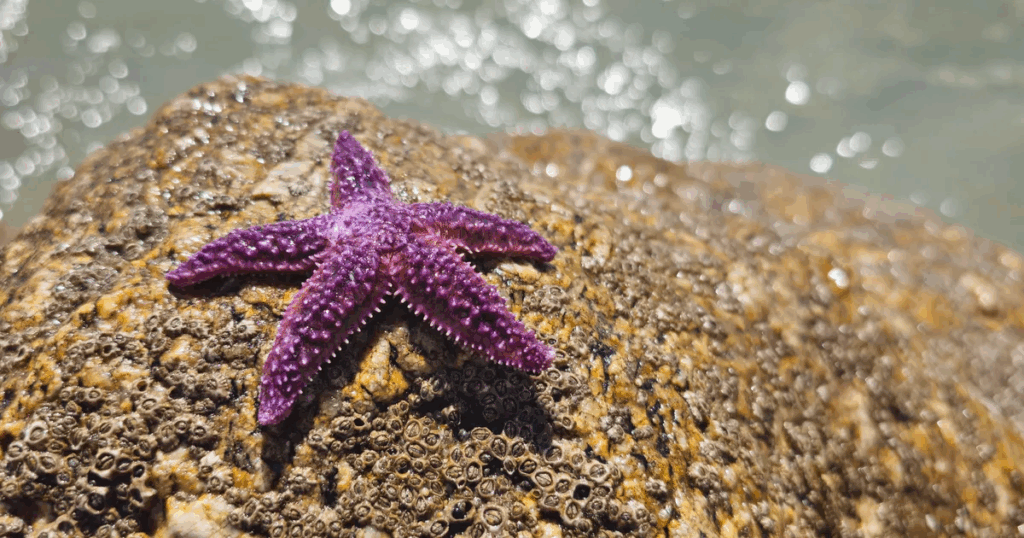
For over a decade, marine biologists have struggled to understand what was causing sea stars to rot and die in massive numbers along the Pacific coastline. The phenomenon, known as sea star wasting disease (SSWD), devastated over 20 species and reshaped ocean ecosystems. Now, scientists believe they’ve finally identified the culprit: a marine bacterium closely related to cholera.
What is sea star wasting disease, and how bad was it?
First documented in 2013, SSWD quickly escalated into one of the largest marine wildlife epidemics ever recorded. Within days of infection, starfish developed lesions, began decaying, and ultimately disintegrated — in some cases while still alive. Entire populations vanished almost overnight.
The outbreak spread from Alaska to Mexico, impacting sea stars both in the wild and in captivity. Among the most affected was the sunflower sea star (Pycnopodia helianthoides), whose population plummeted by nearly 90 percent. The ecological ripple effects were significant: with fewer sea stars to keep them in check, sea urchin populations exploded, leading to the destruction of kelp forests, critical underwater ecosystems.
What caused the die-off?
A new joint study by scientists from the United States and Canada has pinpointed the bacterial species responsible: Vibrio pectenicida, a previously underexamined relative of the cholera bacterium.
In their experiments, researchers collected samples from diseased sea stars and identified high levels of Vibrio pectenicida in their coelomic fluid — a fluid inside the sea stars’ body cavity. This bacteria was absent in healthy specimens. When scientists exposed healthy sea stars to the isolated bacteria, the animals rapidly developed symptoms of SSWD and died.
The strain they identified, FHCF-3, appears to be particularly virulent. The testing method mirrored those used in human disease research — isolating the pathogen and then confirming its effects through controlled exposure. The match between the symptoms and the exposure confirmed the bacteria’s role in the deaths.
Didn’t scientists think a virus was responsible?
Yes — but that theory didn’t hold up. In 2014, researchers initially suspected a densovirus might be to blame, as it was found in some afflicted sea stars. However, further research revealed that the virus couldn’t account for the widespread and rapid die-off. Not all infected animals had the virus, and its presence didn’t align with disease severity or spread patterns.
By contrast, the latest findings suggest a much clearer link between the presence of Vibrio pectenicida and the onset of wasting disease.
Why does this discovery matter?
This breakthrough doesn’t just solve a biological mystery — it opens the door to targeted conservation strategies. Understanding what causes the disease could help scientists develop interventions to protect vulnerable sea star species, particularly Pycnopodia helianthoides, which is now considered critically endangered.
Moreover, the die-off has already demonstrated how interconnected marine ecosystems are. The absence of predators like sea stars allowed herbivorous sea urchins to overgraze kelp forests, transforming vibrant marine habitats into barren sea floors. Kelp forests serve as nurseries for countless species and are vital to carbon sequestration in coastal waters.
What’s still unknown?
While the study identifies Vibrio pectenicida as the key player in SSWD, researchers are still trying to determine how the disease spreads. Possible vectors include:
- Shared food sources in densely populated regions
- Direct physical contact between infected and healthy sea stars
- Environmental presence in sediments or marine detritus
Also unclear is what triggered the initial outbreak in 2013. Was it a sudden population boom of the bacterium? A temperature change that made sea stars more susceptible? Or some combination of factors?
Understanding the transmission dynamics is now a top priority. Researchers are also investigating how climate change and warming ocean temperatures may have contributed to the bacteria’s virulence or spread.
Could other marine species be at risk?
The discovery raises broader questions about oceanic disease ecology. Bacteria like Vibrio are common in marine environments, and shifts in temperature, salinity, or pollution can sometimes trigger outbreaks. It’s possible that other marine invertebrates could also be vulnerable under certain conditions.
Monitoring for similar mass mortality events will be key to protecting marine biodiversity in a changing climate.