

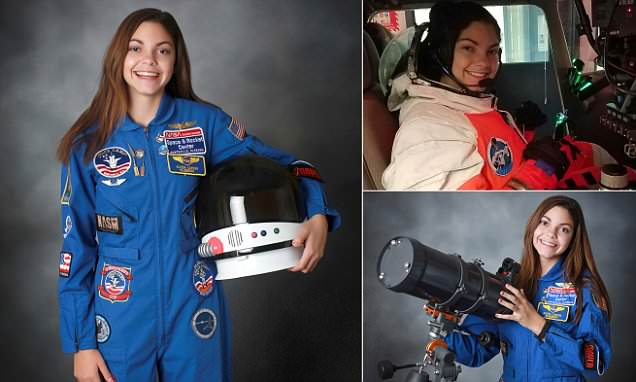
Alyssa Carson’s Lifelong Dream: Becoming the First Human to Walk on Mars
At just 24 years old, Alyssa Carson is already a veteran in space exploration training, with her sights set on an unprecedented goal—being the first human to step foot on Mars. Her journey, which began when she was just three years old, is a testament to unwavering dedication, rigorous preparation, and a vision that could redefine humanity’s future in space.
As NASA and private companies like SpaceX aim for crewed Mars missions in the 2030s, Carson stands out as a leading candidate for this historic voyage. But what drives her? And what does it take to prepare for a mission that could be a one-way trip?
Who Is Alyssa Carson?
Alyssa Carson, known by her NASA callsign “Blueberry,” is a Baton Rouge, Louisiana native who has spent nearly her entire life preparing for Mars. She is currently pursuing a PhD in Astrobiology while undergoing advanced astronaut training.
A Childhood Dream Turned Mission
- At age 3, inspired by an episode of The Backyardigans about a Mars mission, she told her father, “I want to be an astronaut and go to Mars.”
- By 6, she was memorizing Martian geography, explaining, “When we get to Mars, I need to know where we are.”
- At 7, she attended her first NASA Space Camp, eventually becoming the only person to complete all three NASA Space Camps (U.S., Canada, and Turkey).
A Prodigy in Space Advocacy
- At 11, she gave her first public talk on Mars exploration.
- By 12, she was the youngest panelist at a NASA Mars conference.
- At 13, she delivered TEDx talks in Romania, Austria, and Greece.
Her early achievements positioned her as a leading voice in the next generation of space explorers.
Why Mars? The Scientific and Human Imperative
Mars has long fascinated scientists as the most Earth-like planet in our solar system. With rising concerns about climate change and overpopulation, the idea of interplanetary colonization has shifted from science fiction to a tangible goal.
The Case for a Human Mission
- Research Limitations: While rovers like Perseverance provide valuable data, human explorers can conduct more complex experiments.
- Survival of the Species: Experts argue that establishing a Mars colony could safeguard humanity’s future.
- Technological Leap: A successful mission would accelerate advancements in propulsion, life support, and sustainable living in space.
Carson emphasizes, “Nothing can compete with the amount of information we’re able to gain once we send people to Mars.”
The Grueling Path to Becoming a Mars Astronaut
Preparing for Mars isn’t just about physical endurance—it’s about mental resilience, adaptability, and mastering multiple scientific disciplines.
Carson’s Training Regimen
- Advanced PoSSUM Academy: At 15, she became the youngest person certified as a research astronaut trainee.
- Pilot’s License: Earned at 16, crucial for spacecraft operation.
- Survival Simulations: Participates in Mars habitat mock-ups, testing isolation, resource management, and emergency protocols.
The Reality of a One-Way Trip
Current estimates suggest a six-month journey to Mars, with no immediate return. Carson acknowledges the risks but remains undeterred: “I’ve spent my whole life preparing for this. If it’s a one-way trip, I’m ready.”
The Future of Mars Exploration
NASA and SpaceX both target the 2030s for crewed missions. Elon Musk has even suggested a city on Mars within decades.
What’s Next for Carson?
- Completing her PhD in Astrobiology.
- Continuing advanced survival training.
- Advocating for STEM education, especially for young girls.
Could She Really Be the First?
While competition is fierce, Carson’s lifelong dedication and unique training make her a top contender. If selected, she would make history—not just as the first woman on Mars, but as the first human to step onto another planet beyond the Moon.


