Why a decade-old Mars photo is making waves again
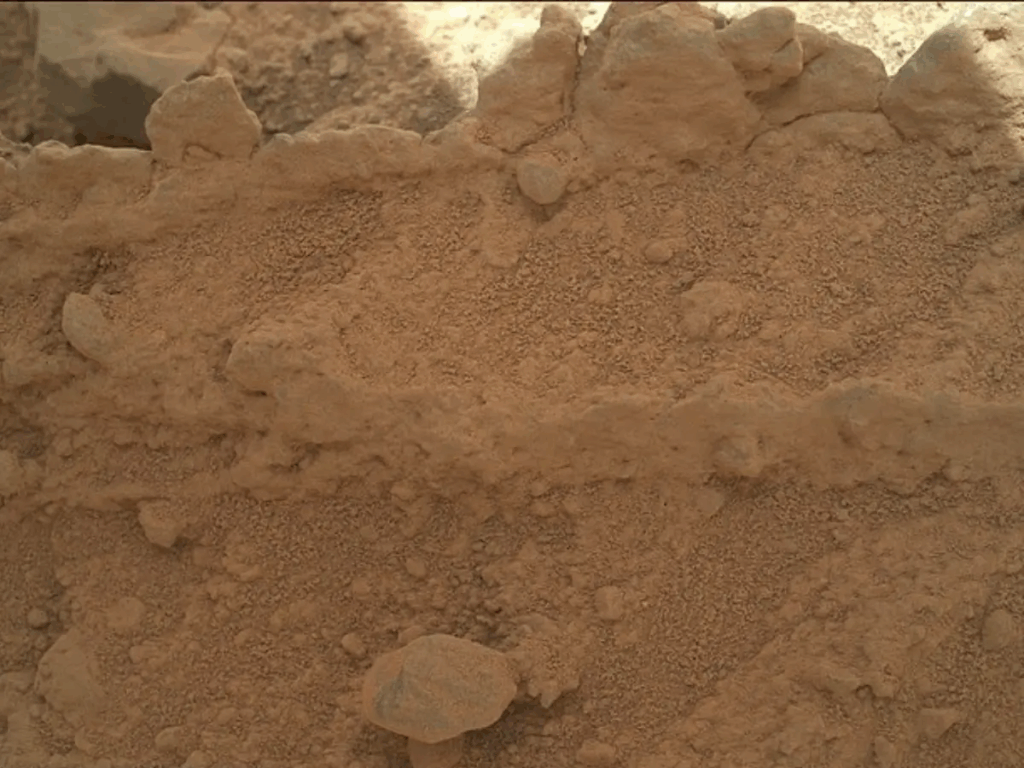
In 2013, NASA’s Curiosity rover captured a photo of something that looked suspiciously like a mushroom on the Martian surface. The image, archived quietly for years, has resurfaced thanks to UFO enthusiast Scott Waring. His discovery has reignited debate over whether the U.S. space agency might have missed or dismissed possible evidence of life on Mars.
At the center of the debate is a strange formation that appears to have a distinct stem and cap, much like a terrestrial mushroom. While NASA never publicly flagged this image as significant, Waring believes the agency should have taken a closer look.
And he’s not alone.
What did the Curiosity rover photograph?
The controversial image shows a small structure poking out of the Martian soil. It looks strikingly similar to a mushroom, at least at first glance. Waring, who runs a website focused on alleged extraterrestrial evidence, claims the object resembles fungi that could have pushed up from below the surface.
“NASA should have poked it, bumped it, knocked it over, cut it open,” Waring said. “That’s what the rover’s tools are for.”
While his demands sound aggressive, they echo a question many have asked: Why didn’t NASA investigate?
Why NASA didn’t follow up and what scientists say
NASA hasn’t commented directly on this specific image, but planetary scientists say the explanation is far simpler, and far less mysterious. According to Dr. Gareth Dorrian, a planetary physicist at the University of Birmingham, the object likely isn’t a mushroom at all. It’s probably just two rocks, with one perched naturally on top of another.
Mars is a planet shaped by billions of years of wind erosion, dust storms, and ancient water flow. These geological processes often create odd-looking landforms. In this case, Dorrian suggests the top “cap” could have settled over time as surrounding dust eroded.
In short: It may look like a mushroom, but that doesn’t make it alive.
Could life even survive on Mars?
The bigger issue isn’t what the photo shows, it’s whether life could even exist on Mars in its current state. And the consensus among experts is: Not on the surface.
Here’s why:
- Radiation exposure: Mars has a thin atmosphere, which offers little protection from ultraviolet and cosmic radiation. These conditions destroy complex organic molecules like DNA.
- Temperature extremes: Surface temperatures can swing from 20°C (68°F) during the day to -100°C (-148°F) at night—well beyond what any known life can withstand.
- Low atmospheric pressure: The pressure on Mars is less than 1% of Earth’s. This makes the presence of liquid water on the surface almost impossible today.
According to Dorrian, these conditions mean “no known forms of life can simultaneously tolerate these extremes of temperatures, radiation levels, and low atmospheric pressure.”
Why people think NASA is hiding something
Despite the science, speculation persists, especially online. Some social media users are accusing NASA of covering up evidence of life on Mars. “Looks like a mushroom to me! NASA knows far more than they let on,” one person posted.
This skepticism isn’t new. NASA has long been the subject of conspiracy theories, especially when it comes to extraterrestrial life. The agency’s cautious, evidence-based approach often clashes with the public’s eagerness for a big reveal.
But the reality is, NASA is still looking. Curiosity, and now its more advanced cousin Perseverance, are both part of a methodical search for ancient microbial life, not mushrooms sprouting on the surface.
Could the object be a fossil or something ancient?
Some scientists acknowledge that Mars might have supported life billions of years ago, when it had flowing rivers and a thicker atmosphere. If life existed then, it might have left behind fossils or chemical traces.
Could this object be one of those remnants?
Unlikely, says Dorrian, who emphasizes that without in-person analysis or sample returns, it’s impossible to make definitive claims based on a photo. He also notes that human brains are wired to recognize familiar shapes—a phenomenon called pareidolia. That’s why we often “see” faces in clouds or animals in rock formations.
In this case, we might just be seeing a mushroom because we want to.
The science vs. the speculation: What matters more?
It’s easy to see why this image captivates people. A mushroom-like object on another planet sparks the imagination. But imagination is not evidence. NASA’s mission isn’t to chase every anomaly—it’s to build a case for life, past or present, through rigorous, testable science.
Still, the renewed interest in this photo is a reminder of how hungry we are for answers—and how quick we are to question institutions when those answers aren’t clear.
And while Waring and others may never accept “just two rocks” as a satisfying explanation, the debate they’ve stirred is useful. It reminds scientists to be thorough, the public to stay curious, and space agencies to remain transparent.