First Indian to reach the ISS prepares for launch with international crew
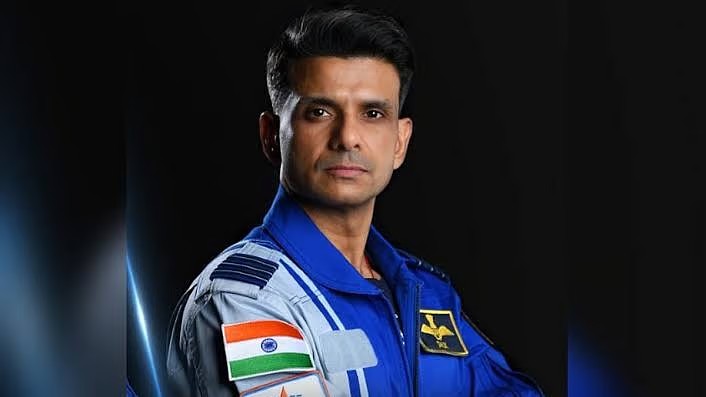
In a landmark moment for India’s space ambitions, astronaut Shubhanshu Shukla has officially begun his final pre-launch isolation ahead of the Axiom Mission-4 (Ax-4) to the International Space Station (ISS). Scheduled to lift off on June 8 from NASA’s Kennedy Space Center in Florida, the mission marks the first time an Indian astronaut will travel to the ISS.
A new milestone for India in human spaceflight
Shubhanshu, who will serve as the mission’s pilot, joins a multinational crew aboard the SpaceX Dragon spacecraft. Leading the mission is Peggy Whitson, a decorated former NASA astronaut and current Director of Human Spaceflight at Axiom Space. Also onboard are Slawosz Uznanski-Wisniewski, a project astronaut with the European Space Agency (ESA) from Poland, and Hungary’s Tibor Kapu. Both are embarking on their first missions to space.
The Ax-4 mission, organized by Houston-based Axiom Space in partnership with NASA and SpaceX, will see the team spend two weeks aboard the ISS conducting scientific research, outreach programs, and technology demonstrations.
Ritual send-off before isolation
As per tradition, Axiom Space employees gathered to bid farewell to the crew before their quarantine began. Addressing the gathering, Shubhanshu expressed confidence in the mission’s outcome, stating, “I am sure this mission will be a success.”
The moment marked the culmination of months of preparation and training across elite facilities, including NASA’s Johnson Space Center and ESA’s Astronaut Center in Cologne, Germany.
The importance of astronaut quarantine
The two-week pre-launch quarantine is a vital protocol aimed at protecting the crew’s health and preventing any illness from being taken aboard the ISS. Even a common cold in the station’s confined microgravity environment could endanger the mission and crew.
Astronauts in quarantine remain isolated with a limited support staff, undergo rigorous health monitoring, and maintain heightened hygiene standards. Mission simulations and briefings continue during this time, with minimal external contact to ensure biosecurity.
Life and work aboard the ISS
During their 14-day mission in orbit, the Ax-4 crew will conduct a series of microgravity experiments, test advanced technologies, and participate in public engagement efforts. These activities are not just critical to expanding scientific knowledge but also serve as stepping stones toward the future of private and international space travel.
India’s return to human space exploration
For India, Shubhanshu Shukla’s mission is a significant leap forward. It marks the country’s return to human spaceflight for the first time since 1984, when Rakesh Sharma flew aboard a Soviet Soyuz spacecraft. Unlike Sharma’s mission, however, Shukla’s journey is tied to the rapidly evolving ecosystem of commercial spaceflight and global collaboration.
As India advances its own Gaganyaan program under ISRO, Shubhanshu Shukla’s participation in Ax-4 is seen as both symbolic and strategic, highlighting India’s growing presence in international space endeavors.