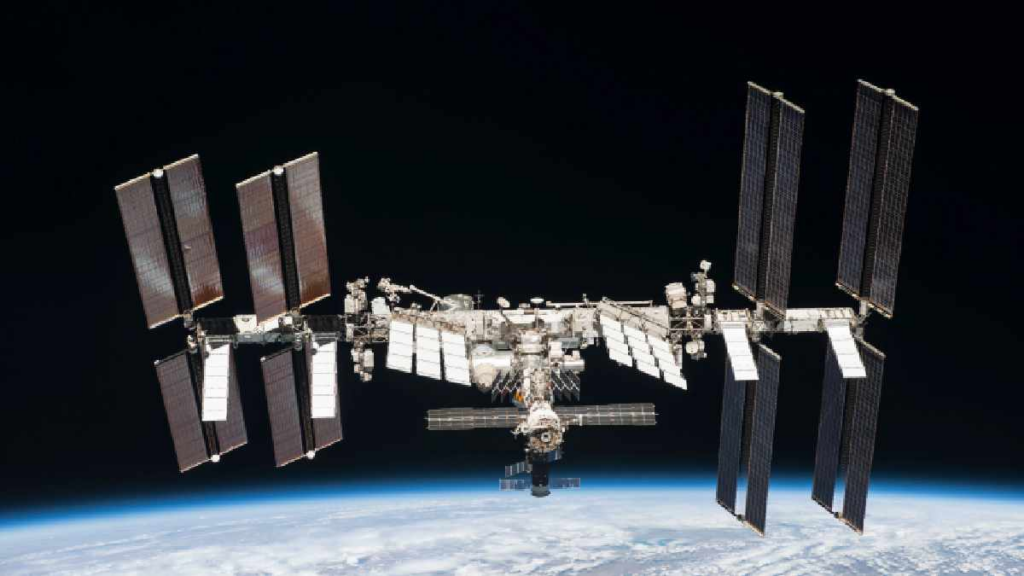
Astronauts aboard the International Space Station (ISS) were placed on a precautionary evacuation alert after a long-running air leak in a Russian section of the orbiting laboratory showed signs of worsening.
The incident prompted NASA to instruct crew members to move into their docked spacecraft and prepare for a potential emergency departure, underscoring growing concerns about the aging infrastructure of humanity’s largest orbital outpost.
While officials stress there is no immediate danger to the crew, the development has renewed scrutiny over a leak that has troubled engineers for years and highlighted the challenges of maintaining a space station that has been continuously occupied since 2000.
What happened on the International Space Station?
NASA issued a precautionary alert after monitoring systems detected an increase in the rate of air loss from the station.
As part of established safety procedures, members of the Crew-12 mission were directed to enter their docked spacecraft and don their spacesuits while engineers assessed the situation.
The move was not an evacuation order but a readiness measure designed to ensure astronauts could quickly depart if the leak worsened unexpectedly.
The affected area is believed to be connected to the Russian segment of the station, specifically the transfer tunnel associated with the Zvezda service module.
Where is the leak located?
The suspected source is the PrK transfer compartment, a small tunnel attached to the Russian-built Zvezda service module.
The compartment serves as a connection point for visiting Russian cargo spacecraft and plays an important role in station operations.
Why this area matters
The Zvezda module functions as one of the ISS’s core components, providing:
- Life-support systems
- Crew living quarters
- Guidance and navigation capabilities
- Communication systems
- Docking interfaces for Russian spacecraft
Any structural issue affecting this section naturally draws significant attention from mission controllers.
Why has the leak become a major concern?
The current issue is not new.
Engineers from NASA and the Russian space agency, Roscosmos, have been tracking air leaks in the area for several years.
Initially, the leak was considered manageable and was addressed through temporary repairs, monitoring programs, and operational workarounds.
Recent data, however, reportedly indicated that the rate of air loss had increased significantly.
What makes air leaks dangerous in space?
Unlike on Earth, astronauts live inside a sealed environment surrounded by the vacuum of space.
Even small leaks can become serious because
- Oxygen and breathable air slowly escape.
- Cabin pressure decreases over time.
- Life-support systems must work harder to compensate.
- Structural damage can potentially worsen.
If a leak expands beyond the station’s ability to replenish air, crew members may be forced to abandon the affected section or evacuate entirely.
How are NASA and Roscosmos responding?
Russian cosmonauts have been carrying out inspection and repair work while teams on the ground analyze pressure data and structural conditions.
NASA and Roscosmos have long disagreed about the root cause of the problem.
Competing theories
Russian engineers have suggested the cracks may be linked to:
- Structural fatigue
- Repeated docking operations
- Vibrations generated by spacecraft arrivals and departures
NASA engineers have reportedly considered a broader combination of factors, including:
- Material aging
- Environmental exposure
- Mechanical stress
- Manufacturing characteristics
Despite differing views, both agencies continue to cooperate closely on mitigation efforts.
Is the crew in immediate danger?
According to available information, no immediate threat to astronaut safety has been reported.
The evacuation alert was issued out of caution rather than necessity.
Astronauts remained aboard the station while engineers evaluated repair progress and monitored pressure levels.
This type of response reflects standard spaceflight safety protocols, where crews prepare for worst-case scenarios even when the likelihood of evacuation remains low.
Current crew safety measures include:
- Continuous pressure monitoring
- Emergency spacecraft readiness
- Spacesuit preparation
- Isolation of affected compartments when necessary
- Real-time coordination between mission control centers
What would happen if evacuation became necessary?
Every astronaut aboard the ISS has access to a docked spacecraft that serves as a lifeboat.
For NASA’s Crew-12 astronauts, that vehicle is a SpaceX Crew Dragon capsule.
In a worst-case scenario, the crew could:
- Enter the spacecraft.
- Seal the hatch.
- Undock from the station.
- Begin the return journey to Earth.
Such an event would be extremely rare, but it remains a core component of ISS emergency planning.
What does this mean for the future of the ISS?
The latest leak comes as questions continue to grow about the long-term future of the International Space Station.
Many of the station’s modules have operated well beyond their original design expectations.
The ISS has been continuously inhabited for more than 25 years, making aging hardware an increasingly important concern.
Space agencies are simultaneously:
- Extending station operations into the 2030s.
- Developing commercial space stations.
- Planning future lunar missions through NASA’s Artemis program.
- Evaluating how aging systems can remain safe and reliable.
The leak serves as a reminder that maintaining a permanent human presence in orbit requires constant monitoring, repairs, and international cooperation.
Why this story matters
Although the current situation appears stable, the incident highlights the complexity of operating a laboratory orbiting roughly 250 miles above Earth.
The ISS remains one of the most ambitious international scientific projects ever undertaken, bringing together the United States, Russia, Europe, Japan, and Canada in a shared effort to advance space exploration.
The air leak may ultimately be repaired without major consequences, but it underscores a broader reality: even after decades of operation, life in space remains a demanding engineering challenge where small problems can quickly become significant concerns.
TL;DR
- NASA placed ISS astronauts on a precautionary evacuation alert after a worsening air leak was detected.
- The issue is linked to the Russian Zvezda service module.
- Crew members were instructed to prepare for a possible emergency departure but were not evacuated.
- NASA and Roscosmos have been monitoring and repairing leaks in the area for years.
- No immediate danger to the crew has been reported.
- The incident highlights the challenges of maintaining the aging International Space Station.