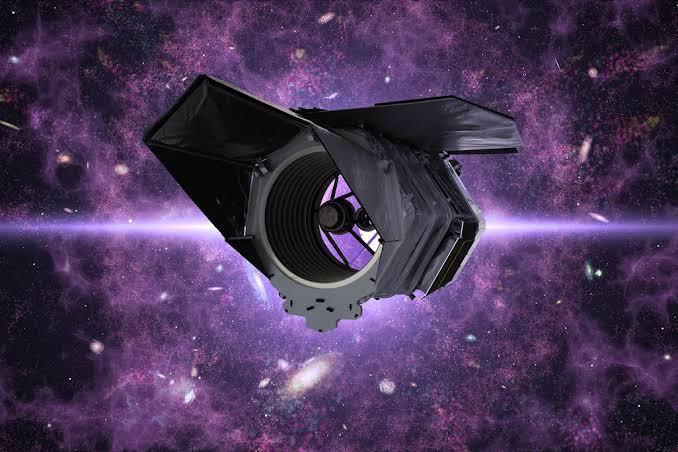
NASA has successfully launched its newest space observatory, sending the Nancy Grace Roman Space Telescope on a journey that could reshape scientists’ understanding of some of the universe’s biggest mysteries.
The telescope lifted off at 7:26 a.m. EDT on Sunday, August 30, aboard a SpaceX Falcon Heavy rocket from Launch Complex 39A at NASA’s Kennedy Space Center in Florida. About 31 minutes after liftoff, Roman separated from the rocket’s second stage and began its journey through deep space.
Roman is now traveling roughly 1 million miles from Earth toward the second Sun-Earth Lagrange point, or L2. From there, it will conduct enormous surveys of the cosmos, studying dark matter, dark energy, exoplanets and the evolution of galaxies.
The mission is expected to last five years, with a potential 10-year goal, and NASA anticipates releasing Roman’s first images in early 2027 after commissioning and calibration.
What is the Nancy Grace Roman Space Telescope?
The Nancy Grace Roman Space Telescope is a next-generation NASA observatory designed to study the universe on an enormous scale.
Unlike telescopes primarily designed to produce detailed images of individual objects, Roman will repeatedly survey huge portions of the sky. Its combination of a wide field of view, infrared vision and rapid surveying will allow astronomers to map billions of galaxies and investigate how the universe has changed over cosmic time.
NASA describes Roman as a flagship mission for studying dark energy, dark matter and planets beyond our solar system. Its observations will also support research into galaxies, black holes, stars and other astronomical phenomena.
The telescope is particularly powerful because it can cover vast areas without sacrificing the sharpness needed to study distant cosmic objects.
Why is Roman heading to L2?
Roman is traveling to L2, a gravitationally useful location about 1 million miles from Earth.
At this point, the gravitational influences of the Sun and Earth allow spacecraft to maintain a relatively stable position while using comparatively little fuel.
NASA’s James Webb Space Telescope also operates around L2.
The location gives Roman a stable environment for long-duration observations and allows the observatory to keep the Sun, Earth and Moon largely on the same side of the spacecraft. That makes it easier to shield its sensitive instruments from unwanted light and heat.
Roman is expected to reach its destination after roughly three months of travel, followed by a commissioning period in which its instruments and systems will be tested and calibrated.
What will Roman look for in the universe?
Roman has three major scientific goals that could answer some of astronomy’s most persistent questions.
Dark matter
Dark matter cannot be seen directly because it does not emit, absorb or reflect light in the way ordinary matter does.
Scientists infer that it exists because of its gravitational effects.
For example, galaxies rotate and cluster in ways that cannot be fully explained by the amount of visible matter scientists can observe. Dark matter appears to provide additional gravitational mass, helping shape the large-scale structure of the universe.
Roman will study these effects across enormous areas of sky.
One important technique will be gravitational lensing. When light from distant galaxies travels toward Earth, gravity from intervening matter can subtly bend its path.
By measuring these distortions across millions or billions of galaxies, astronomers can create detailed maps of how matter, including invisible dark matter, is distributed.
That could provide new clues about what dark matter actually is.
How will Roman investigate dark energy?
Dark energy is an even bigger mystery.
Scientists know that the expansion of the universe is accelerating, but they do not yet know what is driving that acceleration.
Dark energy is the name given to whatever phenomenon is responsible.
Roman will investigate this problem by studying the history of cosmic expansion.
One important tool will be Type Ia supernovae, which have relatively predictable intrinsic brightness. Because astronomers can compare their expected brightness with how bright they appear from Earth, these explosions can act as cosmic distance markers.
By observing large numbers of supernovae across different distances and periods in cosmic history, Roman will help scientists reconstruct how quickly the universe expanded at different times.
That could test competing explanations for dark energy and potentially challenge some of the assumptions underlying modern cosmology.
How many exoplanets could Roman discover?
Roman will also conduct a massive census of planets outside our solar system.
NASA expects the mission to identify roughly 100,000 new exoplanets.
It will use several techniques, including observations of how stars and their surrounding systems change over time.
One method involves gravitational microlensing. When a planetary system passes in front of a more distant background star from our perspective, the gravity of the foreground system can magnify and distort the background star’s light.
A planet can produce a subtle additional signature in that lensing event.
This technique is particularly useful for finding planets that are difficult to detect through methods such as the transit technique used by missions like NASA’s Kepler and TESS.
Roman could therefore reveal a different population of worlds, including planets much farther from their stars than many of those discovered by transit surveys.
How is Roman different from Hubble?
Roman is not simply a replacement for the Hubble Space Telescope.
Hubble is famous for producing exceptionally detailed images of individual astronomical targets.
Roman will combine comparable image sharpness with a dramatically wider field of view and much faster survey capability.
NASA says Roman is designed to survey the universe about 1,000 times faster than Hubble.
That difference changes what astronomers can do.
Imagine trying to understand a forest by studying one tree at a time. Hubble excels at examining individual cosmic “trees” in extraordinary detail.
Roman is designed to survey much more of the “forest,” allowing researchers to study populations of galaxies, stars and planetary systems statistically.
The two observatories can therefore complement each other rather than compete.
How much data will Roman send back?
Roman is expected to generate an extraordinary volume of scientific information.
NASA says the observatory will transmit about 1.4 terabytes of data every day, the highest data rate so far for a NASA astrophysics mission.
That is roughly equivalent to hundreds of hours of high-definition video every day, although scientific data and video files are not directly comparable in how they are stored and analyzed.
The volume is large enough that astronomers cannot rely entirely on humans manually examining every observation.
Machine learning and artificial intelligence will help identify potentially interesting patterns and objects within Roman’s enormous data archive. Citizen scientists are also expected to contribute to the search for discoveries.
This could create another important role for Roman: not just producing discoveries for planned research projects, but generating an open scientific archive from which researchers can make unexpected discoveries years after the observations are collected.
What is special about Roman’s camera?
Roman’s primary Wide Field Instrument is an infrared camera with a 300-megapixel detector system.
It contains 18 4K detectors that collect infrared light from distant objects.
Infrared observations are especially useful because they can reveal objects and structures that are difficult to observe in visible wavelengths.
They can also help astronomers study extremely distant galaxies whose light has been stretched toward longer wavelengths by the expansion of the universe.
The result will be enormous panoramic views of the cosmos rather than isolated snapshots.
Will Roman search for signs of alien life?
Roman is not primarily designed to find Earth-like planets and directly determine whether they host life.
However, it will contribute to the broader search for potentially habitable worlds.
The telescope includes a Coronagraph Instrument designed to demonstrate technology for directly imaging planets around other stars.
NASA’s Jet Propulsion Laboratory developed the instrument, which will initially focus on demonstrating the ability to image Jupiter-like planets.
The technology could eventually contribute to future missions designed to directly image Earth-sized planets around Sun-like stars.
In other words, Roman is partly laying technological groundwork for a future generation of telescopes that could look for signs of life much closer to home.
What happened during the launch?
The Falcon Heavy performed a series of major milestones after liftoff.
The rocket’s 27 Merlin engines generated more than 5 million pounds of thrust during ascent.
Its two side boosters separated roughly two and a half minutes into the flight and subsequently returned to landing zones at Cape Canaveral.
Roman remained attached to the rocket’s upper stage as it continued its trajectory.
The spacecraft separated from the second stage at approximately 7:57 a.m. EDT, marking the transition from launch operations to the observatory’s independent journey.
NASA subsequently confirmed that Roman had begun deploying key systems, including its solar arrays.
What happens to Roman after launch?
The launch is only the beginning of the mission.
Roman now faces a roughly three-month trip to L2.
During that journey, NASA controllers will deploy and test several spacecraft systems. The observatory’s high-gain antenna and deployable aperture cover will be activated, while the instruments will be powered up and checked.
The Coronagraph Instrument will be among the early systems activated.
Several weeks into the journey, the Wide Field Instrument will be switched on.
Once Roman reaches L2, scientists will spend additional time calibrating the observatory and ensuring that its instruments are performing as designed.
NASA expects Roman’s first images to arrive in early 2027.
Why does the Roman mission matter?
The biggest promise of Roman is scale.
Astronomers have learned an enormous amount by studying individual galaxies, stars and planets. But some of the most fundamental questions in cosmology require something different: huge statistical samples.
To understand dark matter, scientists need to map how matter is distributed across the universe.
To understand dark energy, they need measurements spanning enormous distances and billions of years of cosmic history.
And to understand planetary systems, they need to study large populations of planets rather than a handful of unusual worlds.
Roman is built around precisely that approach.
It will turn the sky into a giant astronomical dataset.
Could Roman discover something scientists are not expecting?
That may ultimately be one of its most exciting possibilities.
Major astronomical surveys frequently produce discoveries that were not part of their original mission objectives.
Because Roman will observe such enormous portions of the sky, scientists will have opportunities to study objects and phenomena that were not necessarily anticipated when the telescope was designed.
NASA says the mission’s vast surveys will support research ranging from stars and black holes to galaxies at the edge of the observable universe.
The enormous data archive could also allow researchers to revisit observations later with improved algorithms and scientific techniques.
A discovery made several years into Roman’s mission could therefore come from data collected much earlier.
The bottom line
NASA’s Nancy Grace Roman Space Telescope has begun its journey toward L2 after a successful launch aboard SpaceX’s Falcon Heavy.
Its mission is much bigger than taking beautiful pictures of space.
Roman will survey enormous regions of the universe to investigate dark matter, dark energy and exoplanets while generating an unprecedented volume of astronomical data.
Its combination of a wide field of view, infrared vision and rapid surveying will allow scientists to study the universe at a scale that previous space telescopes could not match.
If Hubble taught humanity to look deeper into the cosmos and James Webb expanded our ability to see the distant infrared universe, Roman is designed to help us see much more of the cosmic picture at once.