The growing militarization of space, the rapid expansion of satellite networks, and increasingly compressed nuclear decision timelines could create dangerous new risks for global security, according to American physicist Laura Grego. In an interview with The Guardian, Grego, a senior scientist at the Union of Concerned Scientists, argued that humanity has gradually built what she described as a “doomsday system”—a combination of nuclear weapons, military satellites, anti-satellite capabilities, and emerging artificial intelligence that could increase the risk of catastrophic conflict.
Her comments come as governments and private companies launch thousands of satellites into orbit while investing heavily in space-based defense technologies.
Why Is Laura Grego Concerned?
Laura Grego, a senior scientist with the Union of Concerned Scientists, believes the way humanity uses space is changing rapidly.
Rather than serving primarily scientific and commercial purposes, space is increasingly becoming a domain for military operations, surveillance, communications, navigation, and strategic competition.
In her interview with The Guardian, Grego argued that these developments have collectively created what she called a “doomsday system,” referring to interconnected technologies that could increase the risk of large-scale conflict if mismanaged.
The phrase reflects her assessment of strategic risks and is not an official government designation.
How Is Space Becoming More Militarized?
Although the 1967 Outer Space Treaty prohibits placing nuclear weapons in orbit or on celestial bodies, it does not ban many other military uses of space.
Today, satellites play essential roles in:
- Military communications.
- Navigation.
- Missile warning.
- Intelligence gathering.
- Surveillance and reconnaissance.
- Precision targeting.
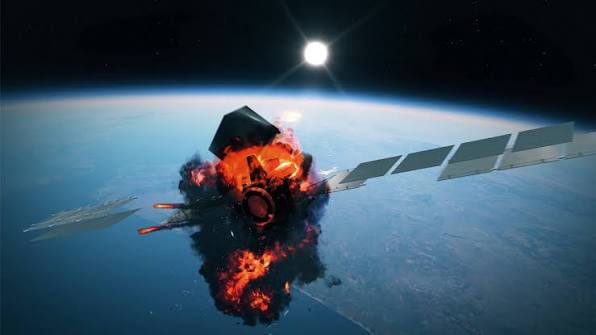
Many countries are also developing technologies capable of disrupting or disabling satellites through methods such as:
- Electronic jamming.
- Signal spoofing.
- Cyberattacks.
- Ground-based anti-satellite weapons.
These capabilities have raised concerns among security experts about the vulnerability of space infrastructure during future conflicts.
Why Are More Satellites Raising Concerns?
Low Earth orbit has become increasingly crowded in recent years.
Large satellite constellations provide services such as:
- Broadband internet.
- Earth observation.
- Navigation.
- Scientific research.
Companies including SpaceX have launched thousands of satellites, while additional constellations are planned by governments and private firms around the world.
Grego argues that the rapid increase in satellites could:
- Change the appearance of the night sky.
- Increase congestion in orbit.
- Raise the risk of collisions.
- Make space operations more complex during crises.
While commercial satellite networks provide significant societal benefits, experts continue to debate how orbital traffic should be managed as launches increase.
What Is the ‘Use Them or Lose Them’ Problem?
One of Grego’s primary concerns involves nuclear deterrence.
Modern early-warning satellites can detect the launch of intercontinental ballistic missiles (ICBMs), potentially giving national leaders only a short time to decide how to respond.
This compressed timeline contributes to what strategists call a “use them or lose them” dilemma.
The concern is that leaders might feel pressured to authorize a retaliatory strike before their own nuclear forces could be destroyed, increasing the risk of escalation based on incomplete or inaccurate information.
Reducing the likelihood of such rapid decision-making has long been a subject of debate among nuclear policy experts.
How Could Artificial Intelligence Affect These Risks?
Grego also expressed concern about the growing role of artificial intelligence in military systems.
AI can assist with:
- Data analysis.
- Threat detection.
- Satellite operations.
- Decision support.
However, some researchers caution that increasing automation in military command-and-control systems could accelerate decision-making during crises.
Supporters argue AI may improve situational awareness and reduce human error, while critics warn that overreliance on automated systems could create new risks if algorithms make mistakes or behave unpredictably.
The role of AI in nuclear decision-making remains an active area of international policy discussion.
What About Intercontinental Ballistic Missiles?
Although ICBMs are launched from Earth, they spend much of their flight outside the atmosphere.
After launch, they travel through space before re-entering Earth’s atmosphere on their way to their targets.
This means that space-based sensors and satellite systems are critical components of modern missile detection and strategic warning networks.
The existence of these systems illustrates how closely space technology and nuclear deterrence have become interconnected.
What Is the Golden Dome Proposal?
Grego also criticized proposals for large-scale missile defense systems, including the proposed “Golden Dome.”
Supporters argue such systems could improve national security by intercepting incoming missiles.
Critics, including Grego, question whether they are technologically feasible, economically sustainable, or strategically stabilizing.
Debate over missile defense has continued for decades, with experts differing over whether such systems enhance security or encourage further arms competition.
Why This Matters
Space has become an essential part of everyday life.
Modern societies rely on satellites for:
- GPS navigation.
- Weather forecasting.
- Banking and financial transactions.
- Telecommunications.
- Internet connectivity.
- Emergency response.
As governments and private companies place more critical infrastructure in orbit, protecting space assets while preventing military escalation is becoming an increasingly important international challenge.
Many experts argue that updated international agreements and greater cooperation will be needed to manage these risks.
The Bottom Line
Laura Grego’s warning reflects growing concern among many security and space policy experts that the increasing militarization of space, expanding satellite constellations, compressed nuclear decision timelines, and emerging AI technologies could create new strategic risks. While her description of a “doomsday system” is an opinion rather than an established scientific conclusion, it highlights broader debates over how space should be governed as it becomes more central to both civilian life and national security.
TL;DR
- Physicist Laura Grego warns that space is becoming increasingly militarized.
- She argues that satellites, nuclear weapons, and AI together could increase the risk of accidental conflict.
- Grego says modern nuclear decision timelines leave leaders with only minutes to respond to a potential attack.
- She also raises concerns about the rapid growth of satellite constellations in low Earth orbit.
- Her comments reflect expert concerns about strategic stability and are part of an ongoing debate over the future use of space.