
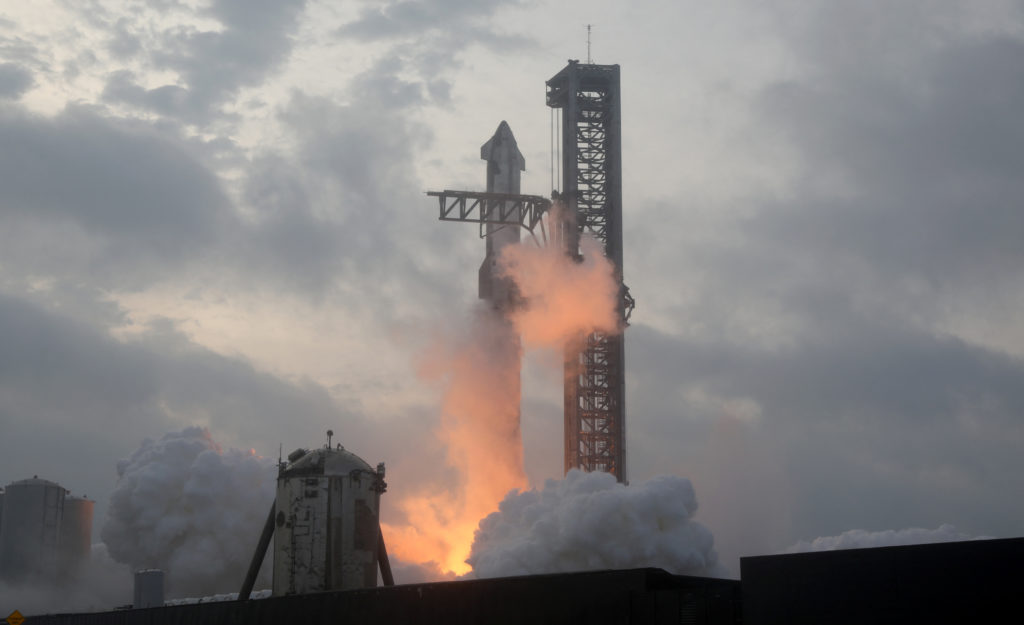
SpaceX is preparing for the 13th integrated flight test of Starship, with liftoff scheduled for July 17 between 5:15 a.m. and 6:45 a.m. IST. More than just another test launch, the mission is expected to demonstrate several firsts, including the deployment of next-generation Starlink satellites, an in-space Raptor engine restart, and new heat shield technologies that could shape the future of reusable spaceflight.
The Starship Flight 13 mission represents another major step toward Elon Musk’s long-term goal of building a fully reusable launch system capable of carrying cargo and astronauts to the Moon, Mars, and eventually deeper into the solar system.
TL;DR
- Launch Window: July 17, 5:15 a.m. to 6:45 a.m. IST.
- Mission Highlights:
- First deployment of 20 next-generation Starlink V3 satellites.
- First in-space restart of a single Raptor engine.
- Testing upgraded heat shield technologies.
- Super Heavy booster recovery attempt after Flight 12 issues.
- Controlled splashdowns for both booster and Starship.
- The mission will test technologies critical for future orbital, lunar, and Mars missions.
What Is SpaceX Starship Flight 13?
SpaceX’s Starship Flight 13 is the latest integrated test of the company’s massive two-stage launch system, consisting of:
- Super Heavy Booster – the first-stage rocket that provides liftoff thrust.
- Starship Upper Stage – the spacecraft designed to carry satellites, cargo, and eventually astronauts.
Unlike previous flights that primarily validated launch and recovery systems, Flight 13 combines multiple complex objectives into a single mission. The outcome will help determine how close Starship is to becoming a fully reusable transportation system.
Why Is Starship Flight 13 Important?
Every Starship test has gradually expanded the rocket’s capabilities, but Flight 13 introduces several milestones that move beyond proving basic flight.
First Deployment of Starlink V3 Satellites
For the first time, Starship will deploy 20 next-generation Starlink V3 satellites.
These upgraded satellites are expected to offer:
- Greater communication capacity
- Improved onboard networking
- Enhanced laser communication links
- Better support for global broadband coverage
Approximately 40 seconds after stage separation, Starship will enter a suborbital trajectory before releasing the satellites.
Why the satellites won’t stay in orbit
Although they’ll deploy normally, the satellites are not expected to become operational.
Since this is a test mission, they will:
- Deploy solar arrays
- Extend communication antennas
- Attempt to establish laser links with the Starlink constellation
- Re-enter Earth’s atmosphere roughly 20 minutes later, burning up safely instead of remaining in orbit
This allows SpaceX to validate the deployment system without adding inactive satellites to space.
Can SpaceX Successfully Recover the Super Heavy Booster?
One of the mission’s biggest objectives is improving the performance of the Super Heavy booster following issues encountered during Flight 12.
What Went Wrong Last Time?
During the previous test, small differences in the engine startup sequence caused the booster to rotate nearly 90 degrees away from its planned orientation.
While the mission still generated valuable engineering data, the unexpected movement complicated the recovery sequence.
What’s Different for Flight 13?
SpaceX engineers have implemented several improvements based on Flight 12 data.
These include:
- Updated engine startup timing
- Hardware refinements
- Improved software controls
- Enhanced onboard fault detection systems
- Better engine relight sequencing
If successful, the booster will complete:
- Launch
- Ascent
- Stage separation
- Boostback burn
- Landing burn
- Controlled splashdown at an offshore site in the Gulf of America
Each successful recovery improves SpaceX’s ability to rapidly reuse boosters—a cornerstone of its strategy to dramatically reduce launch costs.
Why Is the Raptor Engine Restart Test So Important?
Another major objective is restarting a single Raptor ngine while Starship is in space.
Although this may seem like a small technical exercise, it is one of the most important demonstrations of the mission.
Why Engine Relights Matter
Future deep-space missions require spacecraft engines to restart long after launch.
A successful in-space restart is essential for:
- Entering Earth orbit
- Performing orbital adjustments
- Traveling to the Moon
- Injecting spacecraft toward Mars
- Precision landings on other planetary bodies
Without reliable engine relights, Starship would be unable to complete many of its planned missions.
What Heat Shield Upgrades Are Being Tested?
Returning safely through Earth’s atmosphere remains one of Starship’s greatest engineering challenges.
Flight 13 will evaluate several improvements to the vehicle’s thermal protection system.
New Tile Attachment Methods
Engineers are testing revised attachment techniques intended to reduce the number of tiles that detach during re-entry.
Even small improvements can significantly increase vehicle durability and reduce refurbishment time.
Metallic Heat Shield Tiles
For the first time, metallic tiles will be installed on the aft flaps.
These components experience intense heating and mechanical stress during atmospheric re-entry.
The test will determine whether metallic materials provide greater durability than traditional ceramic tiles.
Instrumented “Load-Sensing” Tiles
Some tiles have been fitted with sensors that measure structural loads experienced during ascent.
The data collected will help engineers better understand:
- Mechanical stress
- Vibration
- Thermal expansion
- Structural performance
These insights could lead to lighter and more robust future designs.
How Does Flight 13 Move Starship Closer to Mars?
SpaceX’s long-term vision extends well beyond launching satellites.
The company ultimately wants Starship to become a fully reusable spacecraft capable of transporting:
- Astronauts
- Scientific equipment
- Lunar cargo
- Mars-bound missions
- Large commercial payloads
Each successful test validates technologies needed for that vision.
Flight 13 is particularly significant because it combines launch, deployment, engine relight, recovery, and thermal protection testing into a single mission, closely resembling the operational profile of future orbital flights.
What Success Would Mean for SpaceX
If Flight 13 meets most of its objectives, SpaceX will have demonstrated progress across several critical systems simultaneously.
A successful mission would validate:
- Starlink satellite deployment from Starship
- Improved Super Heavy booster recovery
- More reliable Raptor engine relights
- Advanced heat shield technologies
- Better onboard fault detection software
Collectively, these achievements would represent another step toward routine, reusable heavy-lift spaceflight.
What to Watch During the Launch
Key milestones include:
- Liftoff of the Super Heavy booster
- Stage separation
- Booster boostback burn
- Controlled booster splashdown
- Deployment of 20 Starlink V3 satellites
- Solar array and antenna deployment
- Raptor engine restart in space
- Heat shield performance during re-entry
- Controlled splashdown of the Starship upper stage
Each event will provide valuable engineering data, regardless of whether every objective is achieved.
Looking Ahead
SpaceX has embraced an iterative testing philosophy, using each flight to gather real-world data and rapidly improve the Starship system. Flight 13 reflects that approach by building directly on lessons learned from earlier missions while introducing several first-time demonstrations.
If the mission succeeds, it will mark another significant milestone toward making Starship a fully reusable launch vehicle capable of supporting satellite deployment, NASA’s Artemis program, and future human missions to Mars.