
The FIFA World Cup 2026 has already produced its share of controversies, from ticket prices and accommodation costs to scheduling and disciplinary decisions. Now, a new dispute is putting the spotlight on one of football’s most important rules: who is actually eligible to represent a national team?
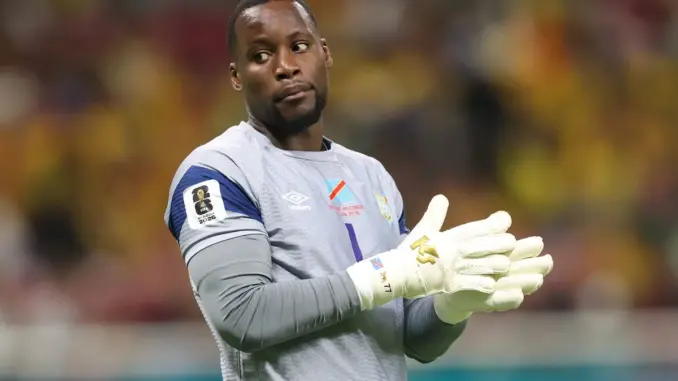
According to reports based on internal FIFA documents reviewed by The New York Times and Le Monde, FIFA’s own legal officials determined that Democratic Republic of the Congo goalkeeper Lionel Mpasi had not completed the required process to change his international association from France to DR Congo.
The issue is significant because Mpasi had already played for DR Congo during the qualifying campaign, including the decisive playoff against Nigeria. He subsequently appeared at the 2026 World Cup, including DR Congo’s Round of 32 match against England.
The controversy, however, is more complicated than simply asking whether Mpasi was eligible. The central question is what FIFA knew, when it knew it, and why no sporting sanction was imposed before DR Congo reached the World Cup.
What is the FIFA World Cup 2026 eligibility controversy?
The controversy centers on Lionel Mpasi, a goalkeeper born in France who represented France at youth level before going on to play for DR Congo.
Under FIFA’s rules, a player who has represented one national association may, in certain circumstances, switch to another association. But such a change is not simply a matter of possessing a second nationality or receiving a new passport.
FIFA distinguishes between a player’s legal nationality and their sporting nationality. A change of association can require an application and approval under FIFA’s eligibility framework.
FIFA itself says its Football Tribunal handles requests for eligibility and changes of association. It also maintains a public platform listing players whose changes of association have been approved. FIFA’s guidance states that a player whose request is still under consideration cannot represent a national team until a final decision has been made.
That distinction is at the heart of the Mpasi case.
According to the reported FIFA documents, the goalkeeper’s change of sporting association from France to DR Congo had not been properly finalized when he represented the Congolese side.
Why does Mpasi’s background matter?
Mpasi was born in France and played for French youth teams. Reports say he became tied to France at youth level before later representing DR Congo.
That did not necessarily mean he could never play for DR Congo. FIFA’s rules allow players to change their sporting association when the applicable conditions are satisfied.
The problem, according to the reported internal findings, was that the required change-of-association process had not been completed.
That is an important distinction. Being born in France does not automatically make Mpasi ineligible for DR Congo. The reported issue concerns whether the formal FIFA process allowing him to represent DR Congo had been completed.
How did Nigeria become involved?
The dispute became especially consequential after DR Congo eliminated Nigeria from the African qualifying playoffs.
The decisive match took place in November 2025. Nigeria and DR Congo drew 1-1 after extra time before DR Congo won the penalty shootout 4-3. Mpasi played the full match and reportedly saved two penalties.
Nigeria subsequently challenged the eligibility of several DR Congo players, including Mpasi.
The complaint was potentially significant because the winner of that playoff advanced to the intercontinental playoff stage. DR Congo subsequently defeated Jamaica and secured a place at the 2026 World Cup.
That means the eligibility dispute was not about an inconsequential qualifying fixture. It involved a match that directly determined which country would continue its path toward the tournament.
What did FIFA reportedly know about Mpasi?
This is where the latest revelations have intensified the controversy.
Reports based on internal FIFA documents say the organization’s legal officials became aware of the unresolved change-of-association issue during the review of Nigeria’s complaint.
According to reporting by The New York Times and Le Monde, FIFA lawyers identified the problem before DR Congo played Jamaica in the intercontinental playoff in March 2026.
That timing is crucial.
FIFA apparently had an opportunity to address the issue before DR Congo’s final step toward qualification for the World Cup. Yet DR Congo was allowed to play Jamaica, qualify for the tournament and ultimately field Mpasi at the World Cup.
The reported options considered by FIFA included:
- imposing a financial or disciplinary sanction on DR Congo;
- awarding the disputed qualifying match to Nigeria;
- replacing DR Congo with Nigeria in the intercontinental playoff; or
- taking no sporting action.
According to the reports, FIFA ultimately did not impose a sporting sanction that removed DR Congo from the qualification pathway.
Why did FIFA reject Nigeria’s complaint?
This is one of the most important parts of the story — and also one that should not be confused with FIFA declaring Mpasi eligible.
Reports indicate that FIFA rejected Nigeria’s complaint on procedural grounds, rather than simply concluding that there was no eligibility problem.
In other words, the dispute involves two separate questions:
- Was there an issue with Mpasi’s change of association?
- Was Nigeria’s complaint admissible under the applicable procedural rules and filed within the required time?
According to the reported documents, FIFA’s legal officials found a problem with Mpasi’s eligibility, but Nigeria’s challenge was rejected because of the timing or procedural requirements surrounding its complaint.
That distinction could become central to any future appeal or compensation claim.
It also explains why the controversy is more complicated than a simple allegation that FIFA “ignored” an ineligible player.
Could Nigeria have replaced DR Congo at the World Cup?
Potentially — but this remains a matter of dispute rather than an established outcome.
Had FIFA ruled against DR Congo and imposed a sporting remedy at the appropriate stage, Nigeria could potentially have advanced instead, depending on the precise sanction and the applicable regulations.
Reports say FIFA’s legal officials considered options that included replacing DR Congo with Nigeria in the intercontinental playoff.
But that does not mean Nigeria would automatically have qualified for the World Cup.
Nigeria would first have had to win the relevant playoff pathway. In the actual tournament qualification route, DR Congo defeated Jamaica to secure its World Cup place.
So the strongest factual formulation is that Nigeria may have been given another opportunity to qualify had FIFA taken a different decision, rather than saying Nigeria was definitively “robbed of a World Cup place.”
That distinction matters.
Did Lionel Mpasi play at the 2026 World Cup?
Yes.
Mpasi was part of DR Congo’s World Cup campaign and played in the tournament, including the team’s Round of 32 match against England.
That is what has transformed the issue from a qualifying controversy into a World Cup governance controversy.
FIFA’s own rules place significant emphasis on player eligibility and the formal change-of-association process. In September 2026, FIFA published updated guidance specifically addressing eligibility and changes of association, including the documentation and procedures required for such applications.
The timing makes the issue particularly sensitive: FIFA has simultaneously emphasized greater transparency around player eligibility while facing questions about how the Mpasi case was handled.
What does FIFA’s change-of-association system actually require?
A common misconception is that international eligibility is determined simply by citizenship.
It is not that straightforward.
FIFA’s framework considers a player’s nationality, previous international appearances, age and other factors depending on the circumstances. A player changing associations may also need a formal approval from FIFA’s competent body.
FIFA introduced a public platform in 2025 listing approved changes of association. The organization described the platform as a transparency measure intended to give federations, players, agents and the public greater clarity about who has been approved to represent a new association.
That makes the Mpasi controversy particularly notable.
If the reported internal findings are accurate, the issue was not simply an obscure technicality that nobody could identify. It involved the formal status of a player whose international eligibility was being examined by FIFA itself.
Was Gianni Infantino involved?
There is currently no evidence establishing that FIFA President Gianni Infantino personally directed the decision concerning Mpasi.
The reports specifically indicate that Infantino was not involved in the investigation or decision-making process.
However, his name has entered the wider controversy because of his relationship with Véron Mosengo-Omba, who was elected unopposed as president of the Congolese Football Federation earlier in 2026.
That connection has fueled questions about FIFA governance and possible conflicts of interest, but a relationship between senior football officials is not, by itself, evidence that Infantino influenced the eligibility decision.
The distinction is important: questions about governance are legitimate; allegations of personal intervention require evidence.
Why does this matter beyond Nigeria and DR Congo?
The issue goes to the credibility of international football’s eligibility system.
Player eligibility rules exist to ensure that national teams compete under the same conditions. If an association fields a player who does not meet the requirements, the consequences can extend beyond the individual player.
They can affect:
- the result of a qualifying match;
- another country’s qualification prospects;
- tournament participation;
- prize money and commercial revenue;
- sporting integrity; and
- confidence in FIFA’s disciplinary system.
The concern is therefore not simply whether one goalkeeper completed a form.
It is whether the same rules are being applied consistently to every national federation.
FIFA’s own legal framework describes eligibility and change-of-association decisions as matters requiring formal regulatory procedures.
That makes consistency especially important when a disputed player appears in a match with major consequences for qualification.
What has CONCACAF said?
CONCACAF, the confederation representing North and Central America and the Caribbean, has also weighed in on the broader eligibility issue.
The organization said it takes player-eligibility matters seriously and expects the applicable rules and procedures to be applied consistently and fairly.
CONCACAF also called for concerns affecting competition integrity or the interests of member associations to be thoroughly reviewed through FIFA’s appropriate governance and disciplinary bodies.
The statement is notable because Jamaica was the team that faced DR Congo in the intercontinental playoff after Nigeria had been eliminated.
If FIFA’s handling of the Mpasi issue is ultimately found to have affected that pathway, the consequences could extend beyond Nigeria.
Could FIFA face compensation claims?
Nigeria may seek compensation, according to reports from Nigerian media.
The argument would be based on the economic and sporting consequences of missing the World Cup after losing to DR Congo in the qualifying playoff. Nigerian officials have reportedly discussed possible claims for lost revenue and opportunity.
But compensation is far from guaranteed.
Any claim would have to address several difficult questions:
- Was FIFA legally entitled to reject Nigeria’s complaint on procedural grounds?
- Did FIFA’s internal finding actually establish that Mpasi was ineligible for the relevant match?
- What sanction would FIFA have been required to impose?
- Would Nigeria have qualified if the match had been awarded differently?
- Can Nigeria establish a direct financial loss attributable to FIFA’s decision?
Those questions would likely determine whether the controversy remains a governance dispute or develops into a formal legal battle.
What happens next?
The immediate issue is whether FIFA will publicly release more information about its handling of the case.
Transparency will be particularly important because FIFA’s own recent reforms have emphasised greater public visibility around player eligibility and changes of association.
The organization has also published its 2026 Legal Handbook, bringing together its current regulatory framework, including the FIFA Disciplinary Code and other governing regulations.
For now, the most significant unanswered questions are:
- When exactly did FIFA determine that Mpasi’s change of association was incomplete?
- Which FIFA body made that determination?
- Why was Nigeria’s complaint rejected?
- Why was no sporting sanction imposed before the Jamaica playoff?
- On what legal basis was Mpasi subsequently permitted to participate in the World Cup?
- Could Nigeria or Jamaica pursue further legal remedies?
Until FIFA releases the underlying documents or provides a fuller explanation, some of those questions will remain unresolved.
The bigger issue for FIFA World Cup 2026
The Mpasi case is not simply another controversy surrounding the 2026 World Cup.
At its core, it tests whether football’s governing body can apply its own eligibility rules consistently when the consequences are enormous.
There is an important difference between a player being technically ineligible and FIFA unlawfully manipulating a competition. The current reporting does not establish the latter.
What it does establish is a serious question about process: FIFA’s legal officials reportedly identified an eligibility problem, Nigeria challenged the matter, the complaint was rejected on procedural grounds, and DR Congo ultimately continued through qualification and appeared at the World Cup.
That sequence is enough to demand answers.
For Nigeria, the issue is about a World Cup opportunity that disappeared in a penalty shootout. For DR Congo, it is about the legitimacy of its historic return to football’s biggest stage. And for FIFA, it is about whether its increasingly detailed eligibility rules mean the same thing when the stakes are high.
The final question is therefore not only whether Lionel Mpasi was eligible. It is whether FIFA handled the rules fairly, transparently and consistently — and whether it can now explain that decision convincingly.