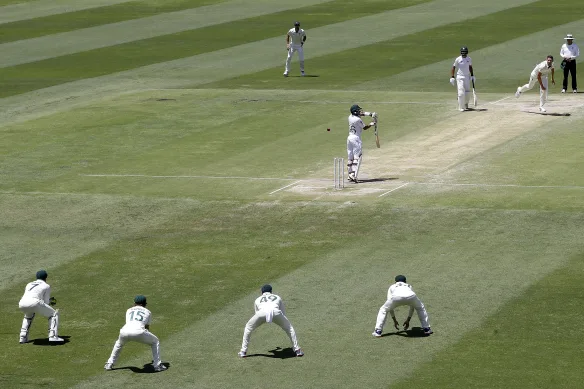
Test cricket may soon experiment with one of its most unusual rule changes in decades: switching from the traditional red ball to the pink ball during an ongoing match.
According to reports, the International Cricket Council is exploring a proposal that would allow teams to switch from red to pink ball in weather-affected Test matches so play can continue under floodlights.
If implemented, the move could fundamentally alter how Test cricket handles fading light, rain interruptions, and lost playing time, particularly in countries where daylight disappears early during certain months.
For a format built on ritual and tradition, even discussing mid-match ball changes feels a bit like suggesting Wimbledon experiment with glow-in-the-dark strawberries.
But modern cricket’s scheduling pressures are increasingly forcing administrators to rethink old assumptions.
What exactly is the ICC proposal?
The reported proposal would allow teams to switch from the red ball to the pink ball during a Test match if poor light or weather interruptions threaten playing time.
The idea is simple in theory:
- Start the match with the traditional red ball
- If fading light becomes an issue, move to the pink ball
- Continue playing under floodlights
According to Cricbuzz, the concept was discussed during a virtual meeting of the ICC Chief Executives Committee, which was attended by former India captain Sourav Ganguly, who currently chairs the ICC Cricket Committee.
The proposal remains in the discussion phase, and several practical details reportedly remain unresolved.
Why the ICC is considering the rule change
The biggest issue is lost playing time.
Test cricket depends heavily on:
- Natural daylight
- Weather conditions
- Visibility standards for batters and umpires
In many parts of the world, especially during winter months, fading light regularly forces matches to end early, even when rain has not interrupted play.
In parts of India, for example, daylight can begin fading around 4 p.m. during certain seasons, often reducing the number of overs possible in a day.
That creates several problems:
- Fewer overs bowled
- Reduced entertainment value
- Increased draw probability
- Scheduling complications
- Lower broadcast efficiency
Administrators increasingly want ways to preserve playing hours without compromising player safety.
The pink ball offers one possible solution because it is specifically designed for visibility under floodlights.
Why pink balls exist in the first place
The pink ball was introduced primarily for day-night Test cricket.
Traditional red balls become difficult to see under artificial lighting, especially
- Against dark backgrounds
- During twilight conditions
- For slip fielders and batters
White balls, meanwhile, deteriorate too quickly for five-day cricket.
The pink ball became the compromise solution:
bright enough for visibility, durable enough for Test cricket.
Day-night Tests were originally promoted as a way to:
- Attract working audiences
- Increase television viewership
- Modernize Test cricket scheduling
While pink-ball Tests initially generated strong curiosity, their novelty has cooled somewhat in recent years.
Still, the pink ball remains one of cricket’s biggest modern innovations.
How red and pink balls behave differently
One major complication with the proposal is that red and pink balls do not behave the same way.
And in cricket, ball behavior changes everything.
Red ball characteristics
Traditional red balls:
- Use a wax coating
- Offer a conventional swing early
- Develop roughness over time
- Encourage reverse swing later in innings
- Generally soften gradually
Players often describe the red ball as more predictable across long spells.
Pink ball characteristics
Pink balls are manufactured differently because they must remain visible under lights.
They feature:
- Extra pigment layers
- Heavier lacquer coating
- More pronounced seams
That often leads to:
- Sharper seam movement
- Longer-lasting swing
- Quicker movement off the pitch
- Different batting conditions under lights
Some batters have compared batting under lights with the pink ball to “negotiating a mortgage during an earthquake.”
The conditions can change dramatically.
The biggest unanswered question: when would the switch happen?
This is where the proposal becomes complicated.
Several practical questions remain unresolved:
- At what point can teams switch balls?
- Would both captains need to agree?
- Would umpires decide?
- Would the pink ball be new or partially used?
- How would fairness be maintained between innings?
The timing matters enormously because ball condition heavily influences the following:
- Swing
- Reverse swing
- Scoring difficulty
- Bowling strategy
A badly timed switch could unintentionally advantage one team.
For example:
- Seamers may gain exaggerated movement under lights
- Batters may suddenly face entirely different conditions
- Reverse swing dynamics could disappear
Cricket already obsesses over tiny variables. A mid-match ball transformation could turn captains into part-time meteorologists and full-time philosophers.
Could this change the balance of Test cricket?
Possibly.
Traditionally, Test cricket evolves slowly. But recent years have already seen major shifts:
- Day-night Tests
- World Test Championship
- Neutral umpire systems
- DRS technology
- Bazball-style aggressive batting approaches
A red-to-pink transition rule could become another step toward making Test cricket more flexible and television-friendly.
Supporters may argue it:
- Preserves overs
- Reduces abandoned sessions
- Improves spectator experience
- Helps broadcasters
Critics, however, may see it as tampering with the traditional rhythm of the format.
For purists, the red ball is not merely equipment. It is almost sacred theater props stitched into cricket’s identity.
Why weather and broadcasting pressures are driving change
Modern cricket calendars are increasingly crowded.
Boards now juggle:
- Franchise leagues
- ICC tournaments
- Bilateral series
- Broadcast contracts
- Travel schedules
Lost overs affect not just sporting outcomes but also:
- Advertising revenue
- Television windows
- Stadium attendance
- Viewer engagement
As sports become more dependent on global streaming audiences, administrators are under pressure to minimize downtime.
That reality often pushes even traditional sports toward experimentation.
Players may have mixed reactions
Fast bowlers could potentially support the idea because pink balls often offer more assistance under lights.
Batters may be less enthusiastic.
Pink-ball Tests have historically produced:
- Higher seam movement
- Difficult twilight periods
- Lower batting comfort
- Increased wicket clusters
Several players in past day-night Tests have complained about visibility challenges during the transition between daylight and artificial lighting.
A mid-Test switch could amplify those concerns if not carefully regulated.
What happens next?
At this stage, the proposal appears exploratory rather than imminent.
The ICC would likely need:
- Further committee discussions
- Input from national boards
- Feedback from players and umpires
- Experimental trials
- Technical manufacturing standards
If the idea progresses, trial runs could potentially appear first in:
- Domestic first-class cricket
- Warm-up matches
- Select bilateral Test series
Cricket has historically used controlled experimentation before adopting major rule changes globally.
The bigger picture: Test cricket is quietly evolving
The debate reflects a broader truth about modern cricket:
even the oldest format is adapting to modern realities.
For decades, Test cricket survived largely unchanged because tradition itself was considered part of the product.
But today’s pressures, shorter attention spans, broadcast economics, climate unpredictability, and packed calendars, are forcing administrators to rethink how the five-day game operates.
The challenge for the ICC is delicate: modernize enough to keep Test cricket commercially viable without stripping away the very quirks that make it special.
Because once you start changing the ball mid-match, cricket’s famous rabbit hole of variables only gets deeper.
And cricket fans, perhaps more than any other sports audience on Earth, can debate variables forever.