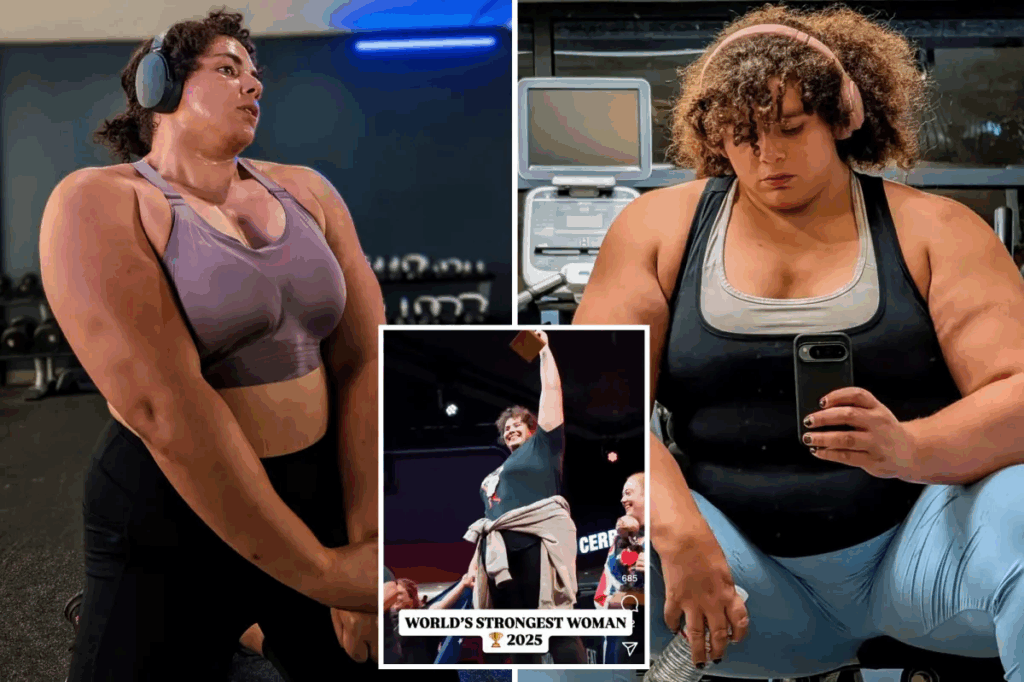
The disqualification of World’s Strongest Woman winner Jammie Booker from a major strength competition has ignited a global debate over fairness, eligibility, and how sports bodies verify athlete backgrounds. The incident, which surfaced after online users circulated past adult-industry footage identifying Booker as a transgender woman, underscores the complex collision of policy, privacy, and public scrutiny in modern athletics.
This article examines what happened, why it matters, and how the incident exposes ongoing tensions in strength-based sports.
What happened in the world’s strongest woman controversy?
Jammie Booker briefly held the title of World’s Strongest Woman before being stripped of the win after organizers determined she was not eligible under competition rules. The federation overseeing the event requires participants to compete according to their biological sex, a rule that several strength sports and powerlifting bodies have enforced or introduced in recent years.
Booker was disqualified after officials were informed that she was a transgender woman. The exact method by which organizers learned of this was not initially disclosed, but a rapid sequence of online activity soon followed.
How online activity influenced the decision
Soon after Booker’s victory, internet users began circulating old adult-industry images and videos allegedly linking her to the performer name Jammie Jay. Public adult-industry databases list the performer as a transgender woman and include references to award nominations in 2020 and 2022. These databases are publicly accessible, but their sudden role in shaping sports adjudication has raised ethical concerns.
The viral spread of this material prompted the competition officials to seek clarification from Booker. According to runner-up Andrea Thompson, organizers gave Booker 24 hours to respond to the allegations. Booker did not reply, and the title was awarded to Thompson.
Why eligibility rules in strength sports matter
Booker’s disqualification has reinvigorated global discussions about transgender participation in high-strength competitions. Strength events rely heavily on physical capacity, leading many sports federations to adopt stricter eligibility standards.
What current rules state
Several strength sports organizations, particularly in North America and Europe, require athletes to compete according to their biological sex. The rules are based on factors such as muscle mass, bone density, physical leverage, and physiological advantages that may persist even after hormone therapy.
These regulations remain controversial, but they are widely implemented in many federations.
How athletes reacted to the controversy
Andrea Thompson, who inherited the title, said organizers were taken by surprise and reacted swiftly when the new information surfaced. She noted that strength athletes often have varied body types, so no one questioned Booker’s appearance during the event.
Thompson later expressed disappointment that the situation overshadowed what should have been a normal celebration of athletic achievement.
Rebecca Roberts, a three-time World’s Strongest Woman champion, also weighed in. In a post reading “protect women’s sports,” she stressed that the debate is not ideological but rooted in observable physical differences.
Who Jammie Booker is and what is known about her past
Public information about Booker remains minimal. She has not commented since the disqualification. Online users resurfaced a YouTube video from 2017 in which Booker describes herself as a 21-year-old transgender woman dealing with family and religious challenges.
This video predates her strength competition career and confirms her past identification as a transgender woman. The unclear timeline of her transition and entry into the sport has contributed to confusion.
What the exposure reveals about online ethics
This case raises important questions:
- Should athletes’ past identities be scrutinized publicly?
- Should sports bodies proactively verify eligibility before competitions begin?
- How should public interest be balanced with an athlete’s right to privacy?
The controversy illustrates how personal digital footprints, including adult-industry content, can resurface and shape public outcomes years later.
What the controversy reveals about sports governance
Beyond the immediate incident, the Booker case highlights structural weaknesses in how federations manage identity verification, privacy and public communication.
Why verification processes may need reform
Officials only became aware of the eligibility issue after Booker had already competed and won. This created confusion among athletes, fuelled online speculation, and damaged trust in administrative systems.
Stronger pre-event verification measures could likely have prevented the controversy.
How sports bodies are navigating privacy and transparency
Federations increasingly face pressure to balance privacy protections with enforcement of eligibility rules. When combined with the rapidly accelerating power of online crowdsourced investigation, these tensions can become difficult to manage.
Why scrutiny of women’s sports is increasing globally
This incident follows several disputes in athletics, cycling, swimming, and weightlifting. Across disciplines, governing bodies face challenges in balancing inclusivity with fairness. The lack of standardized rules across federations contributes to recurring controversies.
Why the incident matters beyond the sport
The Booker controversy lies at a crossroads of online culture, athletic identity, and governance. It highlights how viral exposure, even when based on publicly available data, can shape decisions before official processes fully unfold.
How digital exposure shapes sports narratives
Online activity often moves faster than institutions. In this case, digital footprints surfaced within hours, changing the course of the competition before officials completed their review.
Why polarisation is a continuing risk
Disputes involving transgender athletes frequently become lightning rods for political and cultural arguments. It is important to distinguish policy questions from personal attacks and to analyze each case within the framework of established sports governance.
What happens next for the sport and its rules
Booker has not issued a public statement, and it remains unclear whether she intends to challenge the disqualification. Sports federations may review their verification procedures to prevent similar incidents in the future.
Athletes hope that upcoming competitions will avoid the confusion and public spectacle that defined this episode.
Summary
- Jammie Booker won the World’s Strongest Woman title but was disqualified after officials learned she is a transgender woman, violating eligibility rules.
- Online users circulated past adult-industry material linking her to a transgender performer profile.
- Andrea Thompson was awarded the title, while athletes expressed frustration at the handling of the situation.
- The case raises questions about fairness, digital exposure, transparency, and the ethics of public scrutiny.
- Federations are expected to review their verification processes.