
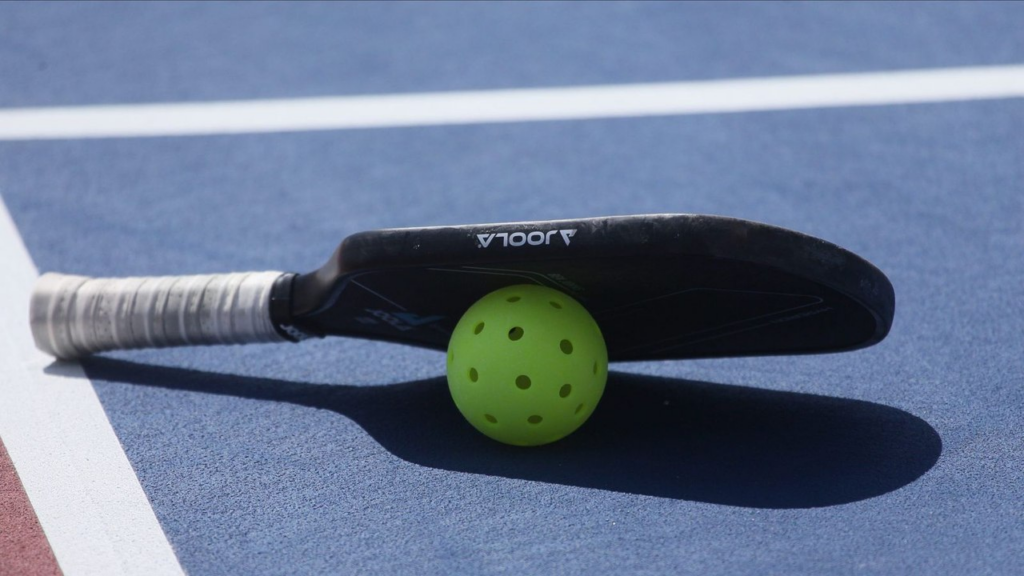
Pickleball in China is no longer a curiosity, it’s becoming a structured, state-backed sport with serious momentum. Already a phenomenon across the United States and parts of Asia, the paddle sport is now expanding rapidly across China, fueled by policy support, grassroots enthusiasm, and a natural cultural fit.
What started as a casual recreational activity is evolving into a nationwide ecosystem, complete with tournaments, referees, and institutional backing. The speed of this transformation offers a revealing look at how emerging sports scale in one of the world’s most organized sporting systems.
What Is Driving the Rise of Pickleball in China?
The growth of pickleball in China is not accidental; it’s being engineered.
A surge in organized competition
The Chinese Tennis Association launched the China Pickleball Circuit in March 2024 with around 80 events. By 2026, that number is expected to exceed 600 annually.
That kind of expansion in just two years signals more than popularity; it reflects institutional commitment.
A rapidly growing officiating system
To support the sport’s scale, China is also building its technical backbone:
- Over 2,300 referees trained in 2025
- Nearly sixfold growth year-over-year
- Standardization of rules and officiating
This ensures the sport can transition from informal play to competitive legitimacy.
How Is the Government Supporting Pickleball in China?
Policy backing is a key differentiator in China’s approach to sports development.
National-level recognition
In 2025, China’s State Council issued a policy encouraging the development of emerging sports. While not exclusive to pickleball, the directive created a favorable environment for its growth.
Integration into national events
The General Administration of Sport of China took things further by including pickleball in the second National Fitness Games, scheduled for April 2026.
This move matters because:
- It legitimizes the sport at a national level
- Encourages local governments to invest in facilities
- Drives public participation through visibility
Why Does Pickleball Fit China’s Sports Culture So Well?
Pickleball’s success in China isn’t just policy-driven—it’s culturally compatible.
Familiar mechanics for players
The sport shares core elements with two of China’s most popular activities:
- Table tennis
- Badminton
These similarities include:
- Fast reflex-based gameplay
- Compact courts
- Paddle or racquet handling
For players already skilled in these sports, the learning curve is minimal.
Accessibility for beginners
Players often cite ease of entry as a major draw:
- Simple rules
- Quick rallies
- Lower physical strain compared to tennis
This makes it appealing across age groups—from young athletes to older recreational players.
How Does Pickleball Support Mental Health and Social Well-Being?
One of the less discussed but important drivers of pickleball in China is its impact on mental health.
A social sport by design
Pickleball is typically played in doubles, which naturally encourages:
- Communication
- Teamwork
- Community building
Events like the Joola Pickleball Titans Tour highlight this aspect, positioning the sport as both competitive and socially engaging.
Stress relief through activity
The combination of light physical exertion and social interaction helps:
- Reduce stress
- Improve mood
- Combat urban isolation
In densely populated cities, this dual benefit makes pickleball particularly attractive.
What Role Do Celebrities Play in Popularizing Pickleball?
High-profile endorsements are accelerating awareness.
International star power
Exhibition events featuring legends like Andre Agassi and Steffi Graf have introduced the sport to wider audiences in China.
Their involvement adds the following:
- Credibility
- Media attention
- Aspirational value for new players
Why celebrity influence matters
In a crowded sports market, recognition can drive adoption. Celebrity-backed events help pickleball stand out, especially among younger audiences.
What Infrastructure Developments Are Still Needed?
Despite rapid growth, infrastructure remains a bottleneck.
Limited dedicated courts
Most pickleball games in China are currently played on the following:
- Converted badminton courts
- Repurposed tennis courts
Dedicated facilities are still relatively rare in major cities.
What’s likely next
With government backing and rising demand, expect the following:
- New purpose-built courts
- Integration into public fitness centers
- Private investment in clubs and academies
A Case Study: Hebi, China’s “Pickleball City”
The city of Hebi has been officially designated as “China’s City of Pickleball,” signaling how local governments are embracing the sport.
This designation typically leads to:
- Increased funding
- Hosting of tournaments
- Development of training programs
It also creates a model that other cities may replicate.
What Comes Next for Pickleball in China?
China is moving beyond discovery and into system-building.
Key indicators to watch
- Expansion of the China Pickleball Circuit beyond 600 events
- Growth in youth participation programs
- Entry of domestic brands into equipment manufacturing
- Potential inclusion in multi-sport international events
If current trends hold, China could become one of the largest pickleball markets globally within a few years.
TL;DR
- Pickleball in China is growing rapidly, with strong government and institutional support
- Annual tournaments are set to jump from 80 in 2024 to 600+ by 2026
- The sport fits naturally with China’s table tennis and badminton culture
- It offers mental health benefits through social interaction and physical activity
- Infrastructure is still developing, but investment is expected to follow demand