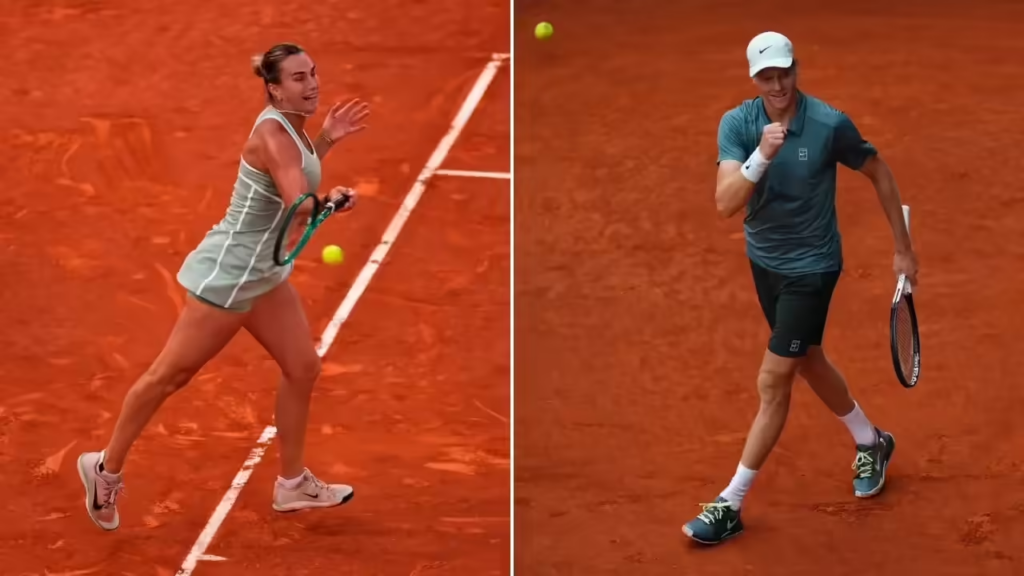
Just weeks before the start of the 2026 French Open, one of tennis’s biggest tournaments has found itself trapped in an escalating financial dispute that could reshape the sport’s power structure. Several top players, including Novak Djokovic and Jannik Sinner, are pushing back against what they describe as an unfair prize money system at French Open. The conflict goes beyond simple demands for bigger paychecks. At its core, the argument is about who truly profits from modern tennis and whether players deserve a larger share of the billions flowing into the sport. The dispute has now become one of the most significant player-versus-organizer standoffs tennis has seen in years.
Why Are Players Angry About French Open Prize Money?
The controversy centers on a simple argument from players: tournament revenues are rising faster than player compensation.
According to figures cited by players and tournament officials, Roland Garros reportedly generated around €395 million in revenue in 2025, marking a year-on-year increase of roughly 14 percent.
But players argue the increase in prize money failed to keep pace.
What players are claiming
Through the Professional Tennis Players Association, players say:
- Tournament revenues are climbing sharply
- Their percentage share is shrinking
- Players have little influence over financial decisions
- Tennis lacks the revenue-sharing structure seen in other major sports
The core frustration is not necessarily the total amount of money involved. It is the percentage split.
Players believe they remain underpaid relative to the value they generate for broadcasters, sponsors, ticket sales, and global media attention.
How Much Prize Money Is Being Offered at the 2026 French Open?
Tournament organizers increased the total prize pool for the 2026 edition of the French Open to €61.7 million.
That represents a €5.3 million increase from the previous year.
Breakdown of major payouts
- Singles champions: €2.8 million each
- Singles runners-up: €1.4 million each
- Total prize pool: €61.7 million
On paper, those numbers appear enormous. Yet players argue the increase does not match the tournament’s overall financial growth.
The disagreement reflects a broader reality in modern sports economics: athletes increasingly compare their revenue share with leagues like the NBA, NFL, and Premier League, where players often receive far larger portions of total income.
Consider adding a comparison chart here showing player revenue shares across tennis, NBA, NFL, Formula 1, and European football.
Why Players Say the Revenue Share Is Actually Falling
The most explosive part of the dispute involves the percentage of tournament revenue going to players.
According to the players’ calculations, prize money accounts for only around 14 to 15 percent of total Roland Garros revenue.
That figure has become a major flashpoint.
The comparison fueling player frustration
The PTPA reportedly wants players to receive roughly 22 percent of tournament revenue, arguing that comparable global sports leagues distribute significantly larger shares to athletes.
From the players’ perspective, the math looks troubling:
- Tournament revenues rise rapidly
- Sponsorship deals grow
- Media rights become more valuable
- Ticket prices increase
- But player percentages stagnate or decline
For many athletes, especially lower-ranked players who depend heavily on prize money to fund travel and coaching costs, the issue is not theoretical. It directly affects career sustainability.
Why the French Open Dispute Matters Beyond Tennis Superstars
The headlines focus heavily on stars like Novak Djokovic, but the financial tension runs deeper than elite players wanting bigger checks.
Professional tennis has one of the widest earning gaps in global sports.
Outside the top-ranked names, many players struggle financially because they must independently cover:
- Travel expenses
- Coaching salaries
- Hotel costs
- Physiotherapy
- Equipment
- Support staff
Unlike team sports, tennis players operate almost like self-funded businesses traveling across continents week after week.
That is why many players argue prize money distribution is fundamentally tied to player welfare and career longevity.
What Is the PTPA and Why Is It Becoming More Influential?
The Professional Tennis Players Association has emerged as a major force behind the current rebellion.
Founded with involvement from Djokovic, the organization was created to give players stronger collective bargaining power independent of existing tennis governing structures.
What the PTPA wants
The group has consistently pushed for:
- Greater financial transparency
- Higher player compensation
- Improved scheduling input
- Better player welfare protections
- Stronger representation in decision-making
The French Open dispute may become one of the organization’s biggest tests yet.
If players successfully pressure Grand Slam organizers into renegotiating revenue-sharing structures, it could permanently alter the economics of professional tennis.
Could Legal Action Actually Happen?
Players have reportedly warned that legal action remains possible if negotiations fail before the tournament begins on May 24.
At this stage, no formal lawsuit has been announced publicly. But even the possibility of coordinated legal escalation signals how serious tensions have become.
The issue is particularly sensitive because all four Grand Slam tournaments operate independently rather than under a single centralized league structure.
That fragmented governance model has long frustrated players, who argue it limits accountability and slows reform.
Why Tennis Is Facing a Broader Identity Crisis
The prize money fight reflects a bigger question hanging over professional tennis: who controls the sport’s future?
Modern tennis generates massive global audiences and commercial revenue, yet its financial model remains unusually fragmented compared to other major sports.
Unlike leagues with collective bargaining agreements, tennis operates through overlapping governing bodies, tournament owners, tours, and independent organizers.
That structure creates recurring tension between:
- Players
- Tournament organizers
- Governing bodies
- Sponsors
- Broadcasters
The French Open controversy has effectively exposed those tensions in public.
What Happens Next?
For now, the tournament is still expected to proceed as planned.
But the dispute could intensify quickly if:
- Negotiations stall
- Players coordinate collective action
- Legal threats escalate
- Public support shifts toward athletes
Organizers also face reputational pressure because Grand Slam tournaments depend heavily on star power. Fans tune in to watch players, not administrative structures.
That gives top athletes leverage, especially when multiple stars align behind the same cause.
Still, organizers are unlikely to dramatically restructure revenue-sharing models overnight. The financial implications would stretch across all four Grand Slams and potentially reshape tennis economics globally.
Why This Could Become a Turning Point for Tennis
The French Open prize money controversy is not just another sports-business disagreement. It reflects a growing shift across global athletics where players increasingly demand influence proportional to their commercial value.
Athletes today are more organized, media-savvy, and financially aware than previous generations. They understand how much money modern sports generate and are becoming less willing to accept systems they believe disproportionately benefit organizers.
Tennis now appears headed toward the same broader labor and revenue debates that transformed sports like basketball, football, and Formula 1.
Whether Roland Garros becomes the spark for deeper reform remains unclear. But the conversation is no longer confined to locker rooms and private meetings. It has moved into public view.
TL;DR
- Top tennis players are challenging prize money distribution at the 2026 French Open.
- Players say tournament revenues are rising faster than their compensation.
- The €61.7 million prize pool represents only about 14 to 15 percent of total revenue, according to player estimates.
- The Professional Tennis Players Association wants players to receive a larger share similar to other major sports leagues.
- Legal action remains possible if negotiations fail before the tournament starts.
- The dispute could reshape tennis economics and player power for years to come.