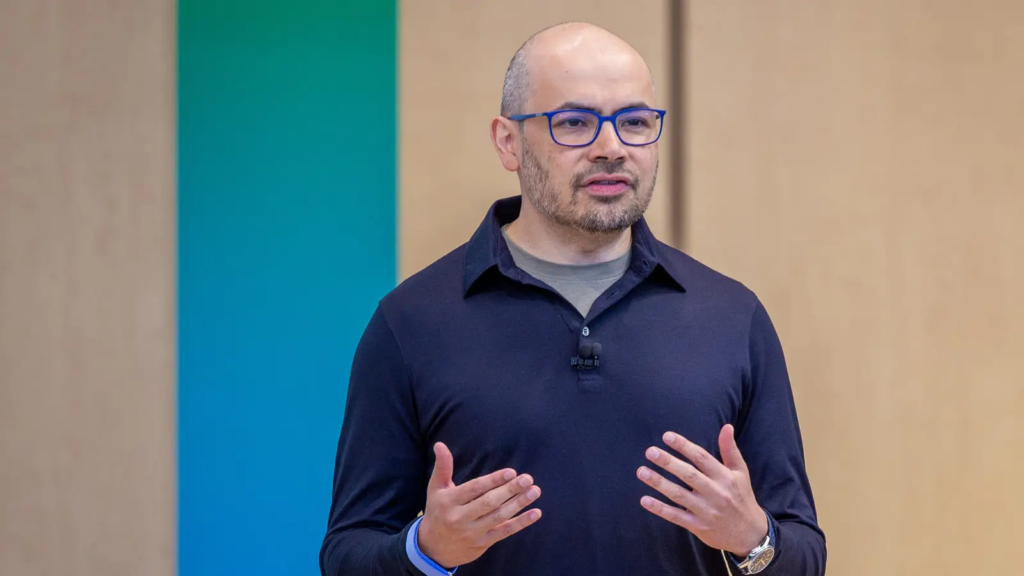
Artificial General Intelligence (AGI) may no longer be a distant concept. According to Google DeepMind CEO Demis Hassabis, the technology could emerge within the next three to four years, ushering in a new era of artificial intelligence that rivals, or even surpasses, human cognitive abilities across a wide range of tasks.
In a recent blog post, the Nobel Prize-winning AI researcher argued that AI development is approaching a critical turning point. While he remains optimistic about AGI’s potential to accelerate scientific breakthroughs and improve lives, he also warned that governments and technology companies must move faster to establish safeguards before increasingly powerful AI systems become a reality.
His comments come amid an intensifying global race among companies such as Google, OpenAI, Anthropic, Meta, and xAI to build ever more capable AI models.
What Is AGI?
Artificial General Intelligence, or AGI, refers to an AI system capable of understanding, learning, and performing virtually any intellectual task that a human can.
Unlike today’s AI models—which are often highly capable but specialised—AGI would be able to transfer knowledge across different domains, solve unfamiliar problems, and adapt to new situations with minimal additional training.
Hassabis describes AGI as the following:
“A system that exhibits all the cognitive capabilities the brain has.”
While there is no universally accepted definition of AGI, most researchers agree that it represents a significant leap beyond today’s generative AI systems.
Why Does Hassabis Think AGI Is Close?
Hassabis has repeatedly suggested that AI progress is accelerating faster than many expected.
In his latest remarks, he argued that advances in large language models, reasoning systems, multimodal AI, robotics, and scientific AI are bringing researchers closer to developing systems with broad, human-like intelligence.
His estimate of three to four years is among the more aggressive timelines offered by leading AI executives, though it is not universally shared.
Many researchers believe AGI could still be a decade or more away, while others question whether today’s AI architectures can ever achieve true general intelligence without major scientific breakthroughs.
The key takeaway is that there is no consensus within the AI community about when—or even how—AGI will emerge.
Why Is Hassabis Concerned About AI Safety?
Although Hassabis has long championed AI’s potential, he argues that discussions about safety are struggling to keep pace with technological progress.
He believes governments and AI companies are increasingly focused on winning the global race to build the most powerful models, potentially leaving important safety questions unanswered.
According to Hassabis, today’s frontier AI systems already present cybersecurity challenges. Future systems with greater autonomy and reasoning capabilities could create far more serious risks if adequate safeguards are not in place.
His concerns extend beyond conventional cybersecurity to include:
- Biological security risks
- Nuclear security concerns
- Autonomous decision-making
- Self-improving AI systems
- Misuse by malicious actors
These risks remain largely hypothetical, but many leading AI researchers argue they deserve attention before more capable systems are deployed.
Why Does He Want an AI Regulator?
One of Hassabis’s central proposals is the creation of an independent body dedicated to overseeing frontier AI development.
He compares the idea to the Financial Industry Regulatory Authority (FINRA), which helps regulate the U.S. financial industry.
Under his proposal, the AI regulator would:
- Develop standardized safety benchmarks.
- Evaluate advanced AI models before public release.
- Conduct independent testing.
- Certify whether systems meet agreed-upon safety standards.
- Monitor evolving risks as AI capabilities improve.
Initially, participation would be voluntary, with companies submitting their most advanced models for review up to 30 days before deployment.
If testing procedures prove effective over time, Hassabis believes participation could eventually become mandatory.
Why Self-Improving AI Is a Growing Concern
One issue receiving increasing attention among AI researchers is the possibility of systems that can improve their own capabilities with minimal human intervention.
While current AI models still require extensive human engineering, future systems could potentially automate parts of their own development process.
If that happens, AI progress could accelerate rapidly, making oversight significantly more challenging.
Hassabis argues that governments and industry should establish governance frameworks before such capabilities become reality rather than reacting afterward.
What Could AGI Make Possible?
Despite his warnings, Hassabis remains optimistic about AGI’s long-term benefits if developed responsibly.
He believes advanced AI could dramatically accelerate progress across multiple fields.
Potential applications include:
Scientific research
AGI could analyze enormous datasets, generate hypotheses, and help scientists discover new physical, chemical, or biological principles.
Healthcare
Future AI systems may assist in:
- Drug discovery
- Personalized medicine
- Medical imaging
- Disease diagnosis
- Clinical research
Clean energy
Researchers hope AI can speed the development of:
- Better batteries
- Fusion energy technologies
- Carbon capture systems
- More efficient power grids
Advanced materials
AI may help design entirely new materials with applications ranging from aerospace engineering to electronics and sustainable manufacturing.
These possibilities explain why many researchers continue investing heavily in AGI despite ongoing debates about safety.
Do Experts Agree on AGI’s Timeline?
Not at all.
The AI community remains deeply divided over when AGI might arrive.
Some industry leaders believe it could emerge within just a few years.
Others argue that today’s AI systems, while impressive, still lack key characteristics associated with human intelligence, including:
- Long-term planning
- Common-sense reasoning
- Reliable causal understanding
- True autonomy
- Consistent performance across unfamiliar tasks
Because there is no agreed-upon scientific definition of AGI, estimates vary widely.
That uncertainty makes it difficult for policymakers to determine how quickly regulation should evolve.
Why This Debate Matters
The conversation surrounding AGI is no longer limited to research laboratories.
Governments around the world are developing AI regulations, companies are investing billions of dollars into next-generation models, and businesses are rapidly integrating AI into everyday operations.
If AGI arrives sooner than expected, societies may face difficult questions involving:
- Workforce disruption
- National security
- Privacy
- Economic competitiveness
- Accountability for AI decisions
Preparing governance structures before these systems become commonplace could help reduce risks while preserving innovation.
The Bottom Line
Demis Hassabis believes the AI industry is approaching one of its most significant milestones yet: the emergence of Artificial General Intelligence. While he sees enormous potential for AGI to transform science, medicine, energy, and technology, he argues that safety measures and regulatory frameworks must keep pace with the technology itself.
Whether AGI arrives within three years or much later remains uncertain. What is increasingly clear, however, is that discussions about AI governance are shifting from theoretical debates to practical questions about how humanity should manage systems that may soon rival human intelligence across a broad range of tasks.
TL;DR
- DeepMind CEO Demis Hassabis believes AGI could arrive within three to four years.
- He defines AGI as an AI system capable of performing all the cognitive tasks the human brain can.
- Hassabis warns that rapid AI progress is outpacing discussions about safety and regulation.
- He proposes an independent AI regulator to evaluate advanced AI models before release.
- While optimistic about AGI’s benefits, he says stronger oversight is needed to reduce cybersecurity and national security risks.